
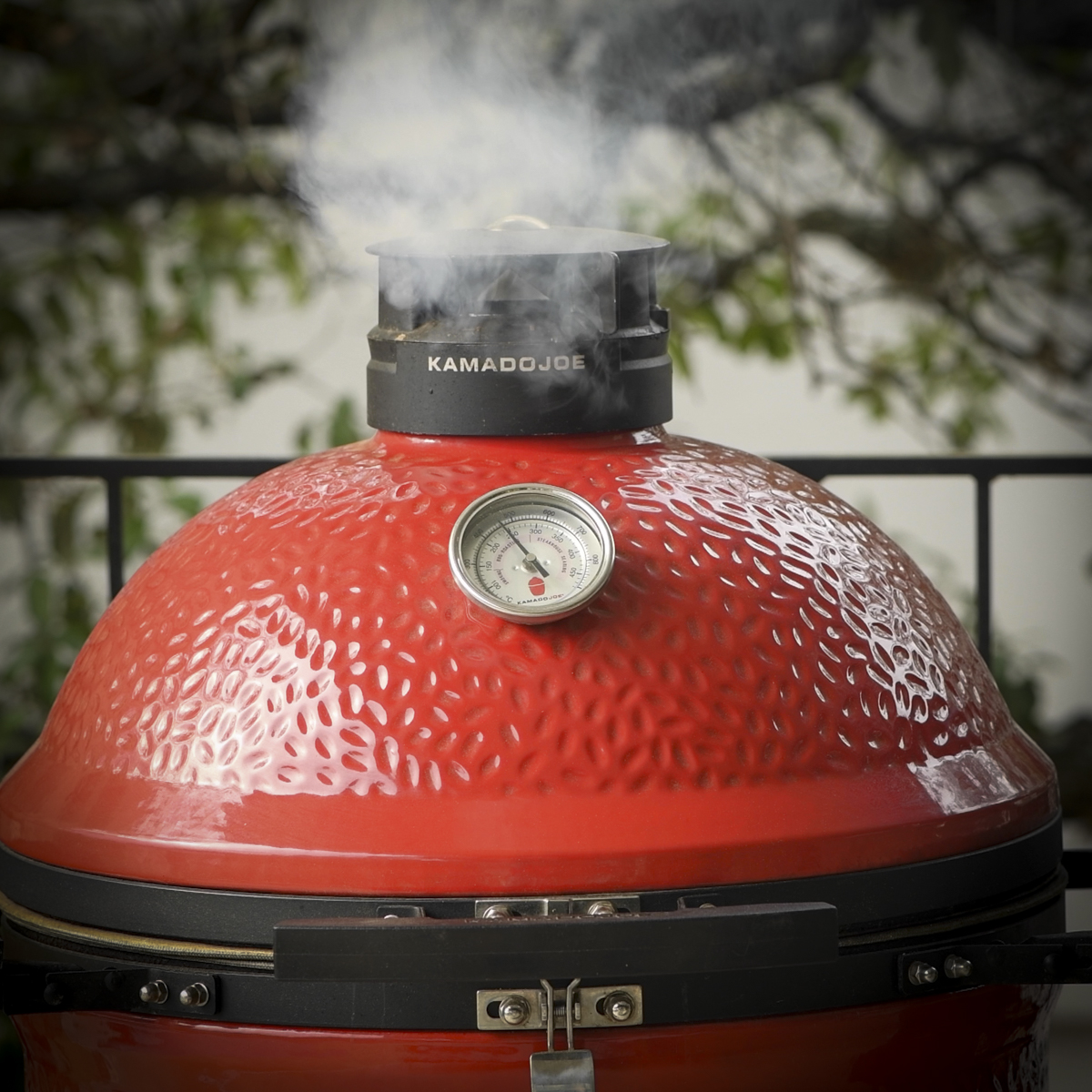
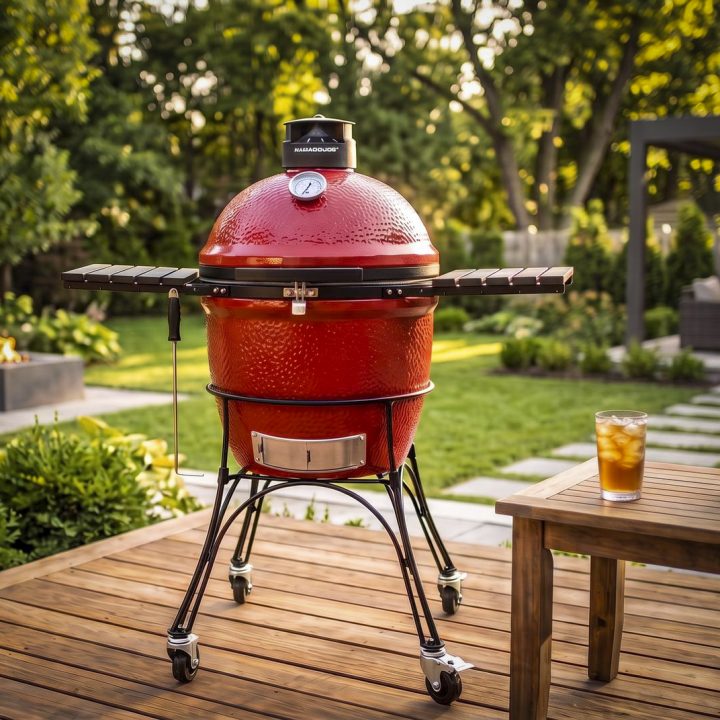
If you own a Kamado Joe, regular cleaning isn't just about keeping your grill looking good. It's essential for better barbecue, longer component life, and consistent temperature control.
Grease buildup, ash accumulation, dirty ceramics, and clogged vents can all affect airflow and produce unpleasant smoke flavors. Fortunately, maintaining a Kamado Joe is surprisingly simple. With a five-minute cleaning routine after every cook and a periodic deep-clean burn-off, you can keep your ceramic grill performing like new for years.
The same basic cleaning process applies to most ceramic kamado grills. I use a Kamado Joe Classic II, so the parts discussed in this guide are specific to that grill, but the methods for cleaning the ceramic interior, cooking grates, heat deflectors, firebox, ash and exterior apply to most ceramic kamado grills.
In this guide, you'll learn exactly how to clean every part of your Kamado Joe, including the cooking grates, ceramic interior, Kontrol Tower top vent, deflector plates, firebox, gasket, and thermometer. We'll also cover the most common cleaning mistakes that shorten the life of ceramic grills, and how to avoid them.
Jump to:
- Why Cleaning Your Kamado Joe Matters
- Cleaning Supplies You'll Need
- Five-Minute Cleaning Routine After Every Cook
- How to Deep Clean a Kamado Joe
- Cleaning After the Burn-Off
- How to Clean the Exterior
- Inspect the Gasket
- How to Clean the Kontrol Tower
- Checking the Bands and Hardware
- Calibrating the Dome Thermometer
- Six Cleaning Mistakes to Avoid
- How Often Should You Clean a Kamado Grill?
- Top Tip
- Final Thoughts
- FAQ
- Related
Why Cleaning Your Kamado Joe Matters
Many owners think a little grease and smoke buildup adds flavor. It doesn't. Old grease, ash, and carbon deposits create dirty smoke that can ruin the taste of your food.
A neglected Kamado Joe can develop several problems:
1. Rancid Grease
Every cook leaves behind grease and rendered fat. If that grease sits for weeks or months, it becomes rancid.
During your next cook, the grease vaporizes and coats your food with unpleasant flavors that many people describe as "old smoke."
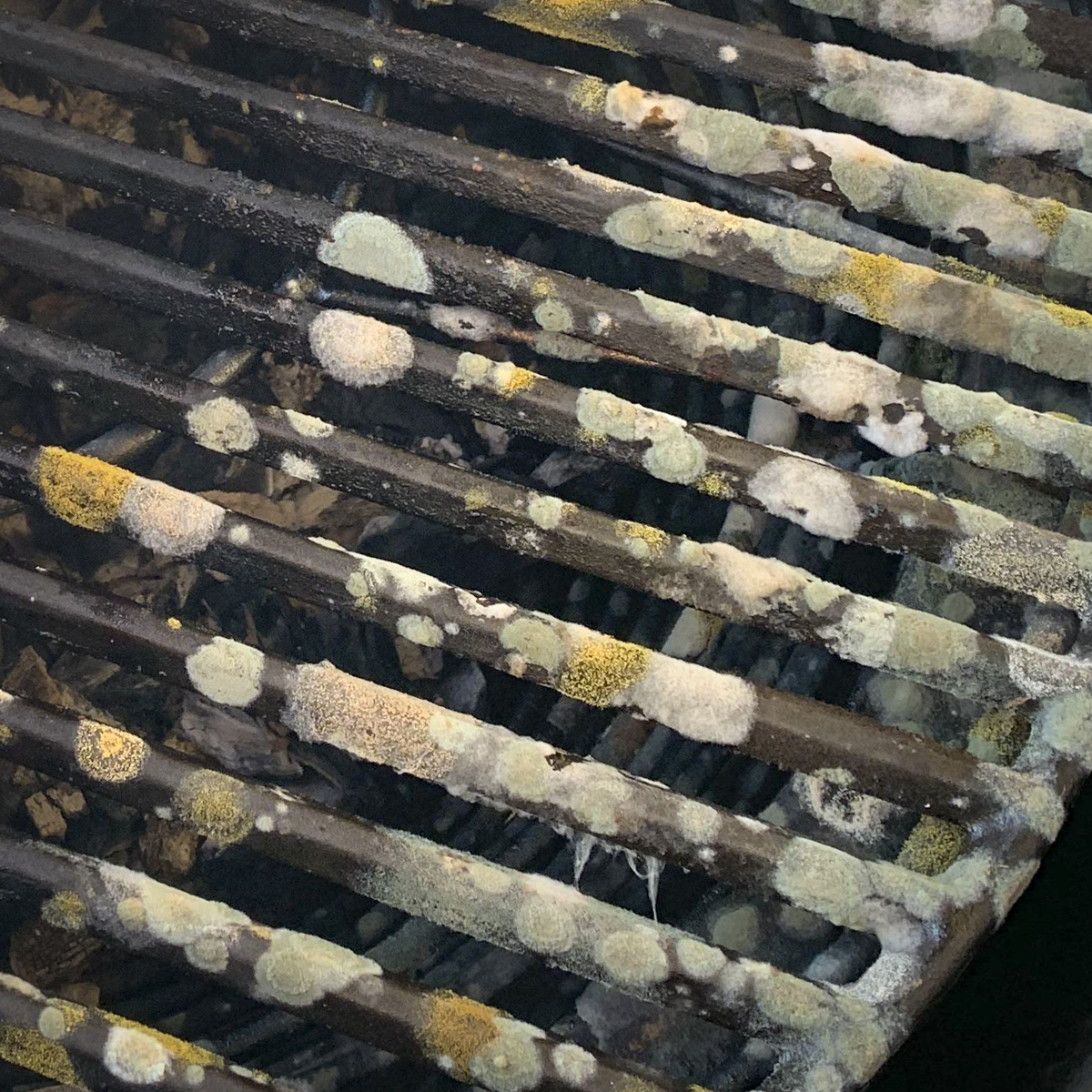
2. Mold Growth
Ash absorbs moisture from the air. If ash remains in the firebox between cooks, especially in humid climates, it can create conditions that encourage mold growth.
Mold can spread across:
- Cooking grates
- Firebox components
- Ceramic walls
- Deflector plates
Once that happens, every cook begins with contaminated smoke.
3. Restricted Airflow
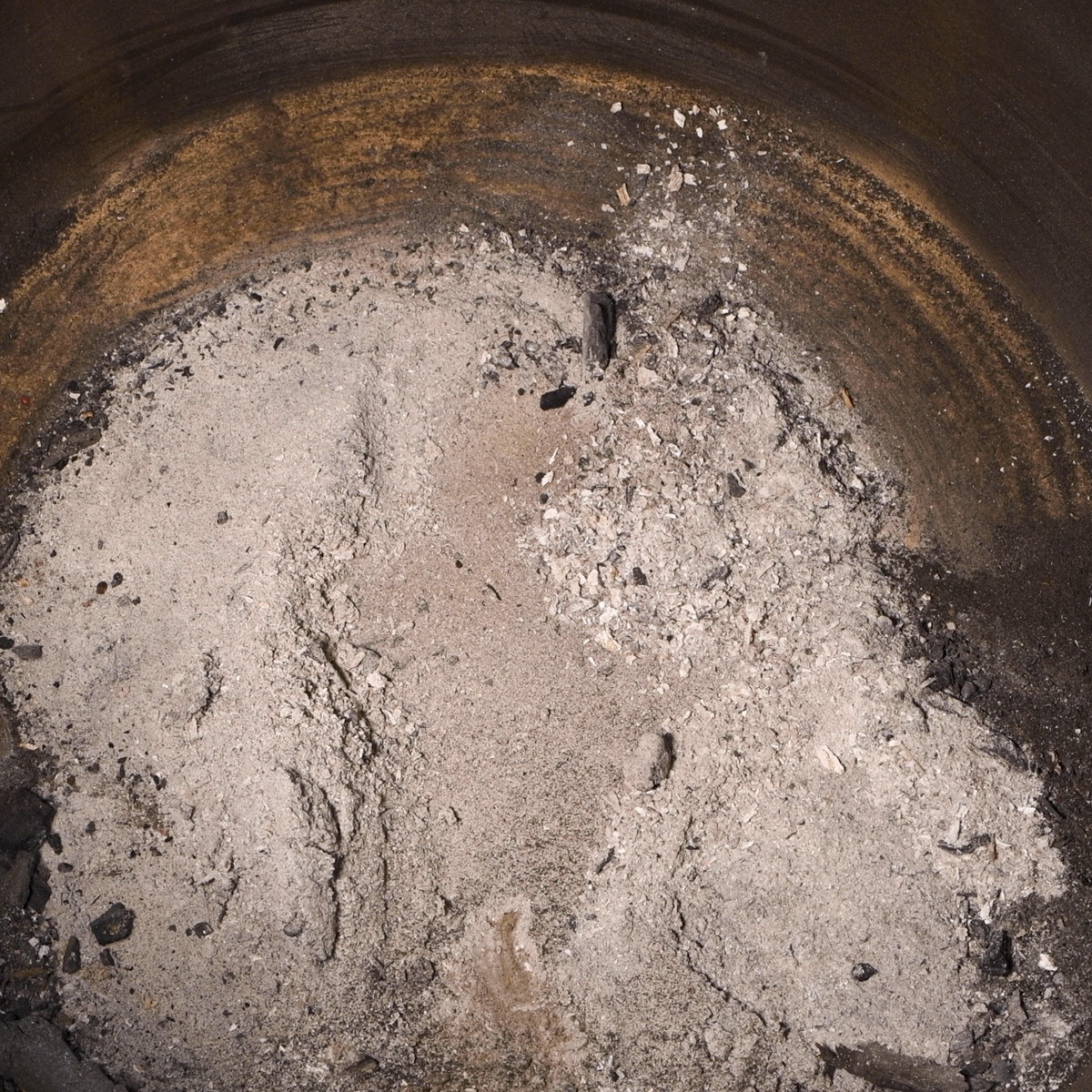
Ash doesn't just collect in the visible ash drawer. Over time it accumulates underneath the firebox where many owners never look.
Reduced airflow means:
- Poor temperature control
- Longer startup times
- Difficulty reaching high temperatures
- Reduced charcoal efficiency
4. Sticky Kontrol Tower Vent
Smoke contains grease vapor. That vapor condenses inside the aluminum top vent every time you cook.
Eventually the vent becomes difficult, or impossible, to adjust precisely, making temperature control frustrating.
5. Dirty Deflector Plates
Ceramic heat deflectors absorb grease during low-and-slow cooks. When reheated, old grease burns again, producing smoke that negatively affects whatever you're cooking today.
A clean grill produces clean smoke, and clean smoke makes better barbecue.
Cleaning Supplies You'll Need
Cleaning a Kamado Joe requires surprisingly few tools.
Here's all you need:
- Bristle-free wire coil grill brush
- Stiff nylon or natural-bristle brush
- Microfiber cloths
- Mild dish soap
- Shop vacuum with brush attachment
- Paper towels
- Disposable gloves
Notice what's missing?
You do not need:
- Oven cleaner
- Degreasers
- Bleach
- Ammonia
- Pressure washers
- Steel wool
- Abrasive cleaners
Ceramic is porous. Harsh chemicals can soak into the surface and later affect the food you cook.
Five-Minute Cleaning Routine After Every Cook
The easiest way to keep your Kamado Joe clean is to never let it become excessively dirty. Here's the routine.
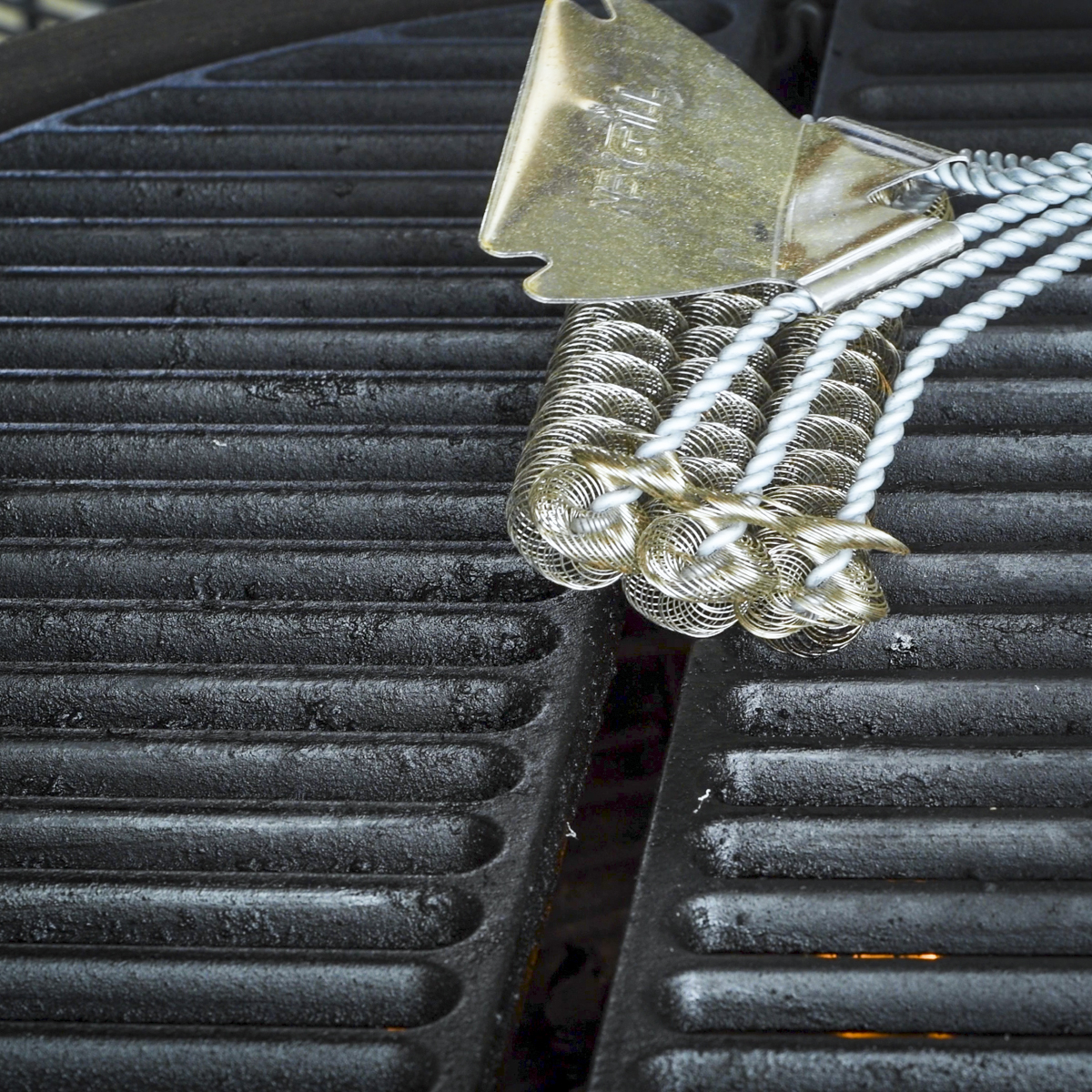
Step 1: Brush the Cooking Grates
While the grates are still warm, scrub both sides using a bristle-free coil brush. Warm grease comes off quickly. Cold grease doesn't. Thirty seconds now saves ten minutes later.
Step 2: Wipe the Exterior
Using a damp microfiber cloth:
- Wipe the dome
- Clean the base
- Wipe the shelves
- Remove fingerprints, grease, dust, and pollen
If necessary, add one drop of mild dish soap to the cloth, not directly onto the grill.
Then wipe again with clean water to remove any residue.
Step 3: Clean the Kontrol Tower
Open the top vent completely. Wipe the underside where grease condenses with a wad of dry paper towels.
Doing this after every cook prevents heavy buildup later.
Step 4: Empty the Ash
Don't wait until the ash drawer is overflowing. Ash attracts moisture and encourages mold growth. Removing it after each cook takes less than a minute.
How to Deep Clean a Kamado Joe
Most ceramic kamado grills need a periodic deep cleaning in addition to routine cleaning after each cook. I deep clean my Kamado Joe every two to three months, or before storing it for an extended period.
This high-temperature cleaning process uses heat instead of chemicals to remove grease and carbon.
Step 1: Clean the Cooking Grates
Brush away loose food residue with a coil wire brush.
Step 2: Fill the Firebox
Load fresh lump charcoal nearly to the accessory rack. You'll need more fuel than a normal cook because the goal is sustained high heat for several hours.
Step 3: Install the Deflector Plates
Place the deflector plates dirty-side down. The accumulated grease faces the fire, allowing intense heat to burn it away.
Step 4: Replace the Cooking Grates
Leave the grates inside during the burn-off. They'll be cleaned at the same time.
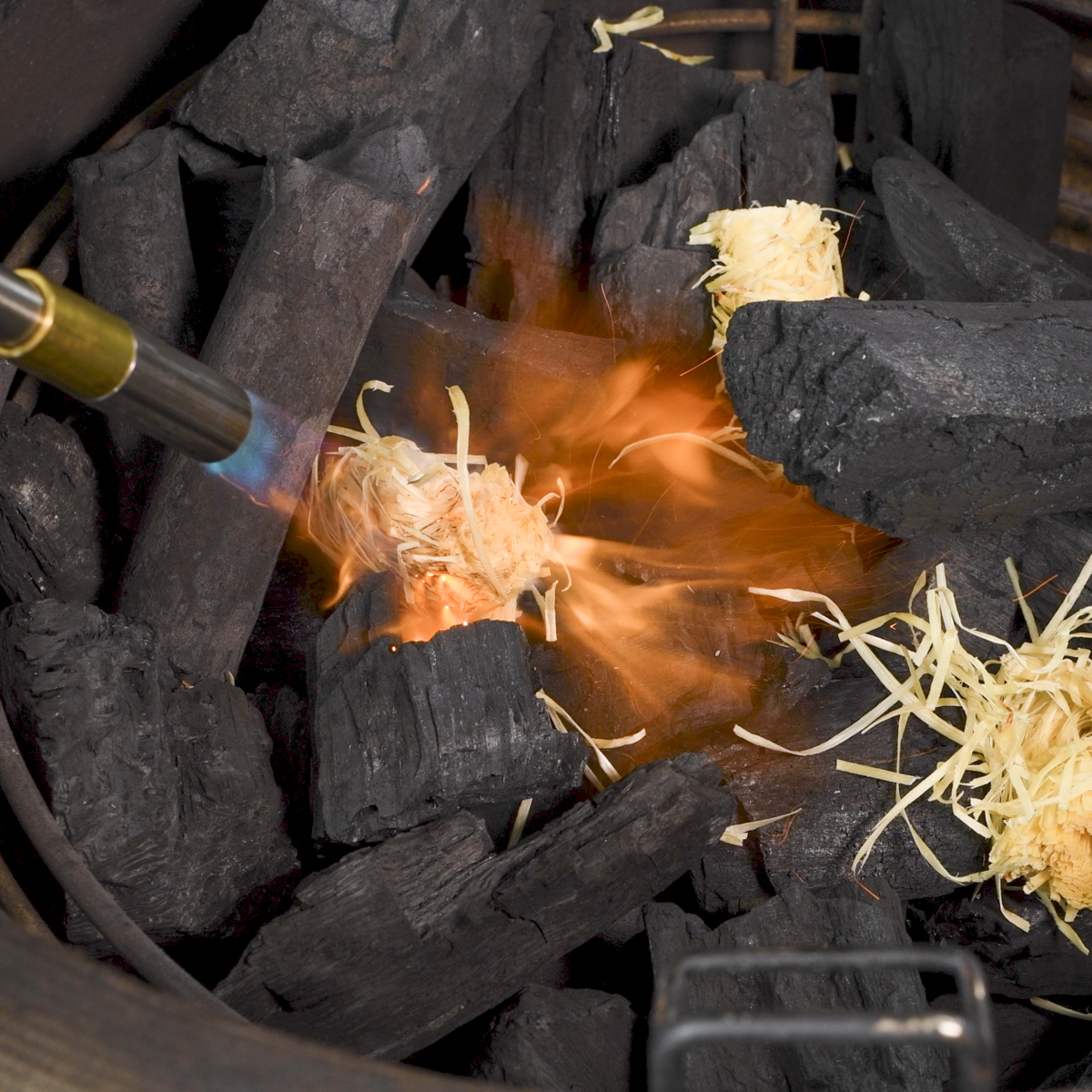
Step 5: Build the Fire
Light the charcoal in several places to build a large fire. Leave the lid open for about ten minutes until the charcoal is burning evenly.
Step 6: Raise the Temperature
Close the lid. Open the bottom vent fully. Open the Kontrol Tower. Allow the grill to reach approximately 600-700°F. Maintain this temperature for one hour.
At these temperatures:
- Grease burns away
- Carbon deposits turn to ash
- Smoke residue disappears
- Organic buildup is incinerated
Cleaning After the Burn-Off
After the grill has cooled completely:
- Brush off both sides of the cooking grates with a coil brush
- Brush off the deflector plates with a stiff brush
- Remove and clean the Divide & Conquer rack
- Empty unused charcoal
- Remove the ash basket
- Brush off the firebox with a stiff brush
- Remove the ceramic firebox pieces
- Clean beneath the ash drawer
- Vacuum out all remaining traces of ash
Pay special attention to hidden ash beneath the firebox. Many airflow problems begin there.
How to Clean the Exterior
The glazed ceramic exterior needs very little maintenance.
Simply use:
- Warm water
- Mild dish soap
- Soft microfiber cloth
Never use abrasive pads or aggressive cleaners. They're unnecessary and may damage the finish.
Inspect the Gasket
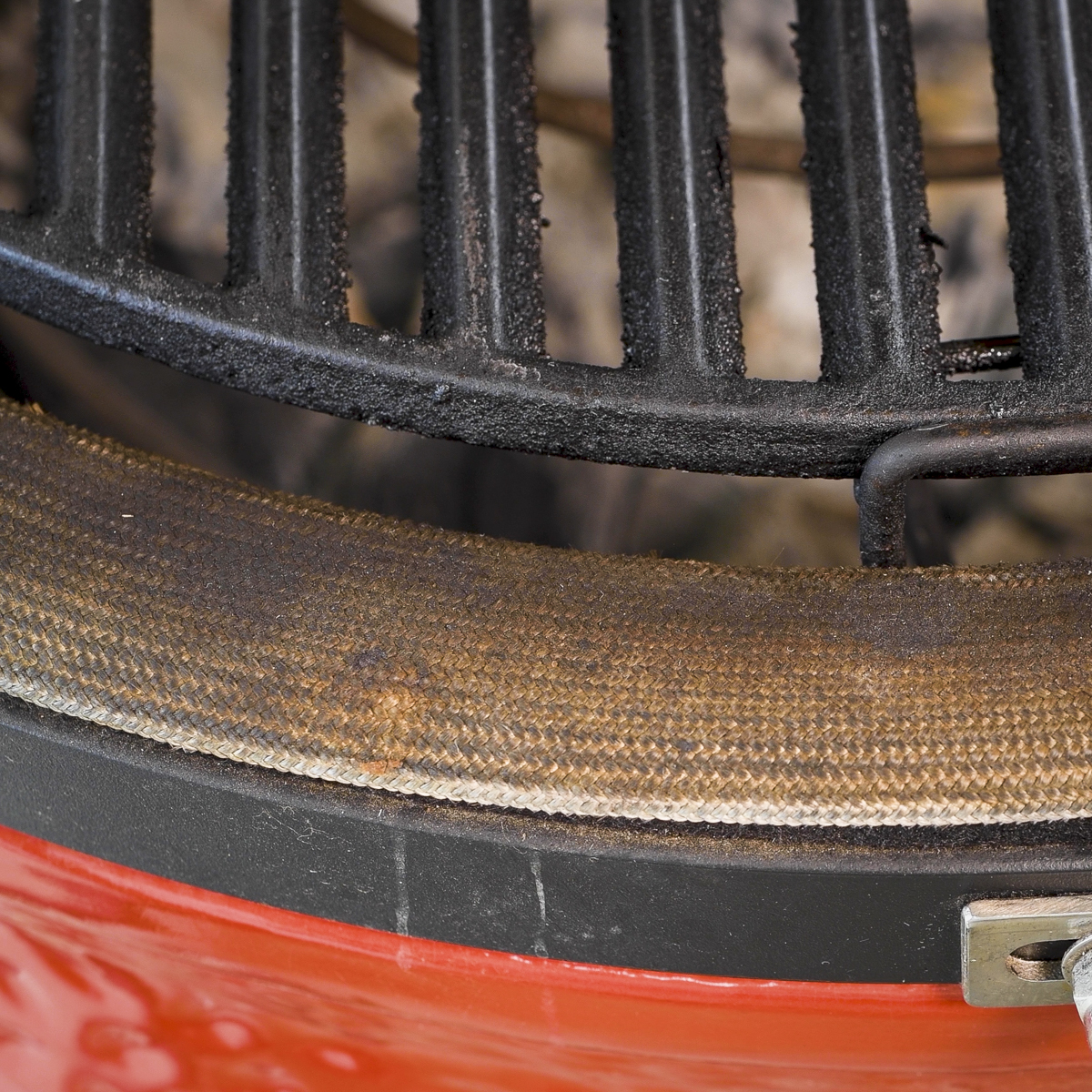
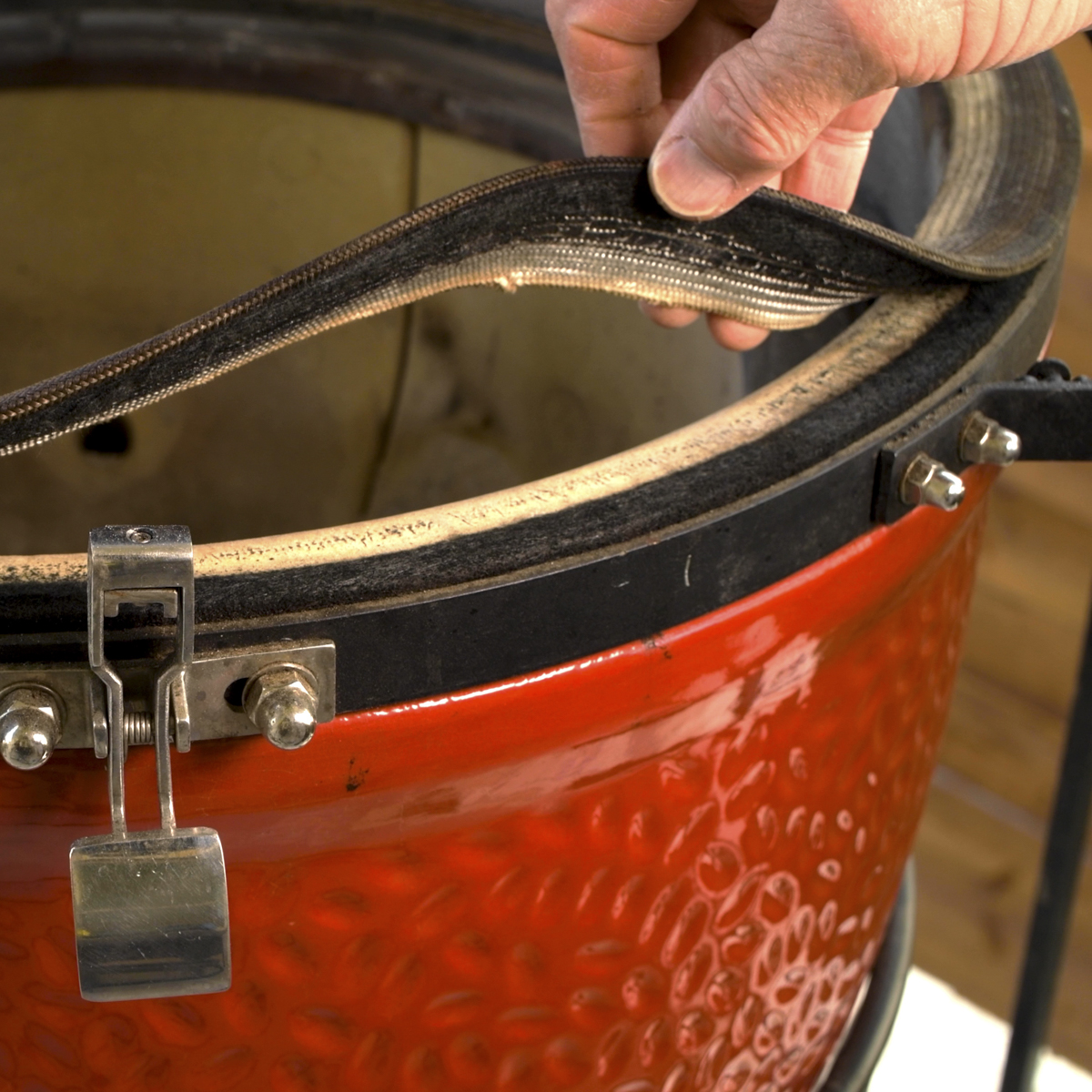
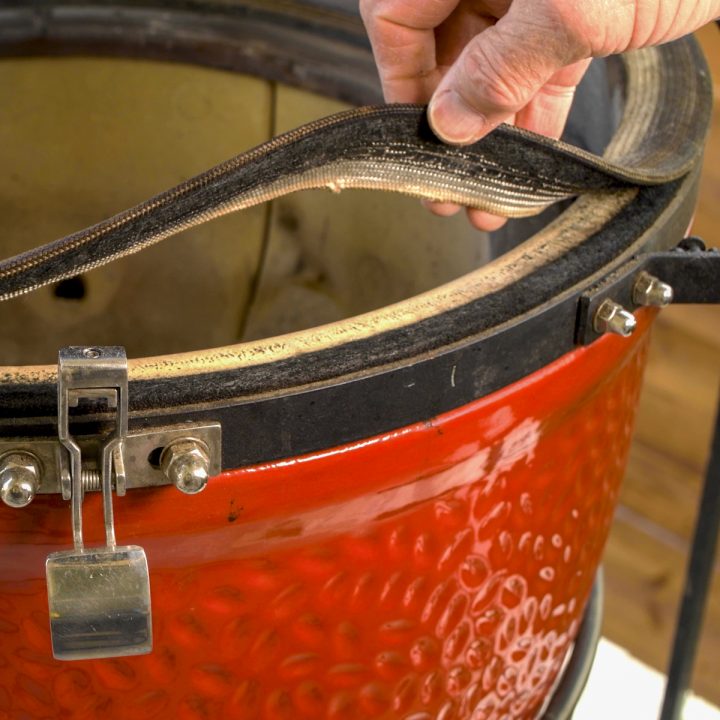
Your gasket creates the airtight seal that makes precise temperature control possible. Simply wipe it gently with a damp microfiber cloth. Avoid soaking it or scrubbing aggressively.
While cleaning, inspect for:
- Fraying
- Peeling
- Flattened areas
- Missing sections
A worn gasket should be replaced before it begins affecting airflow.
How to Clean the Kontrol Tower
This is probably the most neglected part of any Kamado Joe.
If it still moves freely:
- Remove it
- Soak in warm soapy water
- Scrub gently with a non-abrasive sponge
- Rinse thoroughly
- Dry completely before reinstalling
If the vent is permanently seized, corrosion has likely developed beneath damaged paint. Replacement is usually the best solution.
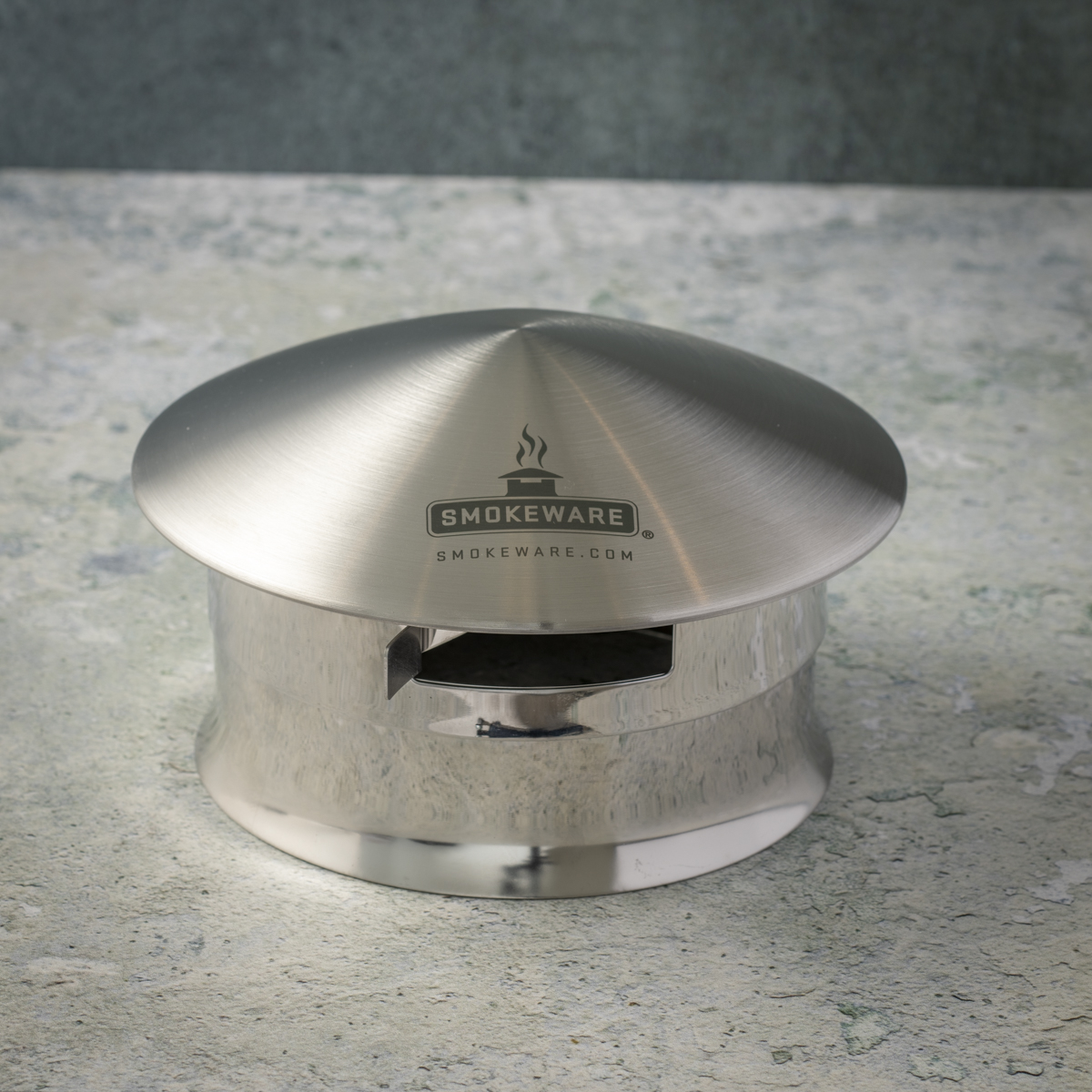
Watch my video on chimney cap upgrade options.
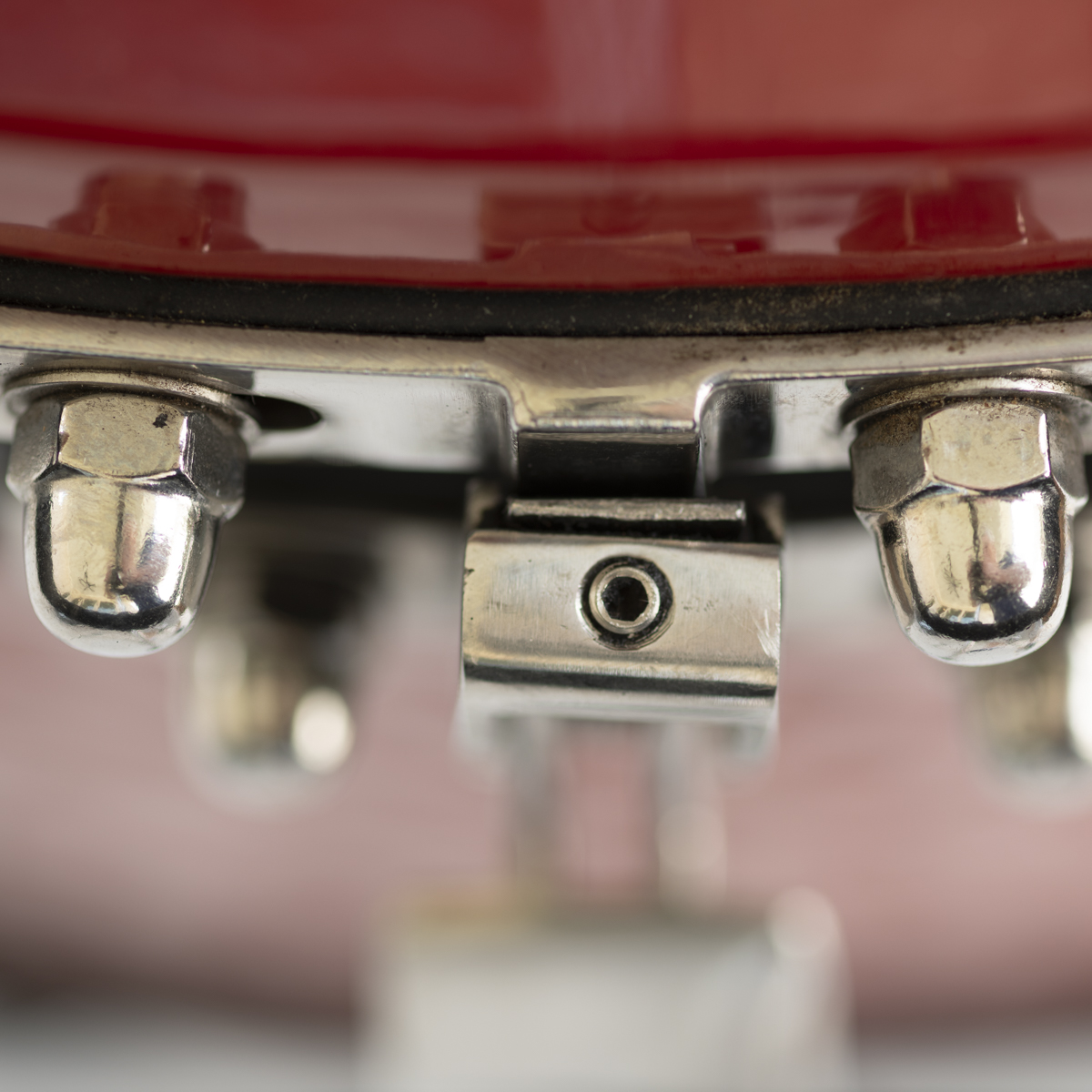
Checking the Bands and Hardware
Cleaning time is also maintenance time.
Inspect:
- Band bolts
- Hinge bolts
- Handle hardware
- Shelf hardware
- Latch screws
Tighten anything loose. Avoid over-tightening.
Loose bands can allow the dome to shift out of alignment, creating air leaks that make temperature control much more difficult.
Calibrating the Dome Thermometer
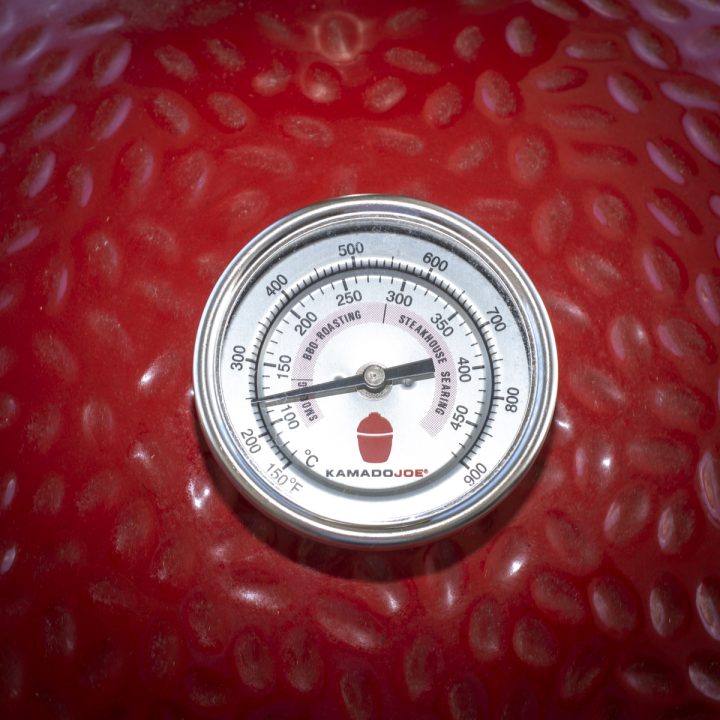
Many factory thermometers drift over time.
Once a year:
- Remove the thermometer
- Clean the probe
- Place it in boiling water
- Adjust it to your local boiling temperature (which varies with elevation)
- Reinstall it snugly
A properly calibrated thermometer makes every cook more predictable.
Watch my video on how to calibrate a Kamado Joe dome thermometer.
Six Cleaning Mistakes to Avoid
1. Using a Wire Bristle Brush
Loose wire bristles can stick to cooking grates and end up in food. Always use a bristle-free coil brush.
2. Using Harsh Chemicals
Never use:
- Oven cleaner
- Degreaser
- Bleach
- Ammonia
Fire, not chemicals, is what cleans the inside of a ceramic grill.
3. Scraping the Ceramic
Don't try to scrape off carbon with metal tools. If it doesn't brush off easily, leave it until the next burn-off.
4. Cooling the Grill Too Quickly
After a high-temperature burn-off:
- Never leave the lid open
- Rapid temperature changes can crack ceramic components
- Allow the grill to cool slowly with the lid closed and the vents gradually reduced
5. Closing the Vents Completely During Storage
Even under a grill cover, moisture accumulates. Leave both vents slightly open so airflow prevents mold growth.
6. Covering the Grill with Plastic
Plastic tarps trap condensation. Choose a breathable grill cover that keeps rain out while allowing moisture to escape.
How Often Should You Clean a Kamado Grill?
After Every Cook
- Brush cooking grates
- Wipe the exterior
- Clean the Kontrol Tower
- Empty the ash
Every 4-6 Weeks
- Remove and wash the Kontrol Tower
- Inspect the gasket
- Check bolts and bands
Every 2-3 Months
- Perform a complete burn-off
- Vacuum the interior
- Deep clean all removable components
- Inspect the firebox
- Calibrate the thermometer if needed
Top Tip
Never cool your Kamado Joe with the lid open after a high-temperature burn-off. Rapid temperature changes can crack ceramic components.
Final Thoughts
A Kamado Joe doesn't require hours of maintenance. What it does require is consistency.
Five minutes after every cook and an occasional deep clean will keep your grill performing the way it did the day you bought it. You'll enjoy cleaner smoke, better airflow, more accurate temperature control, and food that tastes the way it was meant to.
Perhaps most importantly, proper maintenance protects your investment. Ceramic grills are designed to last for decades, and a simple cleaning routine goes a long way toward ensuring your Kamado Joe is still turning out incredible barbecue many years from now.
For a more complete reference covering Kamado Joe maintenance, troubleshooting, temperature control, setup, and common owner problems, see my Kamado Joe Owner's Handbook.
FAQ
Brush the cooking grates, empty the ash, wipe the exterior, and clean the Kontrol Tower after every cook. Perform a complete burn-off and deep cleaning every two to three months, or before storing the grill for an extended period.
No. Never use oven cleaner, degreasers, bleach, ammonia, or other harsh chemicals inside a ceramic grill. Ceramic is porous and can absorb chemical residues that may affect future cooks. A high-temperature burn-off is the recommended cleaning method.
Aim for approximately 600 - 700°F for about one hour. This temperature incinerates grease, food residue, and carbon deposits, leaving behind fine white ash that can be brushed or vacuumed away after the grill has cooled.
Old grease, trapped ash, or mold are the most common causes. Cleaning the grill, removing ash regularly, and performing a burn-off typically eliminate unpleasant odors.
No. Pressure washers can force water into the ceramic and damage components. Use only microfiber cloths, warm water, and mild dish soap on exterior surfaces.
Yes. Leave the bottom vent slightly open and the top vent cracked to promote airflow. This helps prevent trapped moisture and mold growth.
Related
Looking for other recipes like this? Try these:
Leave a Reply