
A good smash burger press seems like it should be a simple tool. It needs a flat surface, enough weight to flatten a ball of ground beef, and a handle. However, after looking at more than a dozen burger presses, I found significant differences in their size, weight, handle design, and overall construction.
Before I began, I had four requirements that I thought would make a good smash burger press. It should have a flat bottom, have no raised lip around the edge, measure at least six inches across, and weigh at least 2 pounds. Then I bought six different burger presses and tested those requirements.
Some of the results were exactly what I expected, while others changed what I thought was important in a burger press. Weight mattered, but not quite for the reason I expected, and handle design mattered much more than I anticipated. I also learned that a burger press can be too small, but it can also be too big.
After testing all six, the Cuisinart Cast Iron Press offered the best combination of size, weight, control, and price. The press I like the most, however, was not the overall winner. The testing explains why those two conclusions are different and what I would look for before buying another press.
Jump to:
- The Six Smash Burger Presses I Tested
- What Should You Look for in a Smash Burger Press?
- How I Tested the Burger Presses
- Does the Diameter of a Smash Burger Press Matter?
- Can a Smash Burger Press Be Too Big?
- Does the Weight of a Smash Burger Press Matter?
- Which Burger Press Had the Best Handle?
- Cast Iron vs. Stainless Steel Burger Presses
- Which Burger Press Had the Best Build Quality?
- What Is the Best Smash Burger Press?
- Smash Burger Press Test Results
- Frequently Asked Questions
- Final Verdict
The Six Smash Burger Presses I Tested
I tested six round burger presses ranging from less than a pound to almost 4 pounds. The group included cast iron and stainless steel presses, wood and metal handles, and pressing surfaces ranging from a compact 5.5 inches to 8 inches in diameter. Those differences gave me a useful range for testing whether my original buying requirements actually mattered.
- Burger Smasher
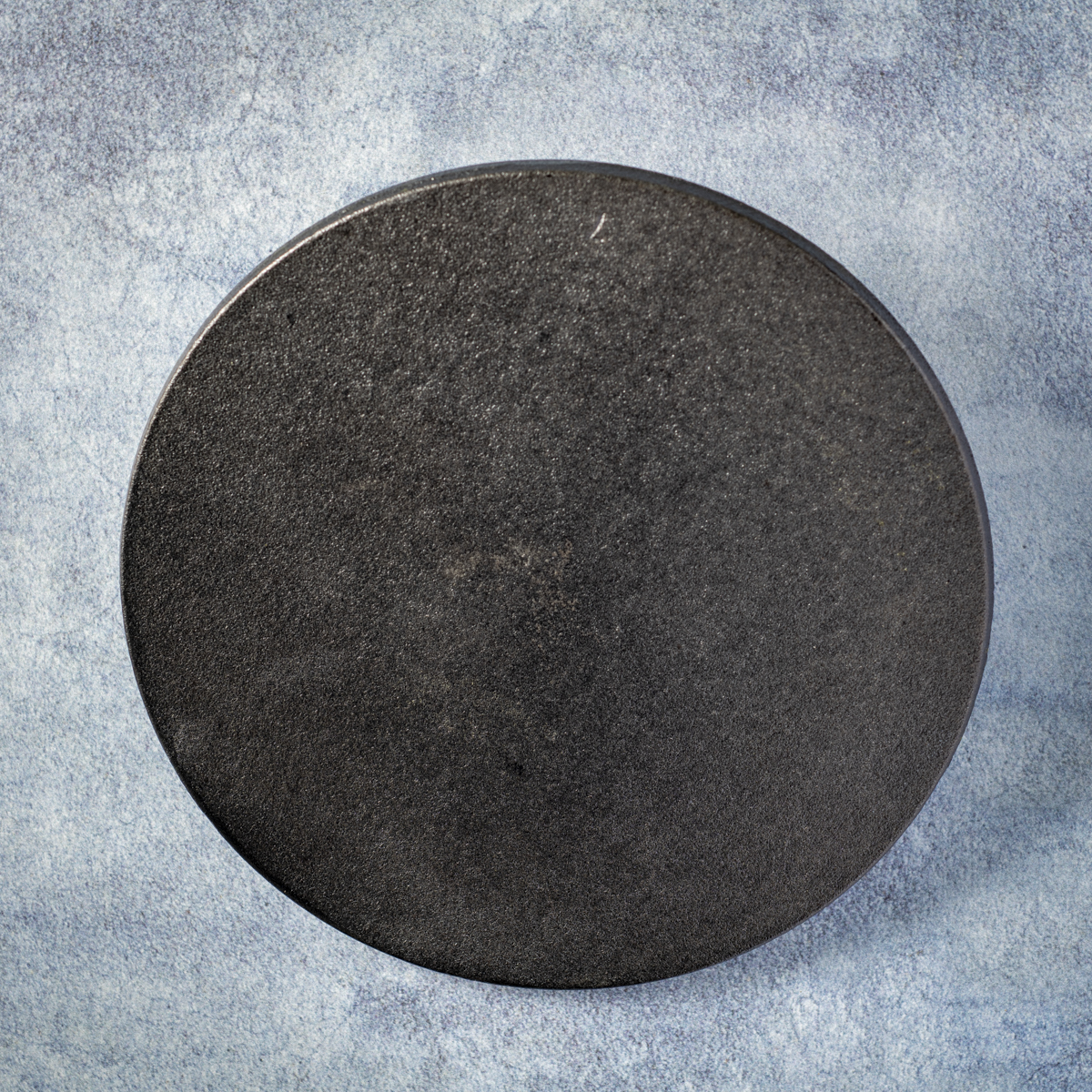
- Cuisinart Cast Iron Press
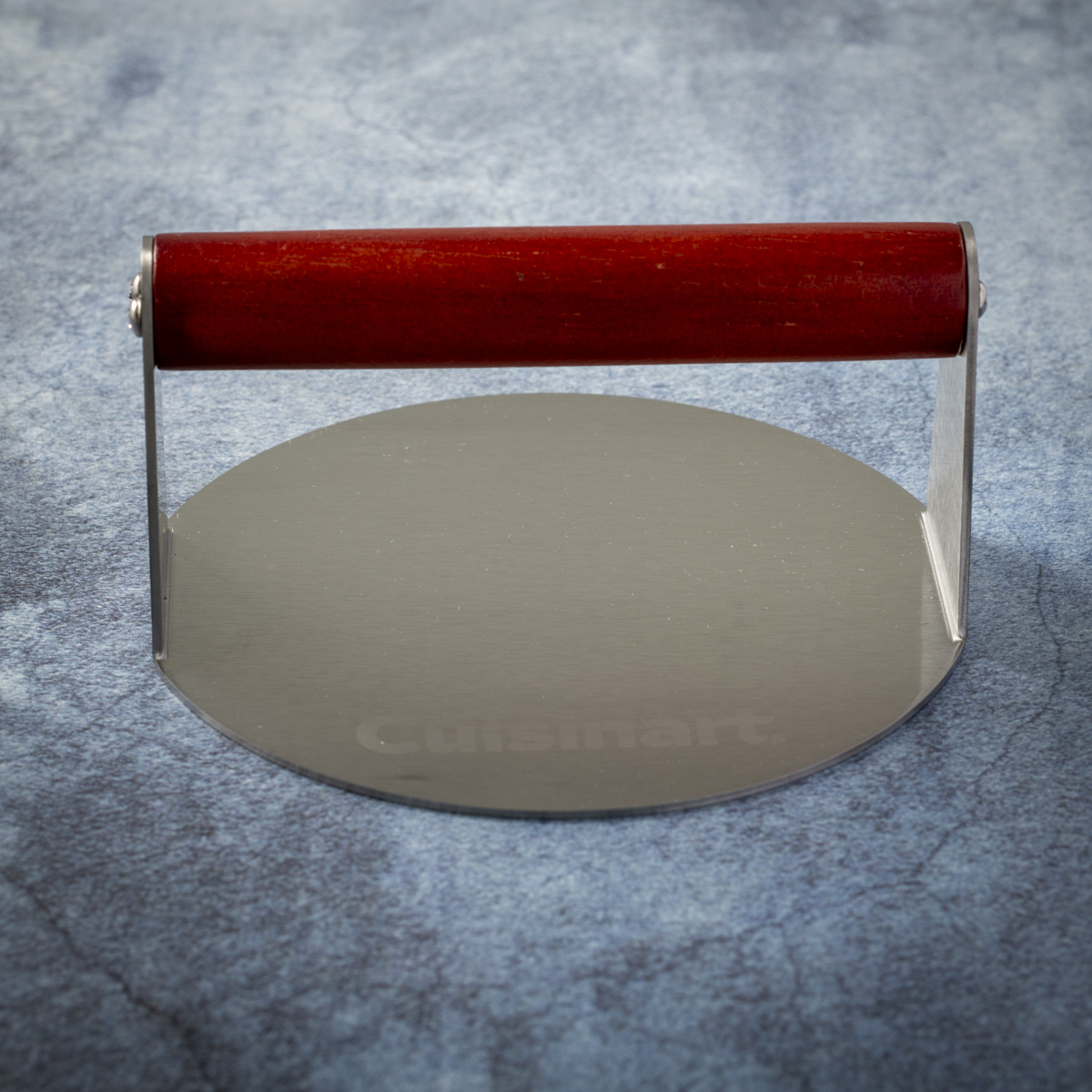
- Cuisinart Stainless Steel Press
- Lodge Cast Iron Round Grill Press
- Blackstone Stainless Steel Press
- Fredericksburg Cast Iron Press
I purchased all six presses at full retail. None of the manufacturers had any input into the test. The rankings and recommendations are based entirely on my experience using them.
What Should You Look for in a Smash Burger Press?
A good smash burger press should have a flat bottom with no raised lip, enough surface area to cover the burger, enough weight to remain stable while pressing, and a handle that gives you good control. The flat bottom, size, and weight were part of my original buying criteria. Handle comfort emerged as an additional priority once I began comparing the presses side by side.
A Flat Bottom With No Lip
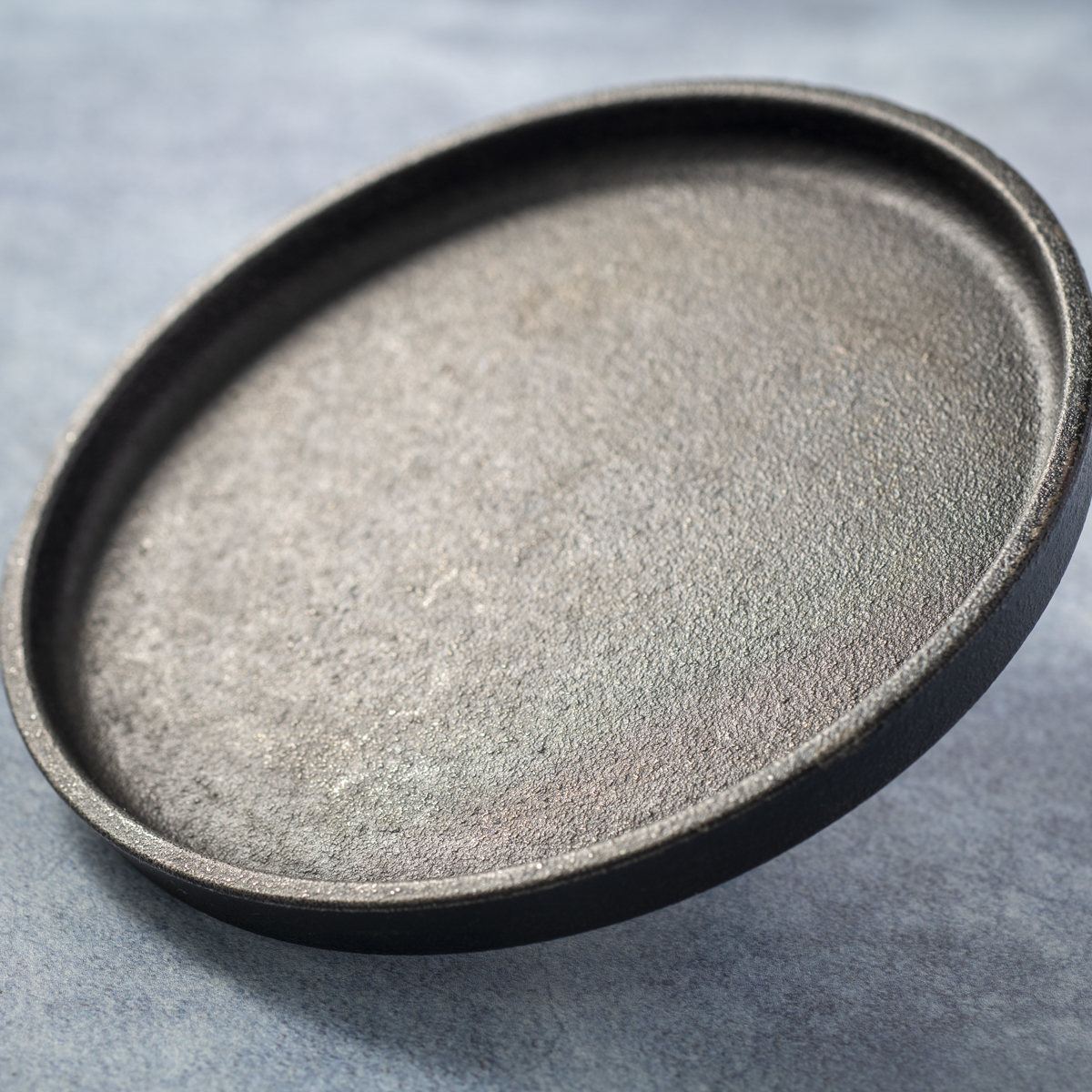
The bottom of the press should be completely flat so the entire surface can remain in contact with the meat. If the goal is a thin, evenly pressed smash burger, there is no advantage to ridges or other patterns on the bottom. A flat pressing surface lets you apply force evenly and see the effect of the press itself.
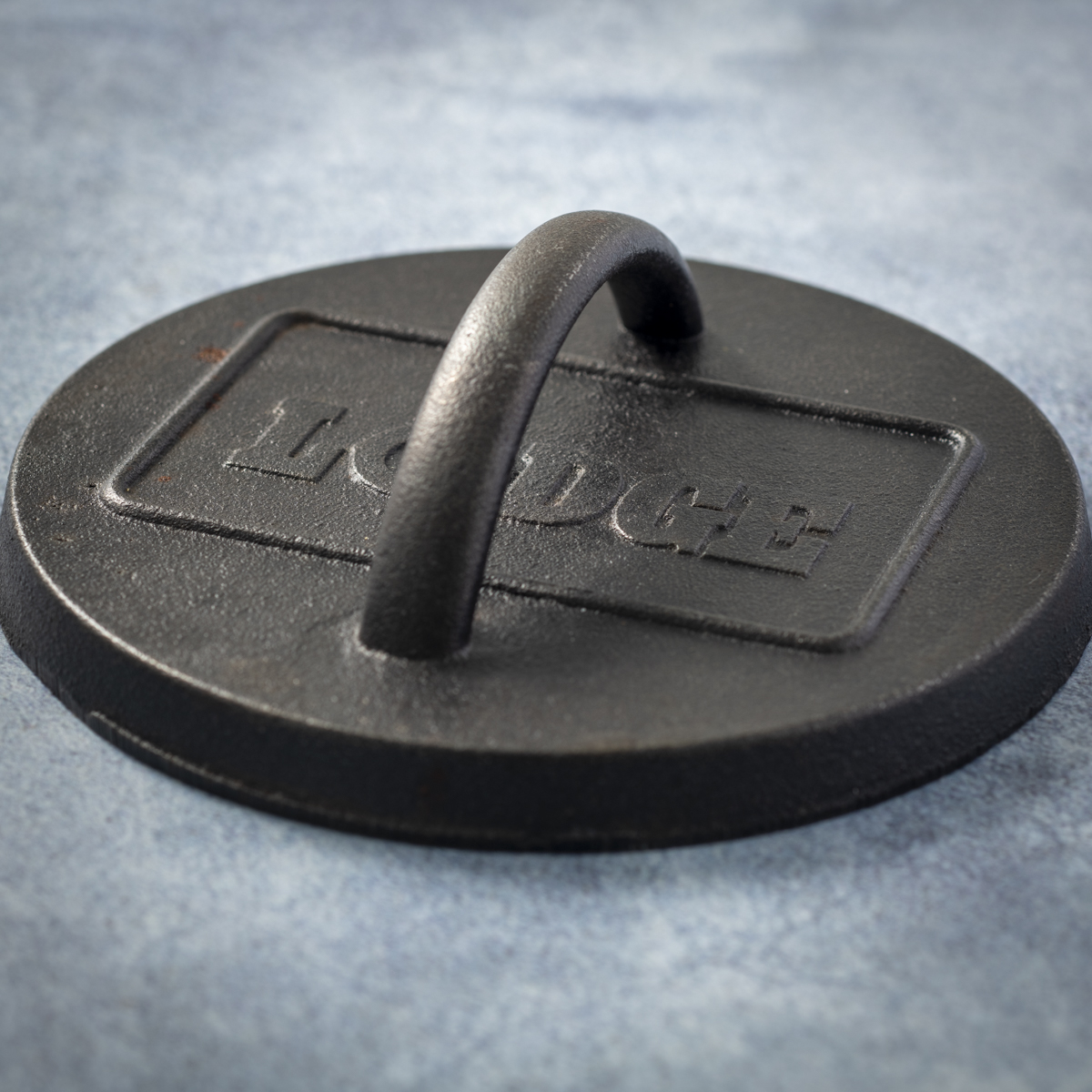
I also excluded presses with a raised lip around the outside edge. I already own a Lodge press with a lip, and it works well for some things, but the lip limits how thin you can press a burger. For a true smash burger, I want to control the thickness myself, so all six presses in this test had flat bottoms with no lip.
At Least Six Inches in Diameter
I initially thought a smash burger press should measure at least six inches across. A four-ounce ball of beef spreads considerably when smashed, so the face needs to remain over the meat throughout the press. If meat extends beyond the edge, the press cannot flatten the entire patty evenly in one motion.
One of the six presses, the Burger Smasher, measured only 5.5 inches across. I included it because I wanted to find out whether the extra half-inch really mattered. Testing it with a four-ounce ball of beef confirmed that it did.
At Least 2 Pounds
My assumption was that a press weighing at least 2 pounds would require less effort and feel more stable. You are still applying most of the force with your hand, so I did not expect the weight of the press alone to flatten the burger. I wanted to learn whether the added mass would make the pressing motion easier or produce a more even patty.
What I underestimated was how much weight would affect control. The two lightest presses were more difficult to keep level, and that difference showed up clearly in the patties. Weight mattered less as a source of downward force than as a way to keep the press stable while I supplied that force.
A Comfortable Handle
Handle comfort was not one of my original four rules beyond making sure the press was usable. After testing six presses, I would move it much higher on the list of priorities. The handle affects how securely you can grip the press, keep it level, and apply force straight down.
You only hold a burger press for a few seconds at a time, but an awkward handle can make it difficult to apply force evenly. When you are cooking an entire batch of burgers, a handle that is too small, too narrow, or difficult to grip becomes even more noticeable. A comfortable handle is therefore more than a convenience because it also contributes to control.
How I Tested the Burger Presses
I tested each press using an identical four-ounce ball of 80/20 ground beef and approximately the same total pressing force. Four ounces is a common size for smash burgers, and it was large enough to reveal whether the smaller presses could completely cover the meat. Using the same amount of beef for every press also made the finished patties easier to compare.
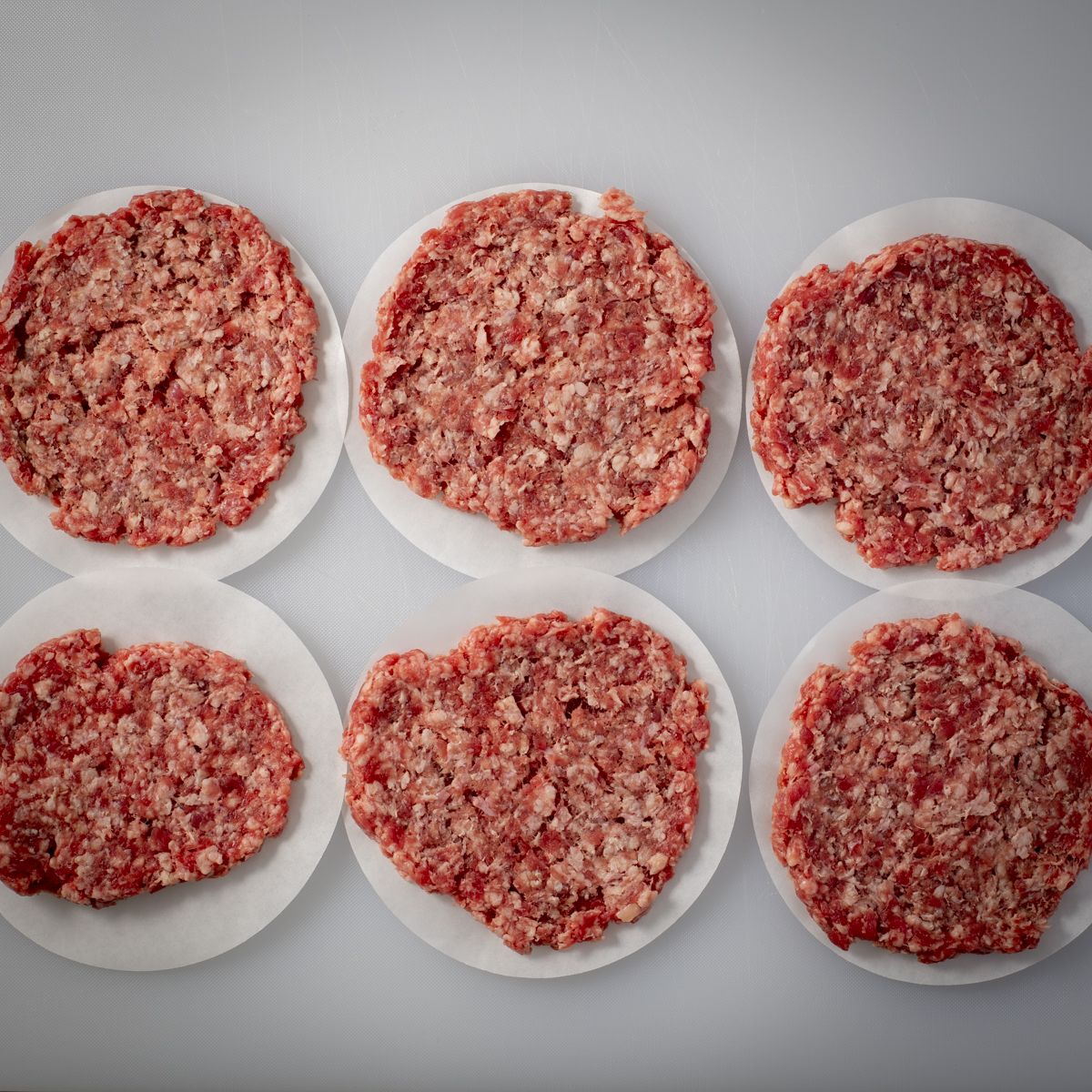
I ground all of the beef from the same packer brisket and formed six loose four-ounce balls. The meat remained cold until each test, and I placed each ball between identical sheets of 6-inch round parchment paper on a smooth, rigid cutting board. I always use 6-inch round parchment sheets when making smash burgers because they keep the face of the press clean, so I used the same technique here.
Before starting the test, I practiced pressing on a postage scale until I could consistently apply about 25 pounds of total force. That 25 pounds included the weight of the press plus the force I applied with my hand. For every test, I pressed straight down in one continuous motion, stopped when the meat stopped spreading, and did not twist or rock the press. If a patty came out noticeably lopsided, I repeated the test with a second four-ounce ball of beef.
Why I Tested on a Cutting Board First
The primary test was performed on a cutting board because I wanted to isolate how effectively each press flattened the same amount of meat. A hot griddle introduces additional variables, including temperature, timing, and hot spots. The controlled surface made it easier to attribute differences in the patties to the presses rather than the cooking environment.
The cutting board test also allowed me to compare the finished patties side by side and see whether the size, weight, or design of a press affected the result. After completing that controlled test, I used all six presses on my Kamado Joe Karbon Steel Griddle at 450°F. The griddle test helped identify practical problems that might only become apparent while cooking, including poor balance, an awkward grip, and interference with nearby burgers.
Does the Diameter of a Smash Burger Press Matter?
Yes, the diameter matters. For the four-ounce burgers in my test, six inches proved to be the minimum practical size. The 5.5-inch Burger Smasher was too small to completely cover the meat as it spread, and meat squeezed out around its edge during both the first test and a repeat test.
That does not make a 5.5-inch press unusable. All six presses should work with smaller two- or three-ounce smash burgers, but the smaller pressing surface becomes a limitation once you move to four ounces. The two 6-inch presses, the Cuisinart Stainless Steel and Fredericksburg Cast Iron, were just large enough when carefully centered over the ball, while every press larger than six inches had plenty of room.
Can a Smash Burger Press Be Too Big?
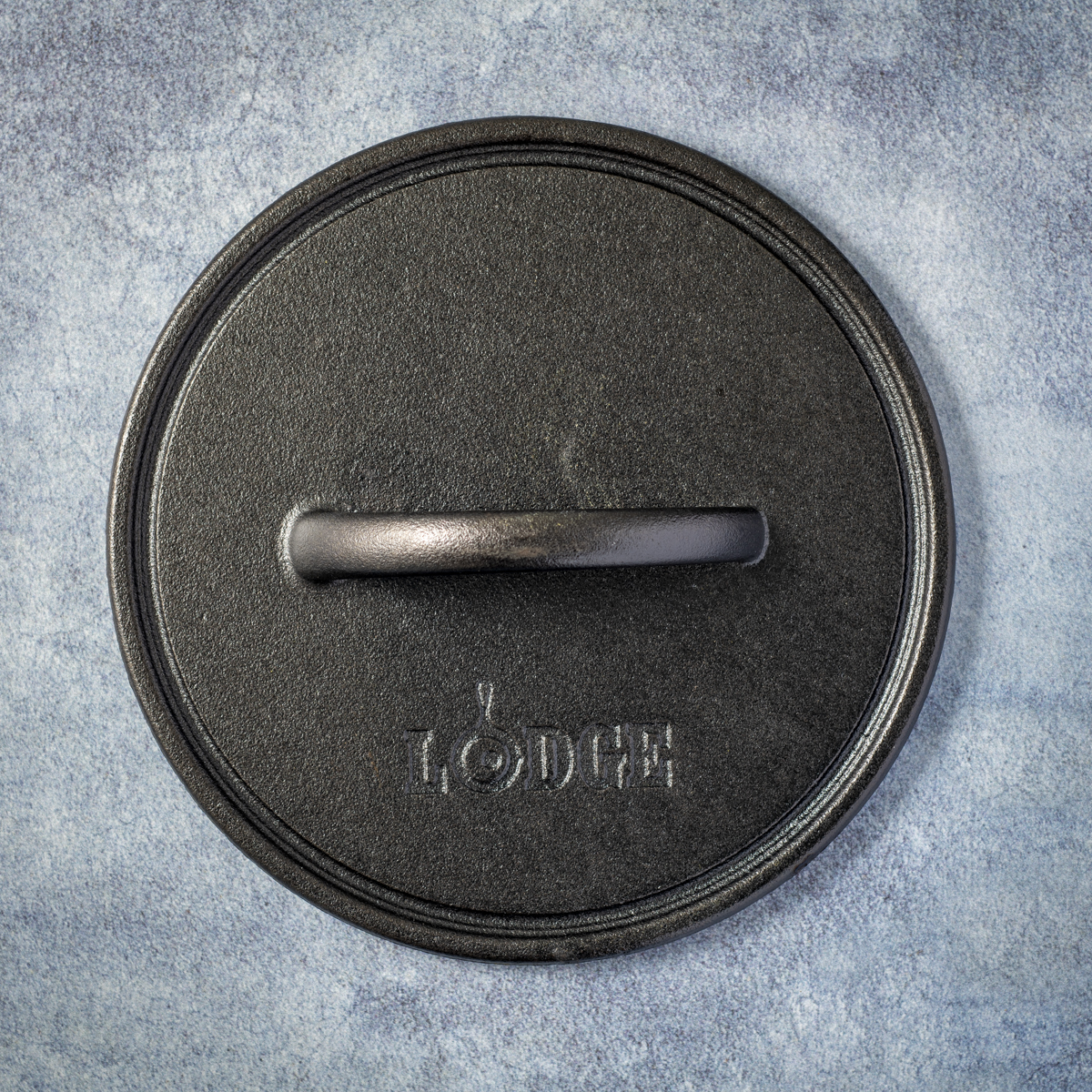
Surprisingly, a burger press can be too large. The 8-inch Lodge Cast Iron Round Grill Press made an excellent, even patty, but its 8-inch diameter became a problem when I moved to the griddle. Its face partially smashed burgers sitting next to the one I intended to press, which matters when you are trying to fill the griddle and cook several burgers at once.
The Lodge would be less troublesome if you normally cook one or two burgers with plenty of space between them. For my cooking, however, I would rather have a press slightly larger than six inches than one substantially larger. The goal is enough surface area to cover the burger without taking up unnecessary room or interfering with the food around it.
Does the Weight of a Smash Burger Press Matter?
Weight matters primarily because a heavier press is easier to keep stable and level. I expected weight to reduce the effort required to smash the burger, but stability turned out to be the more important difference. The extra mass helped resist rocking as I pressed down.
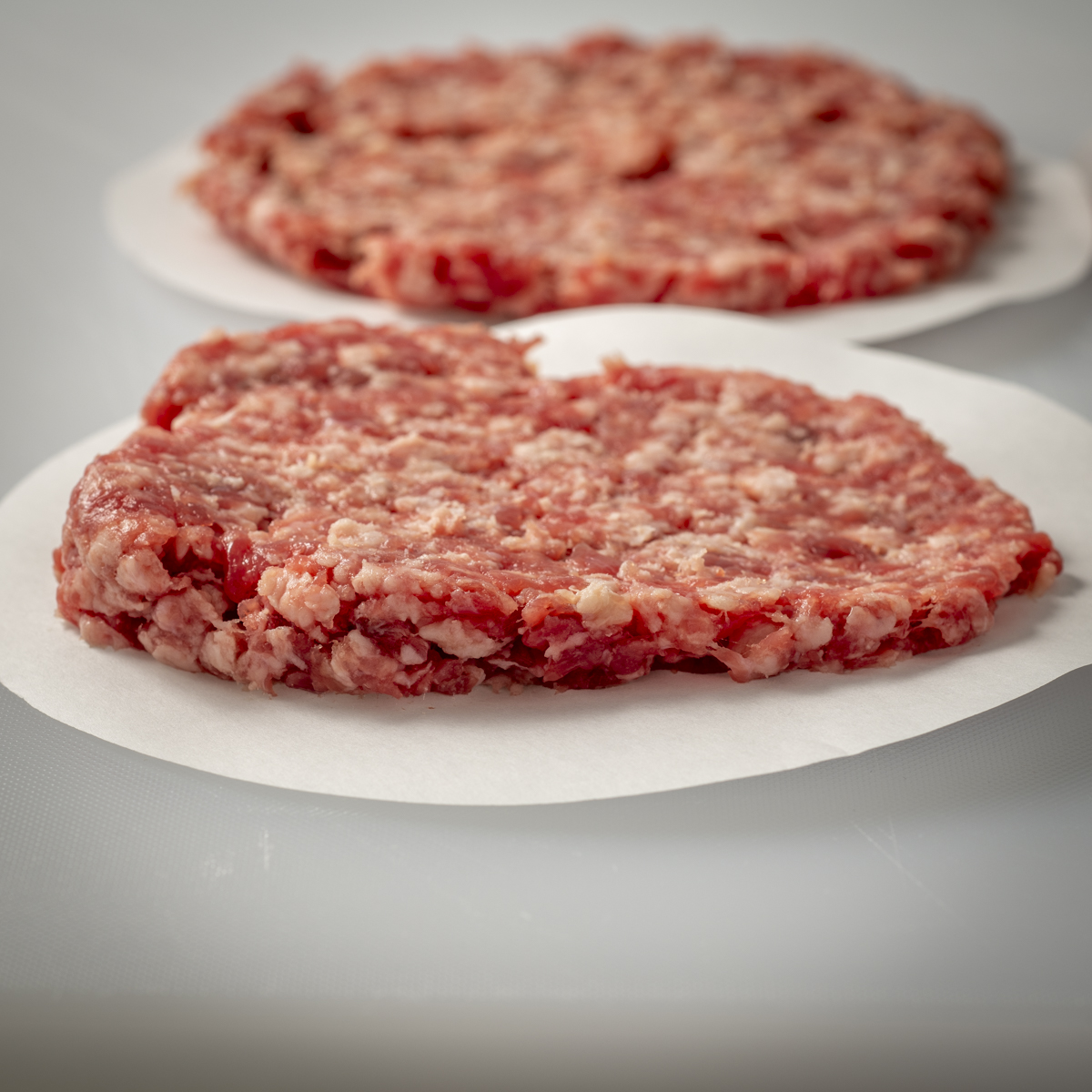
The Cuisinart Stainless Steel and Blackstone Stainless Steel presses were the two lightest models I tested at 15 ounces each. Both rocked slightly as I applied pressure and produced patties that were noticeably thicker on one side and thinner on the other. I repeated the test with both presses and got the same result, while the heavier presses remained more stable and produced more even patties.
The Blackstone was particularly difficult to keep level because its wide, flat steel handle was awkward for me to grip. That combination of low weight and an uncomfortable handle made it the hardest press in the group for me to control. You still have to supply the force with any of these presses, but based on this test, I would look for one weighing about 2 pounds or more because the added mass helps it stay level.
Which Burger Press Had the Best Handle?
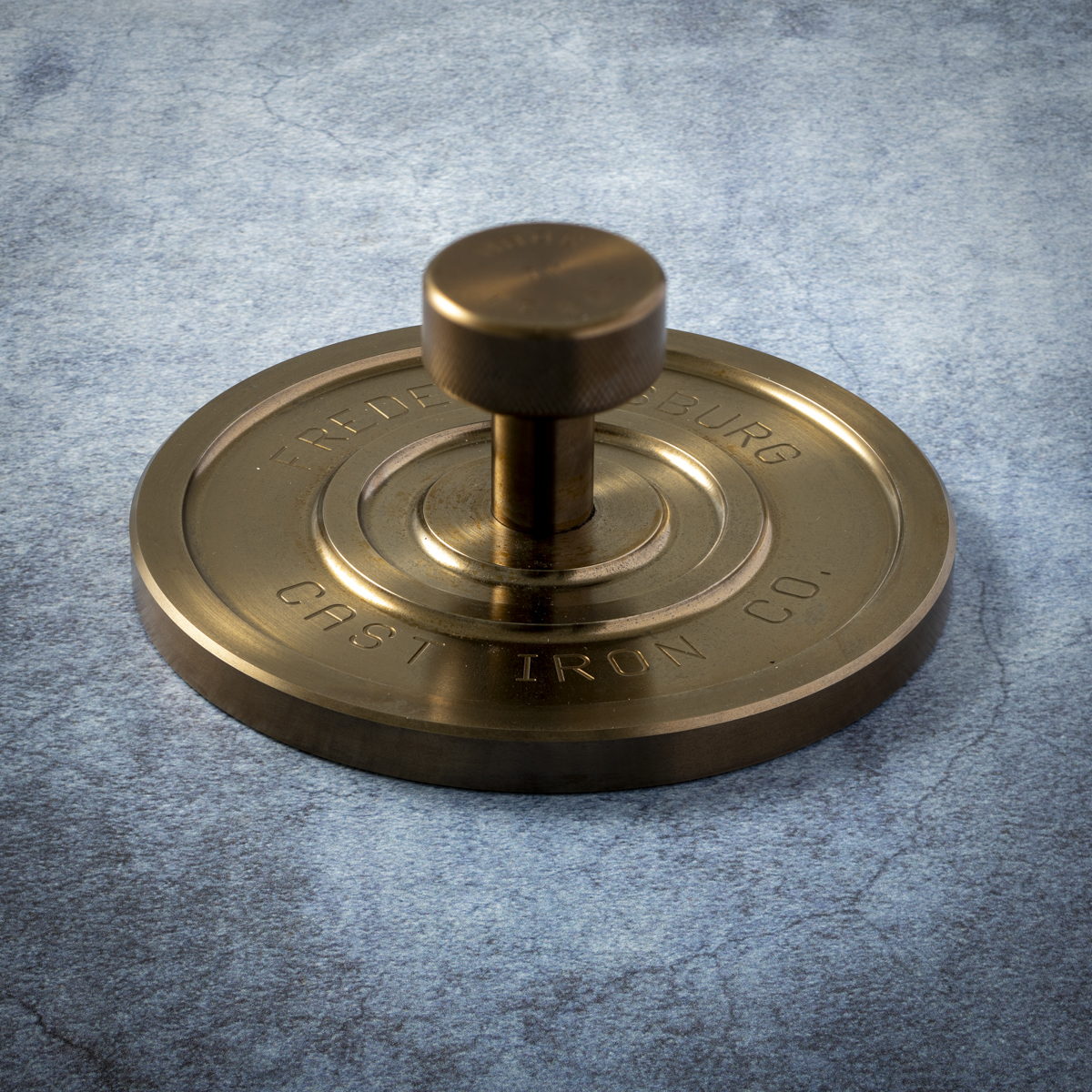
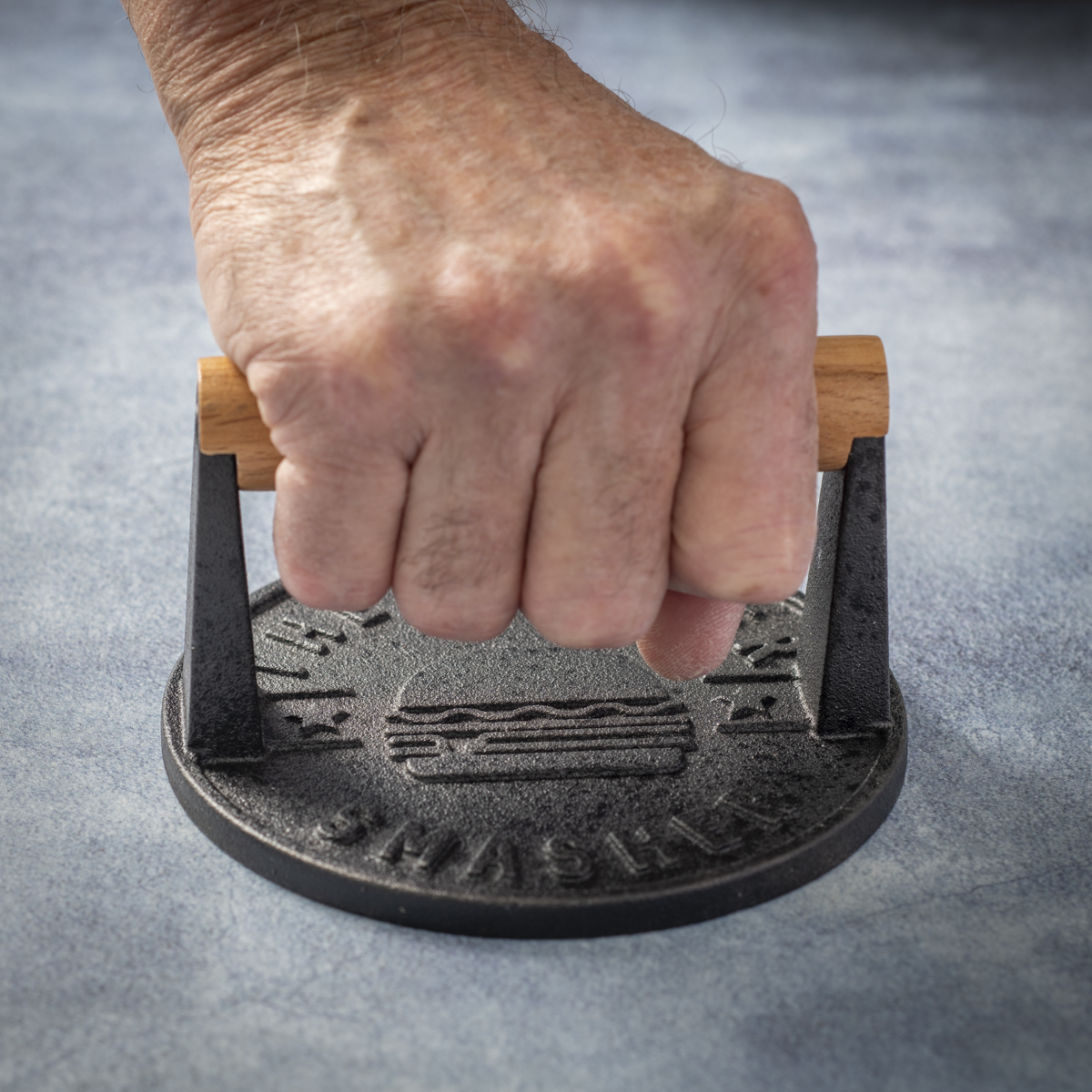
The Fredericksburg Cast Iron Press had the best handle for my hand. Instead of a conventional horizontal handle, it uses a round knob that provided an excellent grip, plenty of knuckle clearance, and very good control over the press. Handle preference will depend somewhat on hand size, but the differences among these six presses were substantial.
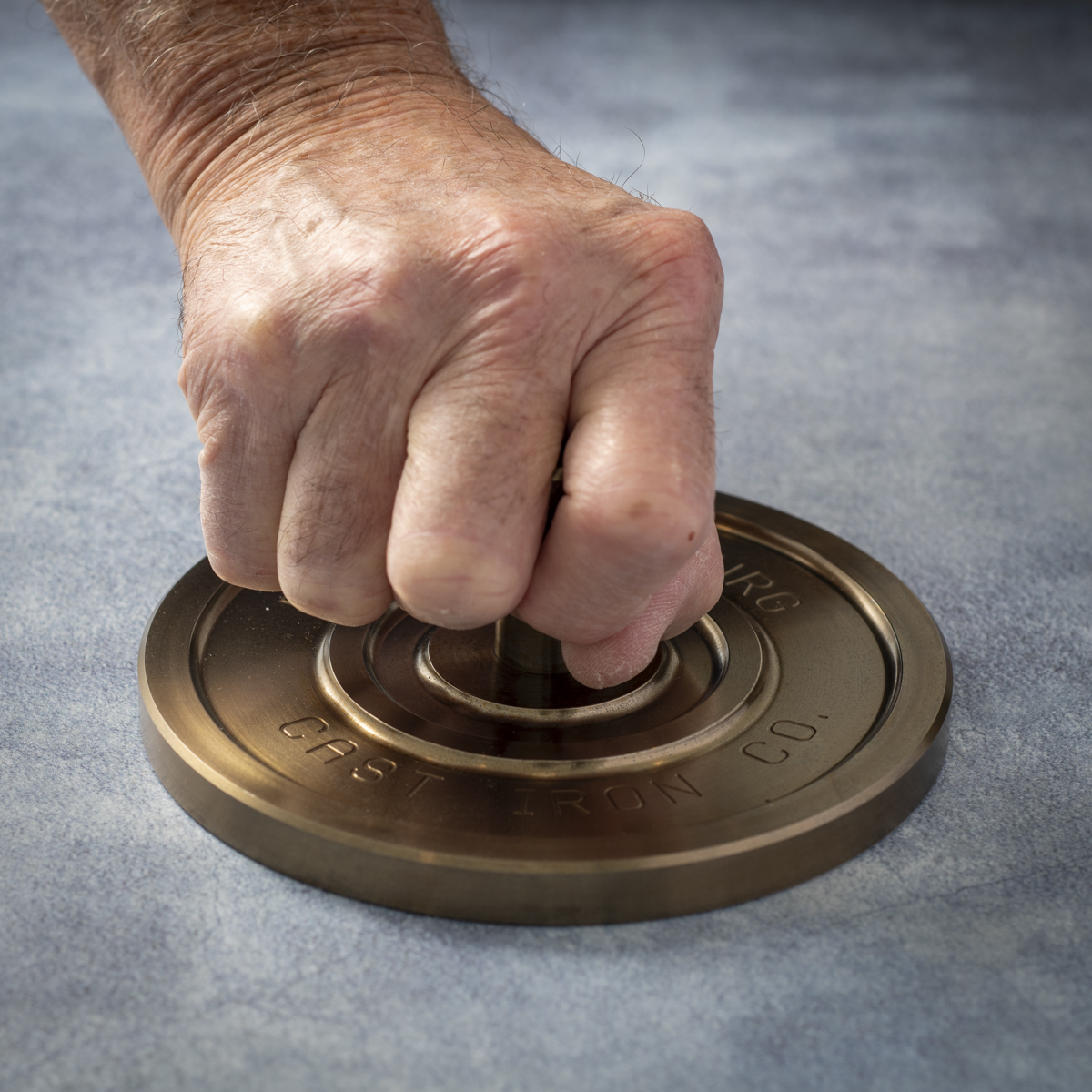
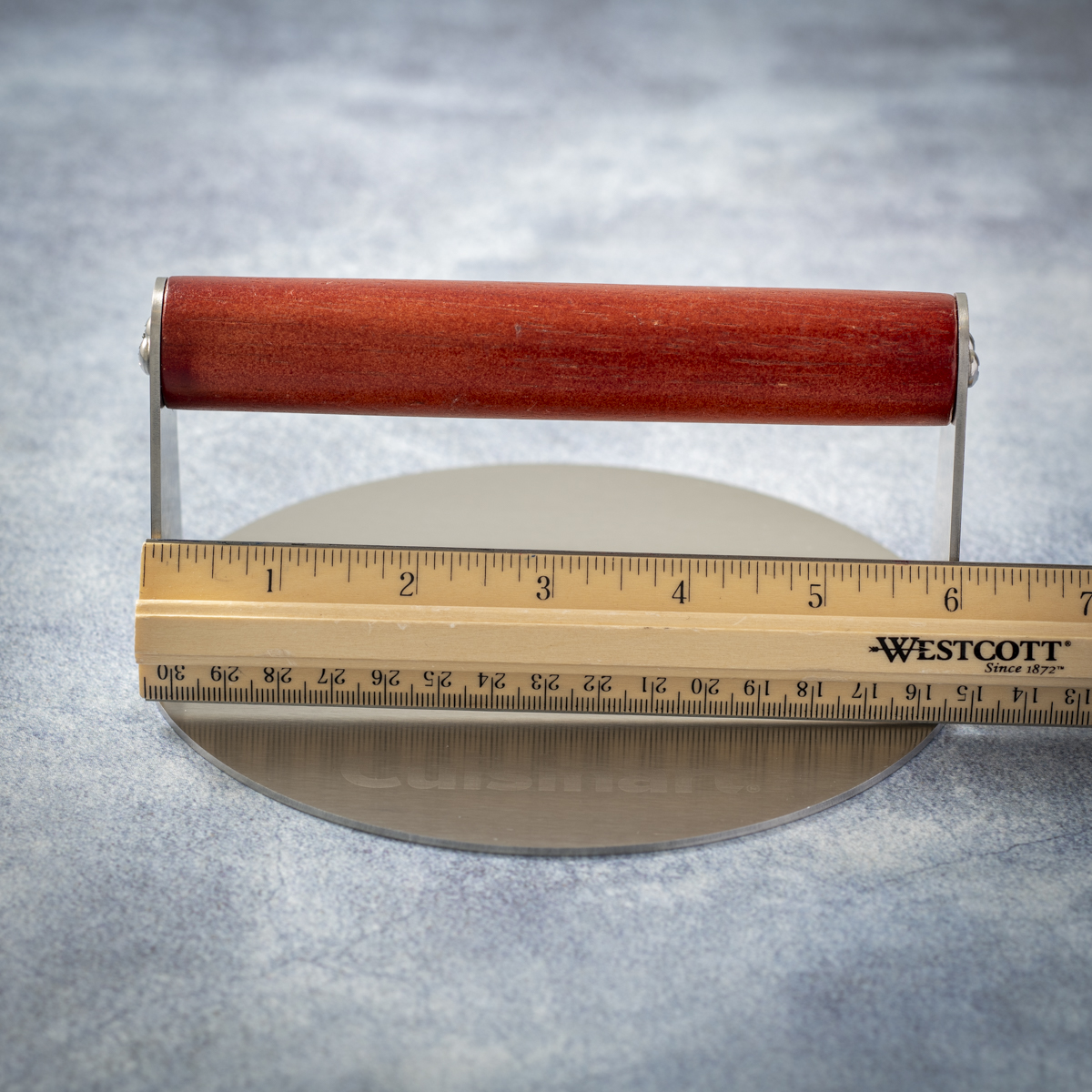
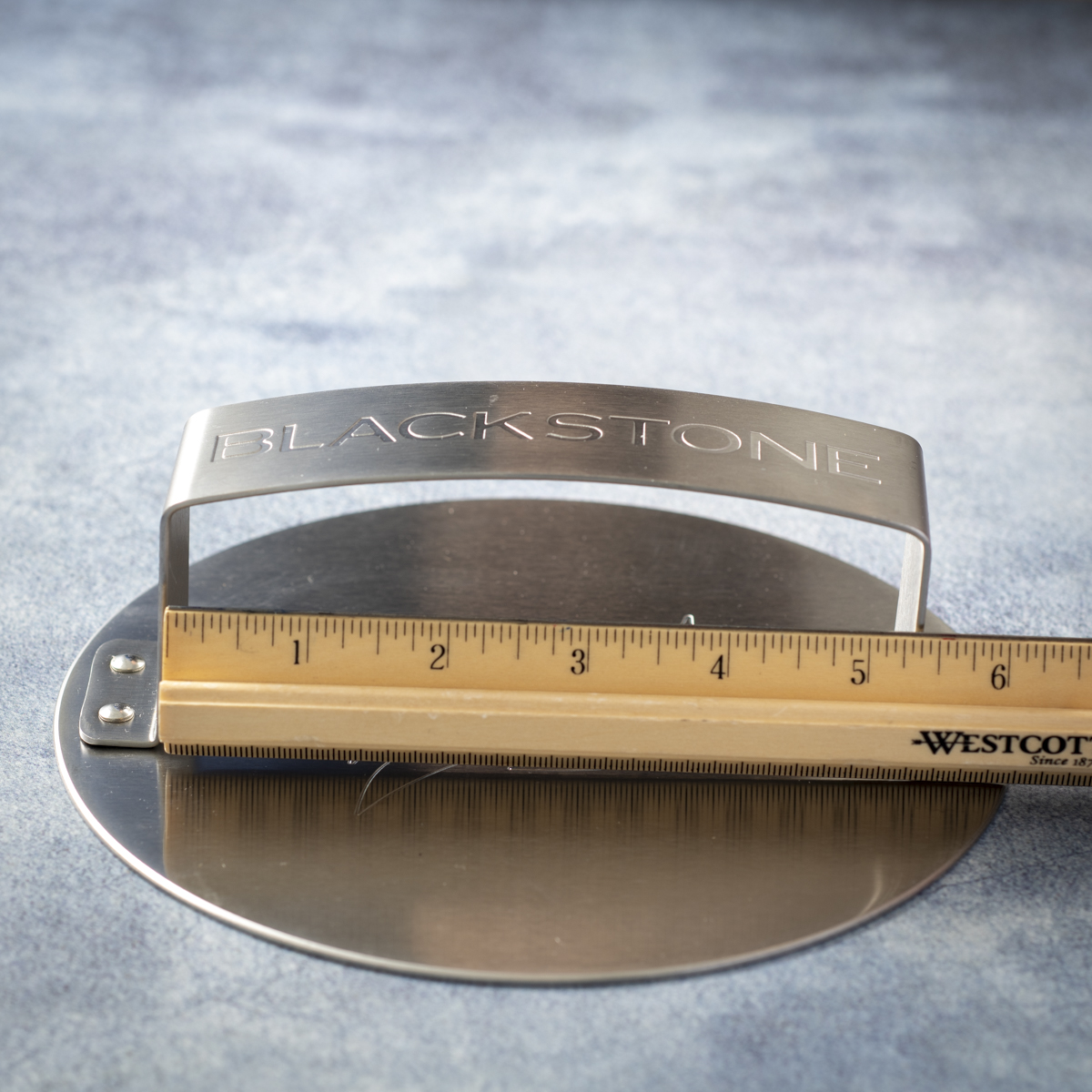
Among the conventional handles, the Cuisinart Stainless Steel and Blackstone provided the most knuckle clearance. The Cuisinart Stainless Steel also had almost six inches of inside clearance from side to side, which made the handle feel much more open. Clearance alone did not make the Blackstone comfortable, however, because its handle was made from a wide piece of flat steel that I found awkward to grip and difficult to control.
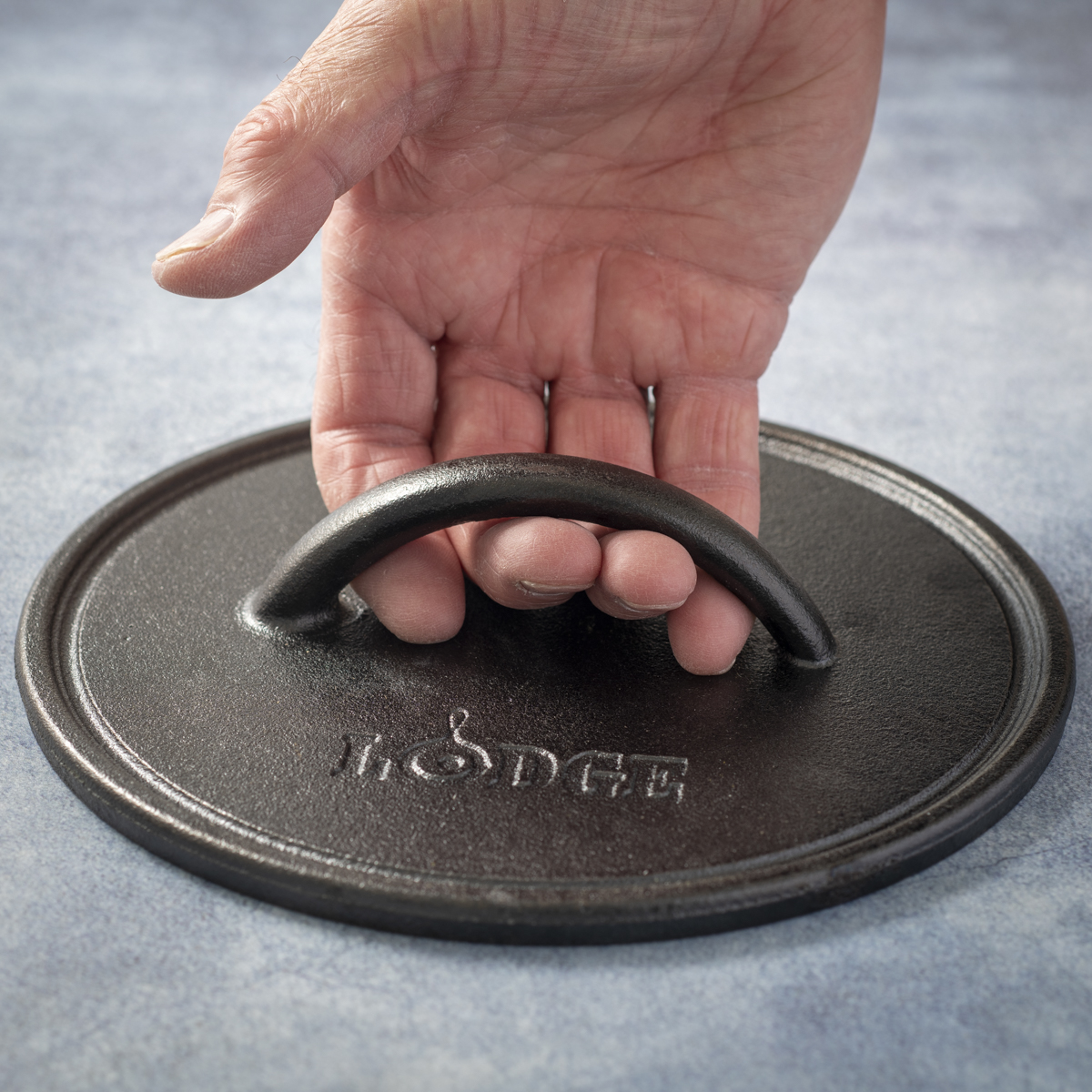
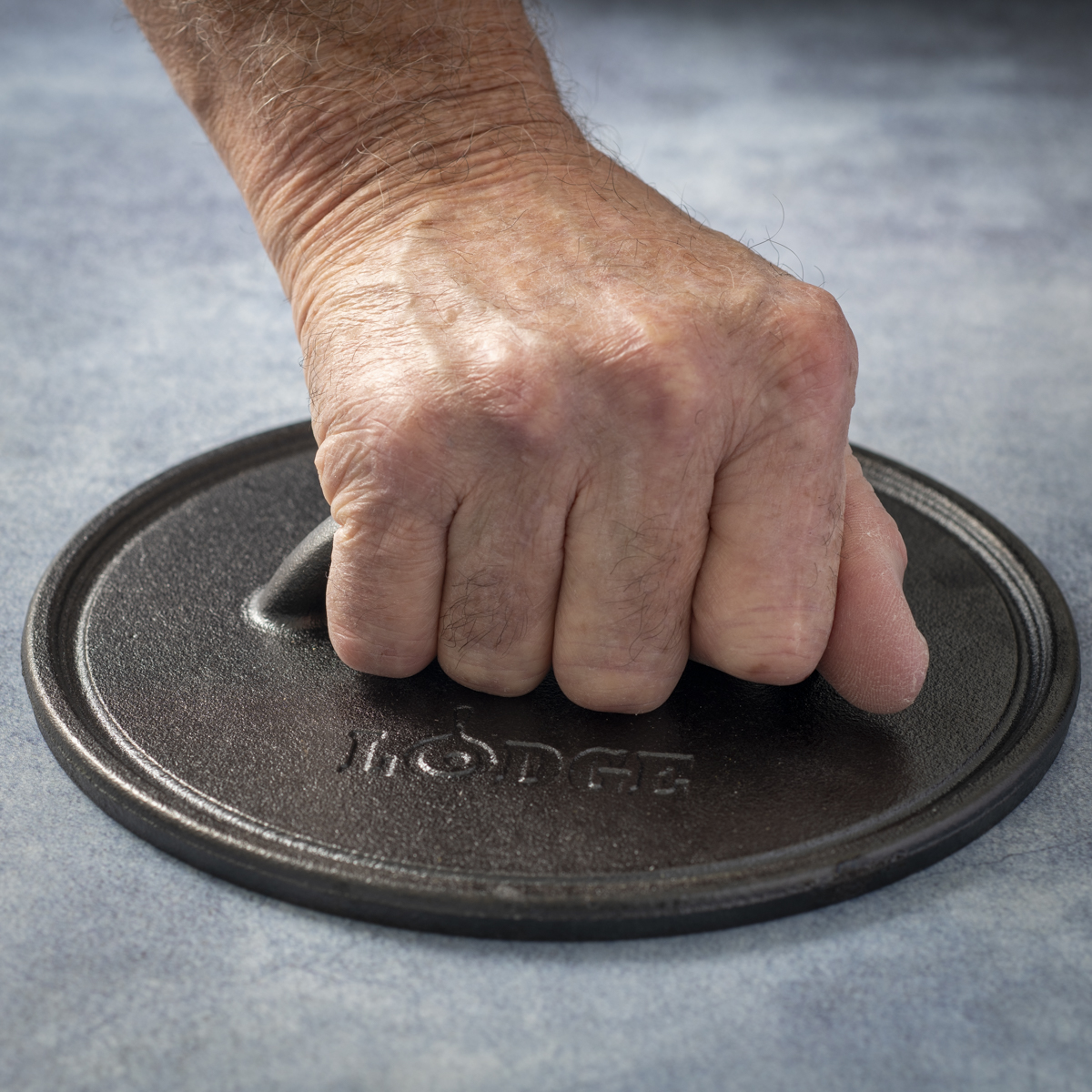
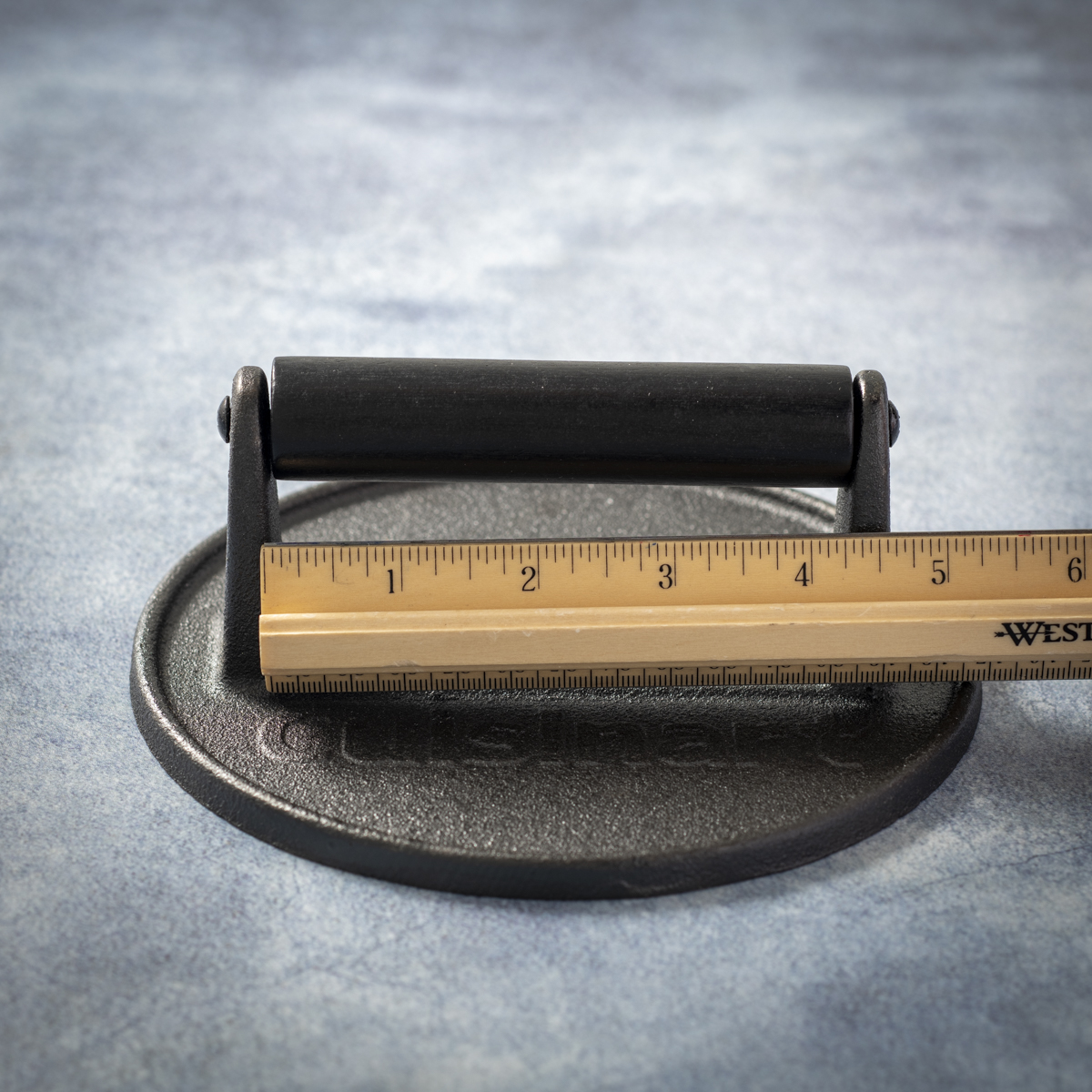
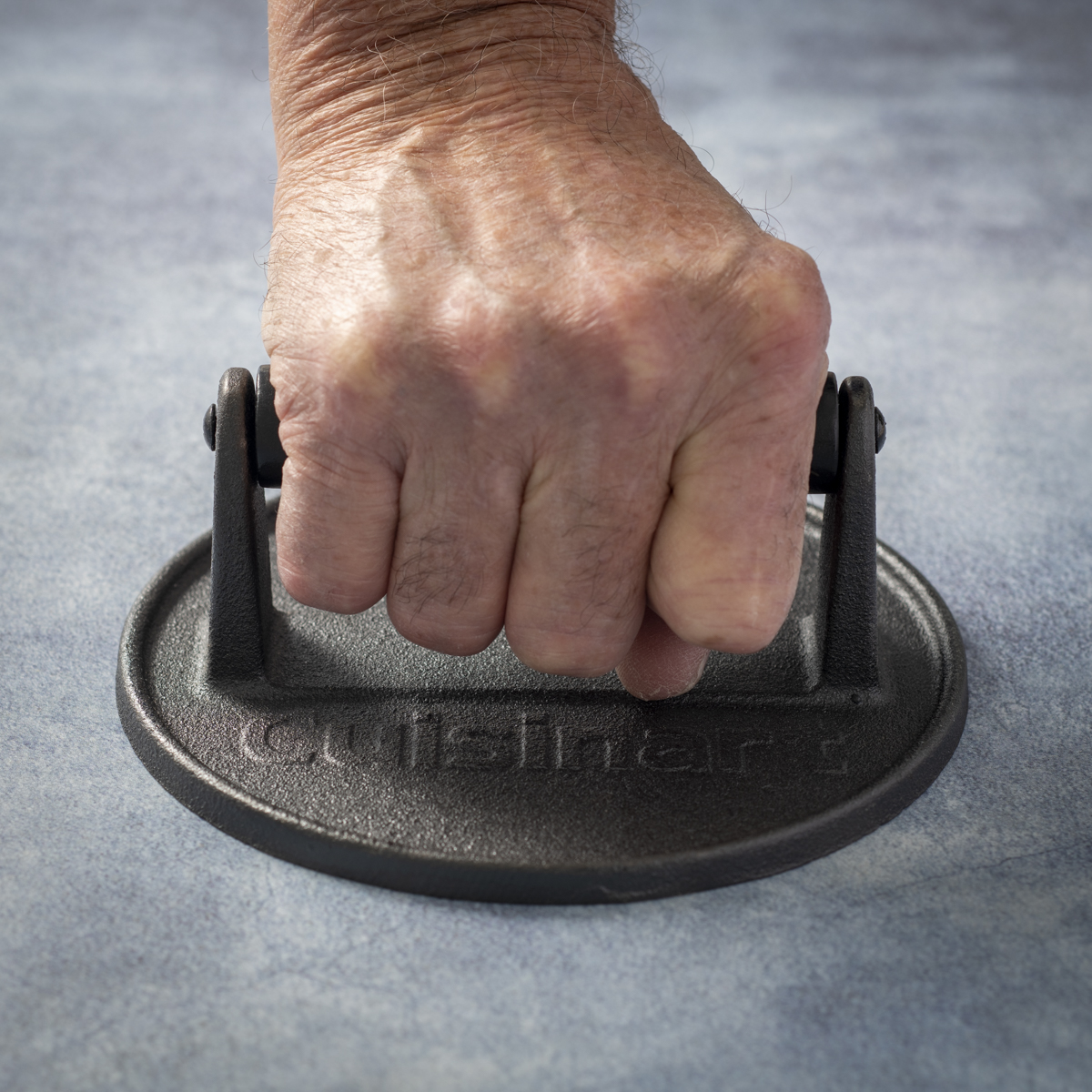
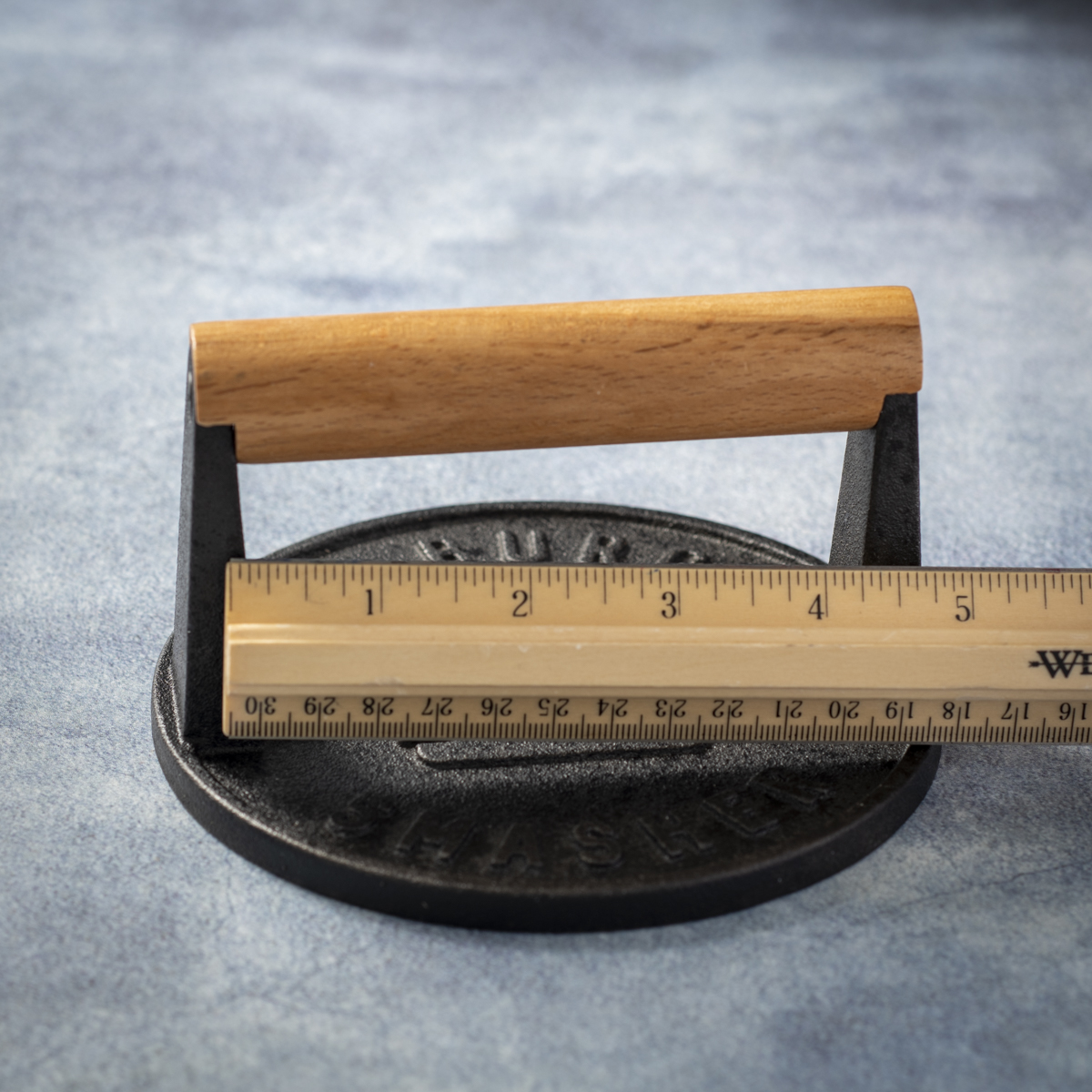
The Lodge was at the other extreme. Its small cast-iron loop was difficult for me to get my fingers underneath and provided almost no knuckle clearance, making it my least favorite handle in the test. The Cuisinart Cast Iron and Burger Smasher each had about 4.25 inches of inside handle clearance and were usable, although I would have preferred a little more room between my hand and the cast iron.
I did not perform a separate heat-soak test on the handles. A burger press is normally in contact with the meat for less than five seconds, so prolonged handle heating was not part of this comparison. My handle rankings reflect grip, clearance, and control during normal use.
Cast Iron vs. Stainless Steel Burger Presses
The heavier cast-iron presses performed better than the two lightweight stainless steel presses in this test. The difference appeared to come from weight and stability rather than the materials alone. Both 15-ounce stainless steel presses produced uneven patties, while the heavier cast-iron presses remained more level and produced more consistent results.
There are still reasons someone might prefer stainless steel. It is easy to maintain, and the handles are generally wider inside. The Cuisinart Stainless Steel Press had one of the roomiest conventional handles in the group. If you normally make smaller burgers or use a different pressing technique, the lower weight may also be less important, but for the four-ounce burgers and pressing method I used, I preferred the stability of the heavier cast-iron presses.
Which Burger Press Had the Best Build Quality?
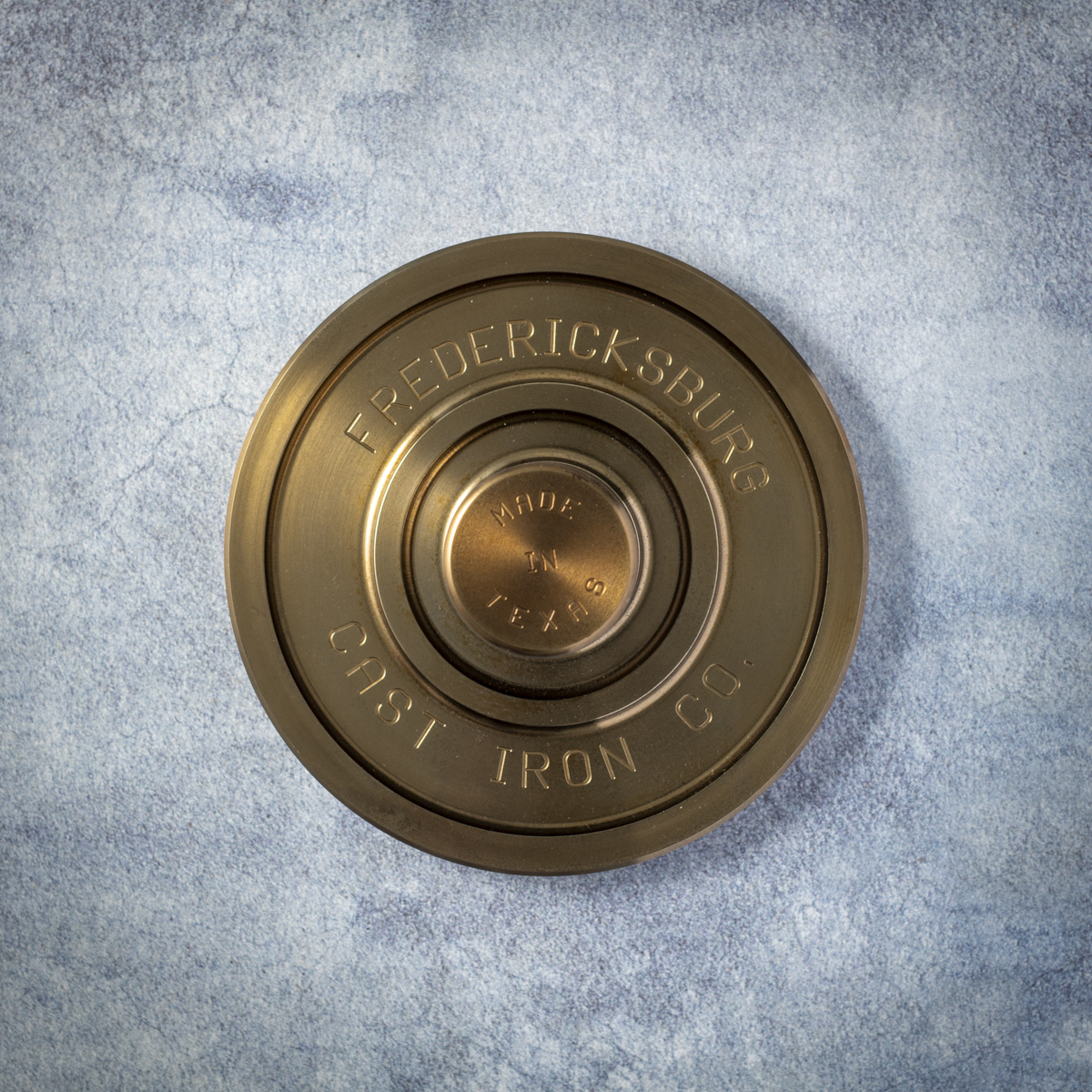
The Fredericksburg Cast Iron Press had the best overall construction of the six presses I tested. Its casting was the heaviest and felt the most substantial in the group. The quality was apparent both in its overall feel and in the control it provided while pressing.
I inspected the cast iron, stainless steel, handles, attachment points, screws, welds, surface finishes, and any rough or sharp edges before and after testing. All six presses were reasonably well made, although there were differences in construction. For example, the Blackstone Stainless Steel Press used a riveted handle, while the handle flange on the Cuisinart Stainless Steel Press was part of the press itself.
None of the presses developed a construction problem during my testing, so build quality alone would not determine which one I bought. The differences in size, weight, and handle design had a much greater effect on how the presses performed. Fredericksburg earned the top build-quality ranking, but that advantage had to be considered along with its higher price.
What Is the Best Smash Burger Press?
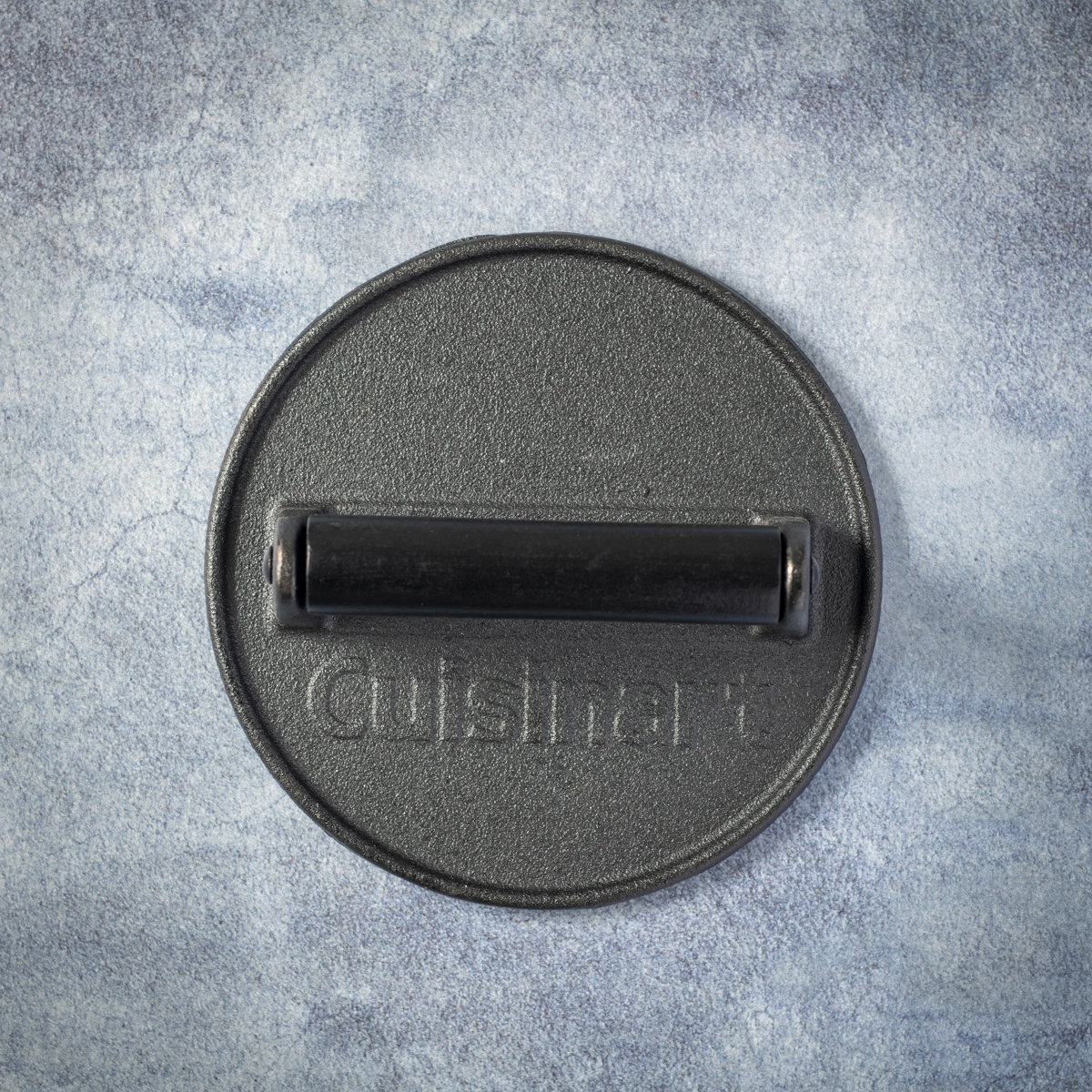
The Cuisinart Cast Iron Press was the best overall choice in my test because it offered the strongest combination of pressing surface, weight, control, and price. It did not win every individual category, but it avoided the major compromises I found with several of the other presses. If I were recommending one press based on overall performance and value, this is the one I would choose.
The Fredericksburg Cast Iron Press was my personal favorite to use. It stayed level, gave me excellent control, had the best overall build quality, and its round-knob handle was easily my favorite handle in the group. It was also the most expensive burger press I tested, so I would choose the Fredericksburg if price were not a consideration and the Cuisinart Cast Iron for the best balance of performance and value.
Smash Burger Press Test Results
The table below summarizes the measurements and rankings for all six presses. For handle comfort, flat-burger performance, and overall ranking, 1 is best and 6 is lowest. In the Price Rank column, 1 represents the least expensive press and 6 represents the most expensive. The overall ranking considers how size, weight, handle design, performance, and price worked together rather than treating any single category as decisive.
| Press | Width (in) | Weight (lb) | Handle Comfort | Patty Evenness | Price Rank | Overall Ranking |
| Cuisinart Cast Iron | 6.5 | 2.0 | 4 | 4 | 5 | 1 |
| Fredericksburg Cast Iron | 6.0 | 3.96 | 1 | 2 | 6 | 2 |
| Burger Smasher | 5.5 | 2.25 | 3 | 3 | 3 | 3 |
| Lodge 8-inch Press | 8.0 | 3.25 | 6 | 1 | 2 | 4 |
| Cuisinart Stainless Steel | 6.0 | 0.94 | 2 | 6 | 4 | 5 |
| Blackstone Stainless Steel | 7.0 | 0.94 | 5 | 5 | 1 | 6 |
Frequently Asked Questions
A burger press should be at least six inches in diameter for a four-ounce smash burger. The 5.5-inch press in my test allowed meat to extend beyond the edge, while both 6-inch presses covered the burger when carefully centered. A smaller press should still work for two or three-ounce patties.
Based on my testing, I would look for a burger press weighing about 2 pounds or more. The additional weight does not eliminate the need to push down, but it makes the press easier to keep stable and level. Both 15-ounce presses rocked during testing and produced patties that were thicker on one side.
The cast-iron presses performed better in this test, but weight and stability appeared to matter more than the material itself. Both stainless steel presses weighed only 15 ounces and were more difficult to keep level. A heavier stainless steel press could perform differently, so I would compare the press's weight and handle design before choosing based on material alone.
A smash burger press should not have a raised lip if you want to control how thin the patty becomes. The lip establishes a minimum thickness and can stop the pressing surface before the burger is as thin as you want it. I excluded lip-style presses from this comparison for that reason.
Parchment paper is not required, but I use it every time I make smash burgers. It prevents the meat from sticking to the press and keeps the pressing surface clean. I used identical 6-inch round sheets of parchment with all six presses so it would not affect the comparison.
Final Verdict
Testing six burger presses confirmed most of my original buying criteria, but it changed my understanding of why they matter. Six inches really was the minimum practical diameter for the four-ounce burgers I make, and the flat, lip-free surface gave me full control over thickness. Weight mattered primarily because it kept the press stable, not because a heavy press could do the work without firm downward pressure.
The biggest surprise was the handle. I originally treated it as a basic feature, but the test showed that grip and clearance directly affect how easily a press stays level. That is also why the biggest press, the lightest presses, and the press with the most open conventional handle each fell short in different ways.
The Cuisinart Cast Iron Press is the one I would recommend to most people because it delivered the best balance of performance, control, and value. The Fredericksburg Cast Iron Press was the one I enjoyed using most, and I would choose it if price were not a consideration. Either one can make an excellent smash burger, but the Cuisinart proves that you do not have to buy the most expensive press to get the combination of size, weight, and control that matters on the griddle.

Leave a Reply