
After going through two Kamado Joe Kontrol Towers, I decided I wasn't going to buy a third one without looking at the alternatives.
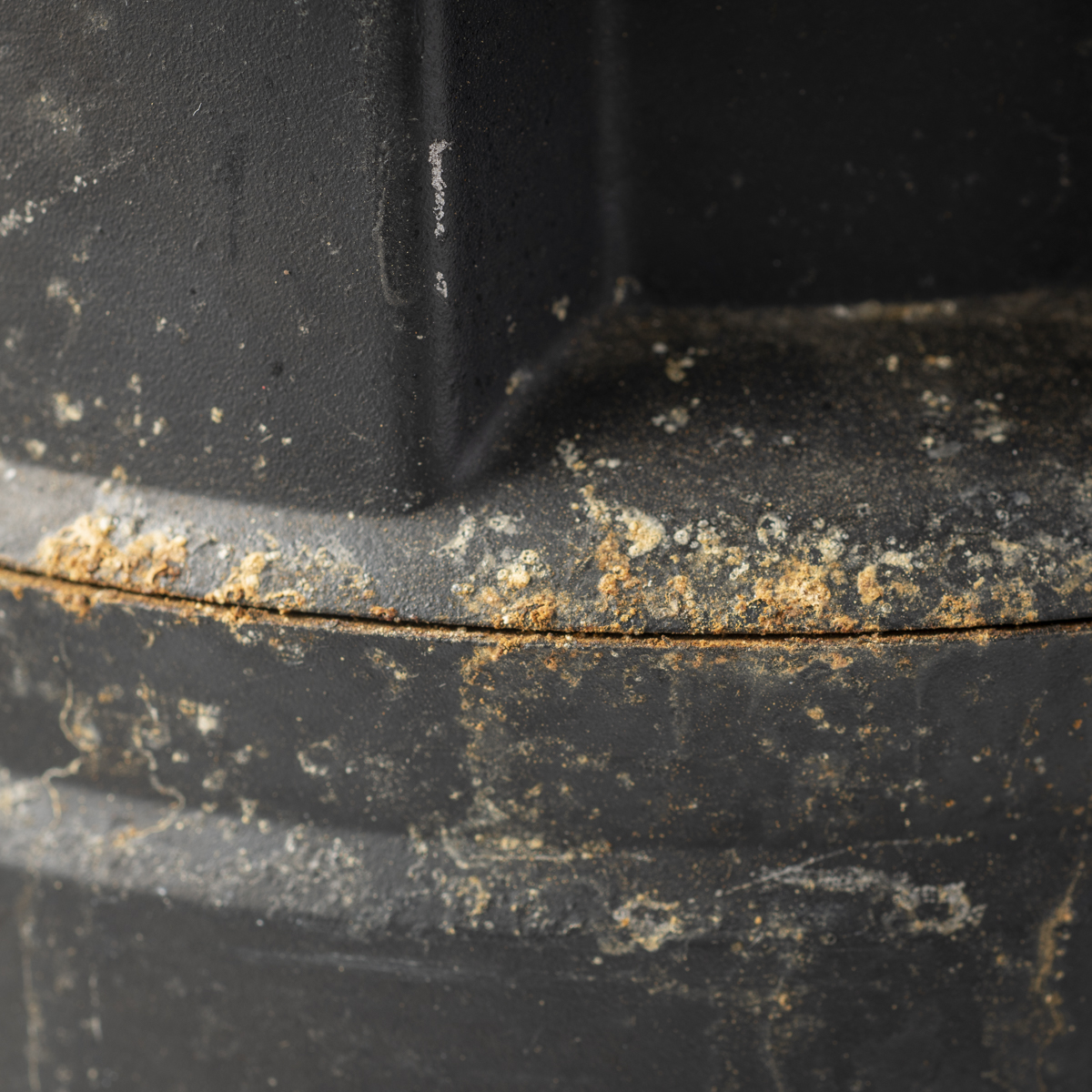
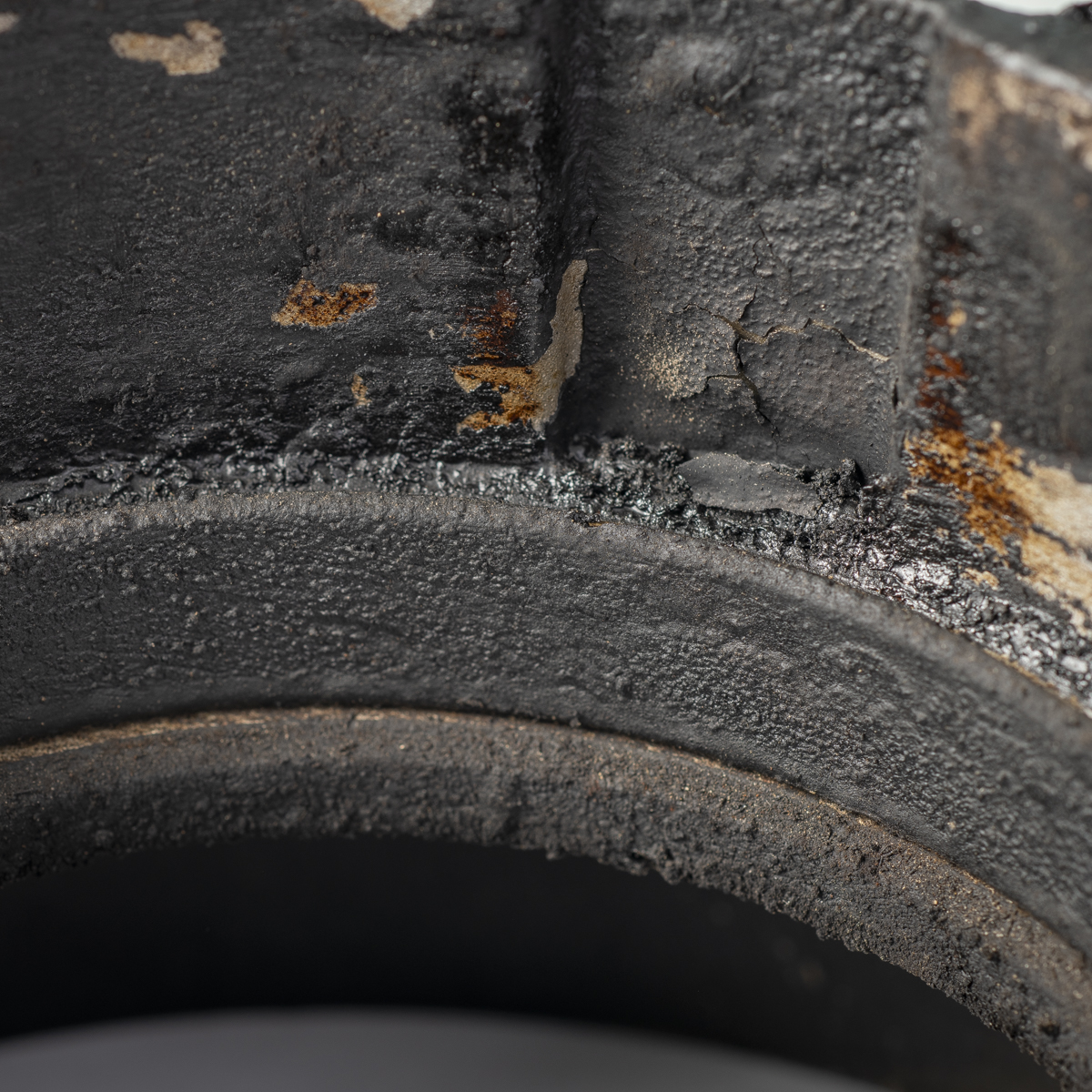
Both of my Kontrol Towers developed similar problems. The black finish bubbled and peeled, exposing the aluminum underneath, and the vent became increasingly difficult to adjust as grease and soot accumulated between the moving parts. I tried cleaning them with hot soapy water, brushes, pipe cleaners, cotton swabs, degreaser and even steam. Some of those methods helped temporarily, but none gave me a satisfactory long-term solution.
That eventually led me to the SmokeWare chimney cap. I also purchased and tested a Skyflame stainless steel replacement, but the SmokeWare was the clear winner.
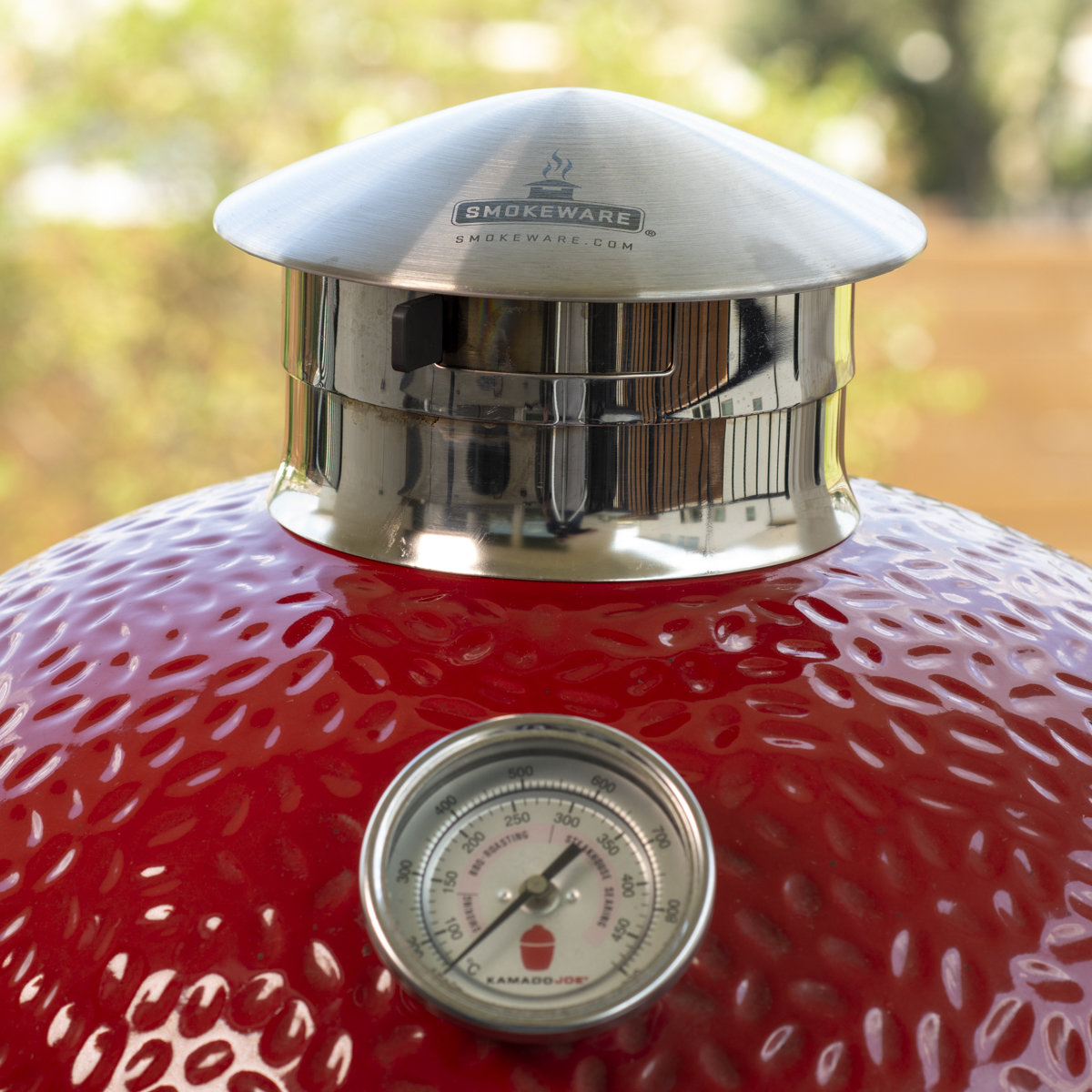
It fit my Kamado Joe well, gave me excellent control at low smoking temperatures and still provided enough airflow for high-temperature cooking. Just as important to me, it's made from 304 stainless steel, so there is no painted exterior finish to bubble and peel like the finish on my Kontrol Towers.
After testing it from approximately 250°F to 800°F, the SmokeWare is now the chimney cap I use on my Kamado Joe and the one I recommend.
SmokeWare Chimney Cap
Summary
Best For: Kamado Joe owners looking for a stainless steel replacement for the factory Kontrol Tower, especially those who cook frequently at low smoking temperatures.
What I Like: Excellent low-temperature airflow control, plenty of airflow for high-temperature cooking, secure fit, stainless steel construction and good weather protection.
What I Don't Like: The stainless steel discolors with high-temperature use, and the silicone adjustment tab can deteriorate or fall off over time.
My Test Results: I was able to maintain approximately 250°F during my low-and-slow test and reach approximately 800°F during my high-temperature test.
Bottom Line: If I had to choose today between buying another Kamado Joe Kontrol Tower and installing a SmokeWare chimney cap, I would buy the SmokeWare.
Why I Replaced My Kamado Joe Kontrol Tower
The chimney cap plays a major role in controlling airflow and maintaining temperature. If the top vent doesn't move smoothly or can't restrict airflow enough for low-and-slow cooking, temperature control becomes more difficult than it needs to be.
The Kontrol Tower was introduced as an improvement over the original cast-iron daisy wheel used on older Kamado Joe grills. The covered design helps keep rain out of the grill, maintains its setting when you open the dome and provides a wide range of airflow adjustment. When mine was working properly, I liked it. My problems developed with age and use.
The Finish Started Peeling
The first problem was cosmetic. The black finish began bubbling and peeling away from the aluminum body. That happened to my original Kontrol Tower and eventually happened again to its replacement.
Once the coating came off, the exposed aluminum began to oxidize and the cap looked increasingly rough. I could live with an ugly chimney cap. The bigger problem was what started happening inside it.
The Kontrol Tower Became Difficult to Adjust
Smoke, grease and cooking residue inevitably make their way through the top vent. Over time, deposits accumulated between the overlapping pieces of my Kontrol Tower until rotating the adjustment became difficult.
I tried just about everything I could think of to clean it. Hot soapy water and brushes removed surface grime but couldn't reach deeply enough into the narrow channel. I tried pipe cleaners, cotton swabs and dental picks. I soaked it with degreaser and even tried using steam to loosen the buildup.
I could improve it, but I never found a method that restored the cap to the smooth operation I wanted for long. After dealing with the same general problems on two Kontrol Towers, I wasn't interested in buying another one. That was when I decided to see whether there was a better replacement.
What I Looked for in a Kamado Joe Replacement Chimney Cap
A replacement chimney cap needs to do more than fit over the ceramic chimney. I wanted to evaluate the things that actually matter when cooking. Fit was first. A poorly fitting cap can allow unwanted air into or out of the grill, and it can potentially move or fall off when the dome is opened.
Low-temperature airflow control was especially important. A Kamado Joe is extremely efficient, so maintaining 225°F to 250°F requires very little airflow. A top vent that leaks too much air when nearly closed can make low-and-slow temperature control difficult.
I also wanted plenty of maximum airflow. A replacement cap shouldn't restrict the exhaust enough to prevent the grill from reaching the high temperatures needed for pizza or searing. Finally, I wanted good weather protection, durable construction and an adjustment mechanism that remained easy to use.
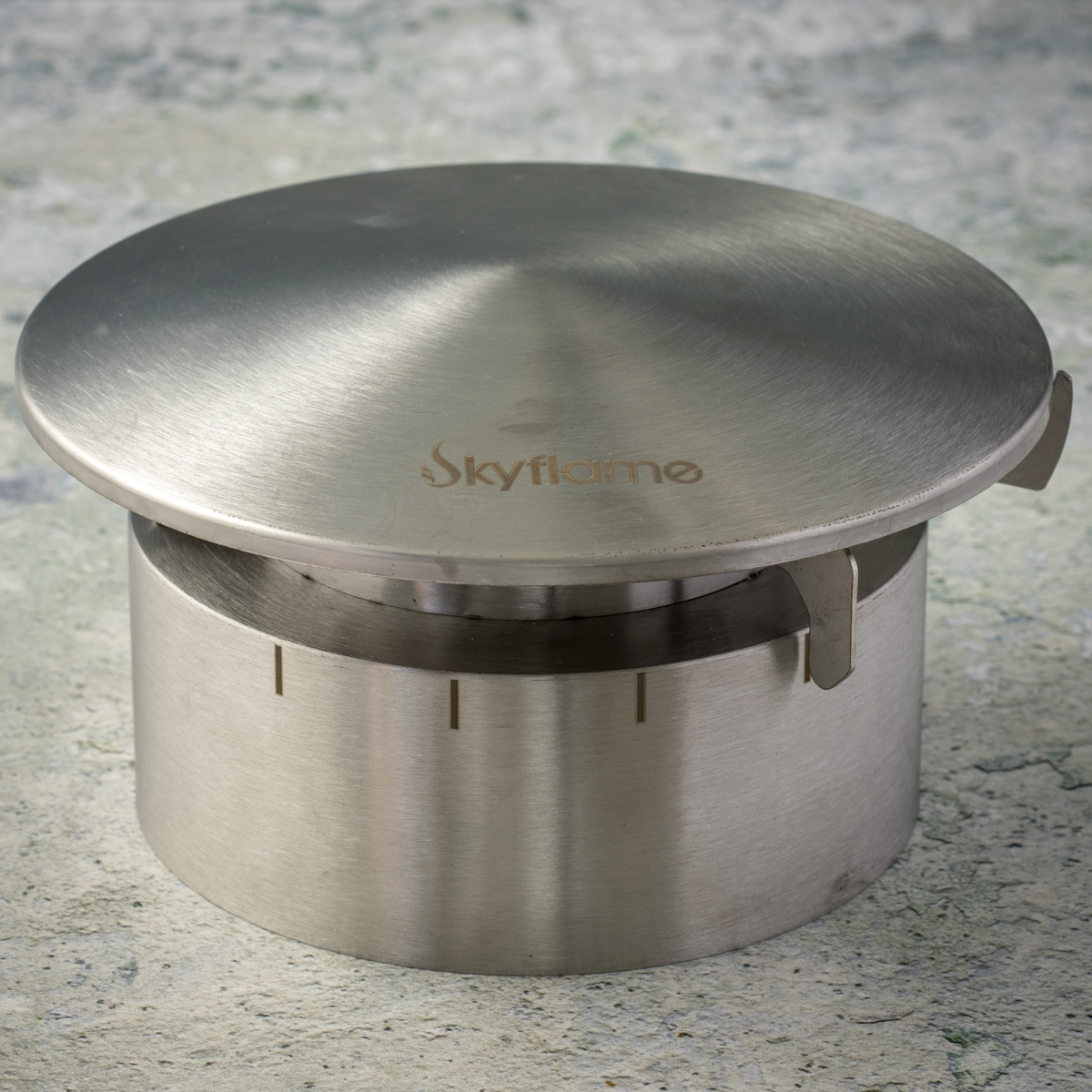
Before settling on the SmokeWare, I tested a Skyflame stainless steel replacement. It fit my grill, but it did not provide the low-temperature airflow control I wanted.
Skyflame Stainless Steel Chimney Cap
The Skyflame looked more promising. It's a stainless steel design with a rotating inner barrel and a flip-up rain cap. It also came with gasket material that could be installed around the Kamado Joe chimney to tighten the fit.
Once I installed the gasket, the Skyflame fit reasonably well. But I noticed fairly large gaps between the rotating pieces, which made me wonder how much air would continue passing through the cap when it was supposedly closed. That became the most important part of my test.
Skyflame Low-and-Slow Test
I set up my Kamado Joe with a FireBoard temperature controller and targeted 250°F. Once the grill was running, I completely closed the Skyflame chimney cap. The temperature still climbed. Eventually, the grill stabilized at approximately 269°F, even though the FireBoard fan was completely off. In other words, the temperature controller wasn't adding air to the fire. Enough air was moving naturally through the grill to keep it nearly 20 degrees above my target.
That's not what I want from a replacement chimney cap. When I close the top vent down, I want precise control over how much air can leave the grill.
Skyflame High-Temperature Test
At the other end of the range, the Skyflame had no shortage of airflow. With the vents opened, I took the Kamado Joe to approximately 810°F. So, the Skyflame's problem wasn't maximum airflow. It was controlling that airflow at the low end. I also found that the rotating adjustment mechanism became extremely difficult to move when the cap was hot. Combined with the low-temperature results, that was enough for me to move on.
The Skyflame test also gave me a useful benchmark for evaluating the SmokeWare. I knew a replacement chimney cap could provide enough airflow to take my Kamado Joe past 800°F. The bigger question was whether I could find one that provided that kind of maximum airflow while also giving me better control at 250°F. That's where the SmokeWare performed significantly better.
SmokeWare Chimney Cap Review
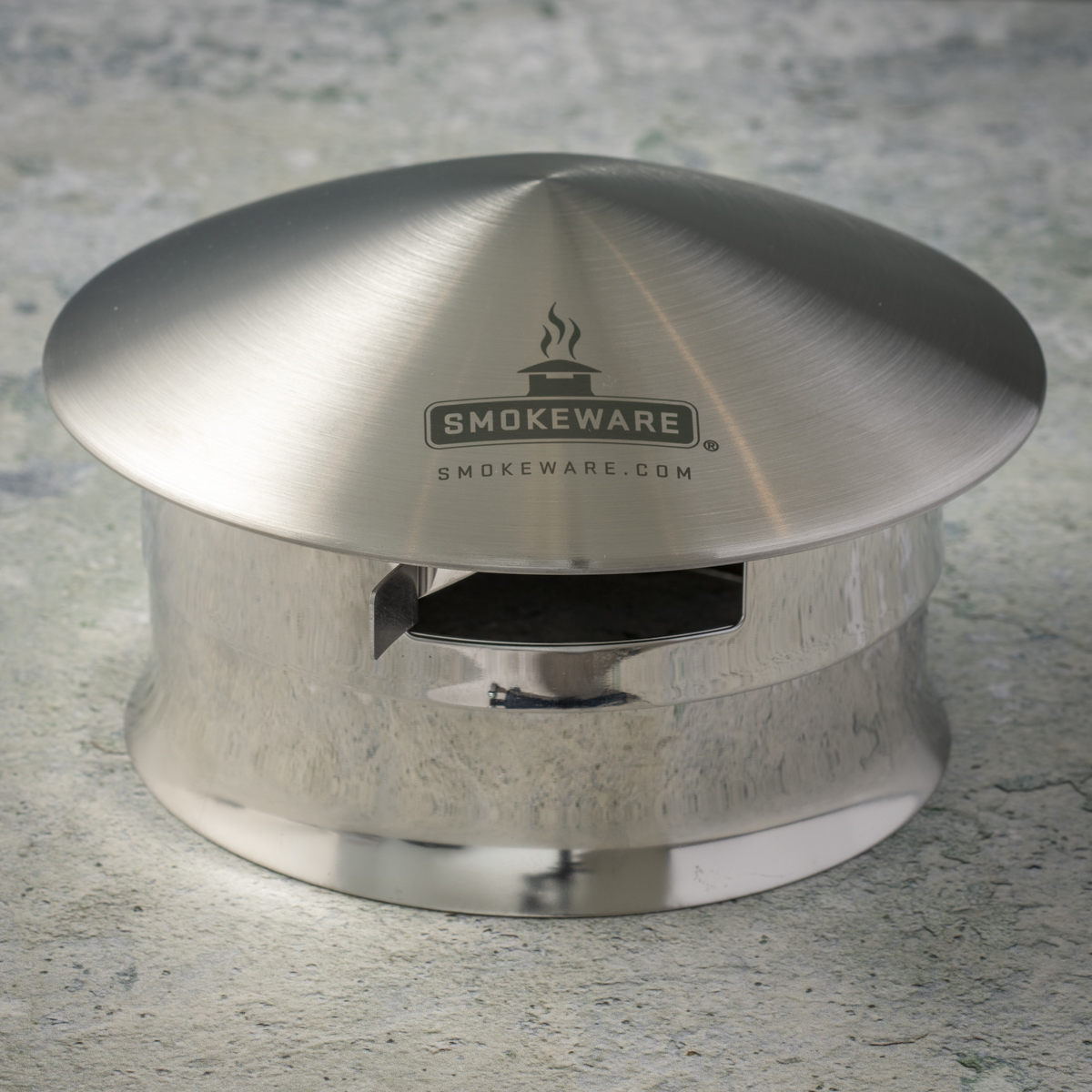
The SmokeWare takes a different approach from the other replacement chimney caps I tested. It's constructed from 304-grade stainless steel and uses three tapered vent openings to control exhaust airflow.
That tapered design is intentional. SmokeWare says the current vent design was developed to provide more precise low-temperature control. The cap is also designed for all-weather cooking and to maintain its vent setting when the Kamado Joe dome is opened.
Of the aftermarket chimney caps I tested, the SmokeWare also had the best overall fit and finish. More importantly, it gave me the combination I was looking for: very fine control at low temperatures without sacrificing the airflow needed for high-temperature cooking.
Installing the SmokeWare Chimney Cap
Installation was straightforward, although getting the gasket positioned correctly is important. After removing the old chimney cap and gasket material, I cleaned the ceramic chimney thoroughly. I then test-fit the SmokeWare cap before installing the supplied gasket.
The ceramic chimney tapers slightly, and the SmokeWare base follows that shape. I installed the gasket near the upper portion of the chimney and pressed the cap firmly over it. Once installed correctly, the fit was excellent. It was snug enough that I didn't worry about unwanted airflow or the cap moving when I opened the grill.
SmokeWare currently lists the standard Kamado Joe version as fitting the Classic Joe, Big Joe and Konnected Joe. It does not fit the Joe Jr. SmokeWare sells a separate cap-and-adapter combination for the smaller grill.
SmokeWare Low-and-Slow Temperature Test
This was the test I cared about most. The Skyflame had already demonstrated what happens when a chimney cap allows too much airflow at the low end. Even with the Skyflame completely closed and my FireBoard fan turned off, the Kamado Joe stabilized at approximately 269°F instead of my 250°F target. I used the same grill and fire to test the SmokeWare and again targeted approximately 250°F. This time I installed the SmokeWare and closed the vent down. The difference was obvious, but initially it created the opposite problem.
When I set up for low-and-slow cooking with my Kontrol Tower, I normally close the top vent completely. Even in the closed position, enough exhaust air can pass through the Kontrol Tower for my FireBoard temperature controller to maintain the target temperature. Naturally, that's how I initially set up the test with the SmokeWare fully closed. The grill couldn't maintain 250°F.
At first that might sound like a failure, but it actually demonstrated how tightly the SmokeWare can control airflow. With the vent completely closed, it simply wasn't allowing enough exhaust flow to maintain my target temperature. The solution was simple. I opened the top vent about ⅛ inch. After that adjustment, my Kamado Joe settled at approximately 250°F within about 20 minutes and stayed there. That's exactly what I wanted to see.
The SmokeWare gave me enough control to restrict the exhaust for a very small charcoal fire without the excess airflow I experienced with the Skyflame. The difference is important. The Skyflame allowed too much air through even when fully closed, while the SmokeWare allowed so little that I had to deliberately open it slightly.
For brisket, pork shoulder, ribs and other long low-and-slow cooks, that level of control matters far more to me than simply having the largest possible exhaust opening.
Can the SmokeWare Handle High-Temperature Cooking?
Better low-temperature control wouldn't mean much if the SmokeWare choked the grill when I wanted maximum heat, so I repeated my high-temperature test. With the SmokeWare opened for maximum airflow, the Kamado Joe reached approximately 800°F.
The Skyflame reached approximately 810°F compared with approximately 800°F for the SmokeWare, but I don't consider that 10-degree difference meaningful. Both provided more than enough airflow for the high-temperature cooking I do.
I also measured the actual vent openings. Based on my measurements and calculations, the three trapezoidal openings in the SmokeWare provided slightly more total vent area than the two rectangular openings in the Skyflame.
That's what makes the SmokeWare design work so well for me. It gives me a wide usable range. I can close it down far enough to maintain a 250°F fire but open it sufficiently to take the same grill to around 800°F. For a Kamado Joe chimney cap, that's exactly the combination I was looking for.
SmokeWare vs. Kamado Joe Kontrol Tower: Which Would I Buy?
If my choice were between buying another Kamado Joe Kontrol Tower and replacing it with a SmokeWare chimney cap, I would buy the SmokeWare.
My decision comes down to durability, maintenance and airflow control. I've already gone through two Kontrol Towers. Both eventually developed finish problems, and buildup inside the vent made adjustment increasingly difficult.
The SmokeWare eliminates the coated-aluminum construction in favor of 304-grade stainless steel. More importantly, it performed exactly as I wanted in my temperature tests. I could hold approximately 250°F at the low end and still reach approximately 800°F at the high end.
The Kontrol Tower still has plenty going for it. It provides weather protection, maintains its setting when the dome is opened and offers a wide range of airflow adjustment. When mine were new and operating properly, I liked them.
The difference is what happened after extended use. After experiencing similar problems with two Kontrol Towers, I don't see a compelling reason to install a third when the SmokeWare has performed this well.
What I Like About the SmokeWare Chimney Cap
The biggest advantage for me is airflow control. A Kamado Joe doesn't require much airflow to maintain a small 250°F fire, and the SmokeWare lets me make very small adjustments at the top vent. My testing showed that it can restrict airflow extremely well when nearly closed while still providing enough exhaust capacity for temperatures around 800°F.
I also prefer the stainless steel construction. There is no black coating to bubble or peel away, which directly addresses one of the problems I experienced with both of my Kontrol Towers. SmokeWare specifies 304-grade stainless steel for the cap.
The fit on my Kamado Joe was excellent once I had the gasket positioned correctly. The cap stays securely in place when I open the dome, and its covered design provides the weather protection I want when cooking in rain or snow.
Is There Anything I Don't Like About the SmokeWare Chimney Cap?
There are a couple of things worth knowing before you buy one. First, don't expect the polished stainless steel to remain shiny forever. High-temperature cooking will discolor stainless steel. Mine changed appearance with use, but that doesn't affect how the chimney cap performs.
Second, there is a small silicone tab on the vent adjustment. That tab is useful because the stainless steel gets extremely hot during cooking, but the tab can dry out, deteriorate or fall off over time.
I would buy a couple of replacement tabs when ordering the cap. SmokeWare sells replacement tabs separately, as well as a replacement felt-and-tab combination. The manufacturer also warns that the stainless steel becomes hot during cooking and recommends using the tab, a high-temperature glove or a cooking utensil to make adjustments.
Neither issue changes my recommendation, but they're worth knowing before you buy one.
Who Should Buy the SmokeWare Chimney Cap?
If the finish on your Kamado Joe Kontrol Tower is bubbling or peeling, the SmokeWare is an upgrade I would seriously consider. Its 304-grade stainless steel construction eliminates the painted exterior finish that caused problems on both of my Kontrol Towers.
It's also a good option if your Kontrol Tower has become difficult to adjust as grease and cooking residue build up between the moving parts. That's ultimately what pushed me to look for a replacement, and the SmokeWare gave me the precise airflow adjustment I wanted without sacrificing high-temperature performance.
Finally, if your Kontrol Tower is damaged, missing or simply needs to be replaced, I would choose the SmokeWare rather than buy another factory cap. It fit my Kamado Joe securely, gave me excellent control at 250°F and still provided enough airflow to reach approximately 800°F. However, if your existing Kontrol Tower is working properly and you're happy with it, I don't think you need to replace it simply because the SmokeWare is available.
Frequently Asked Questions
Yes. SmokeWare currently specifies its standard Kamado Joe chimney cap for the Classic Joe, Big Joe and Konnected Joe. The standard Kamado Joe cap does not fit the Joe Jr. SmokeWare offers a separate adapter solution for the smaller grill.
For me, yes. Both of my Kontrol Towers eventually developed finish and adjustment problems. The SmokeWare uses stainless steel construction and provided excellent airflow control in my testing. I was able to maintain approximately 250°F while still having enough airflow to take my Kamado Joe to approximately 800°F.
Yes. The SmokeWare is a covered chimney cap designed for all-weather cooking. SmokeWare specifically lists cooking in rain or snow as one of its intended benefits.
SmokeWare makes the cap from 304-grade stainless steel and markets it as a non-rusting replacement chimney cap. The stainless steel can discolor after repeated exposure to high cooking temperatures, but discoloration shouldn't be confused with the peeling finish I experienced on my Kontrol Towers.
Yes. Proper gasket placement is important because it allows the cap to fit securely around the ceramic chimney. I cleaned the chimney, test-fit the cap and then positioned the supplied gasket so the SmokeWare seated tightly on my Kamado Joe.
Yes. The design allows the vent setting to remain in position when the Kamado Joe dome is opened and closed. That's one of the advantages it shares with the Kamado Joe Kontrol Tower.
Yes. In my test, my Kamado Joe reached approximately 800°F with the SmokeWare installed and opened for maximum airflow. For the high-temperature cooking I do, the SmokeWare didn't create a meaningful restriction.
On my Kamado Joe, I found that opening the SmokeWare approximately ⅛ inch allowed my FireBoard-controlled grill to settle at about 250°F. I wouldn't treat that as a universal vent setting because charcoal load, bottom-vent position, weather and the individual grill can all affect airflow. Use it as a starting point rather than an exact setting.
I think it is, particularly if you're replacing a damaged or troublesome Kontrol Tower. I wouldn't necessarily remove a perfectly functioning factory cap just for the sake of replacing it. But if I needed to buy a new chimney cap for my Kamado Joe today, I would choose the SmokeWare.
Final Verdict: Is the SmokeWare Chimney Cap Worth It?
Yes. For me, the SmokeWare chimney cap has proven to be a worthwhile replacement for the Kamado Joe Kontrol Tower. I didn't start this test because I disliked the Kontrol Tower. When it was working properly, it did its job well. I started looking for alternatives because I had already experienced similar problems with two of them and didn't want to install a third without seeing what else was available.
The Skyflame provided a useful point of comparison. It fit my grill and could move an enormous amount of air, but it allowed too much airflow for the kind of precise low-temperature control I wanted.
The SmokeWare did both jobs well. It fit my Kamado Joe securely, gave me enough control to settle the grill at approximately 250°F, allowed enough airflow to reach approximately 800°F and provided the weather protection I expect from a modern Kamado Joe chimney cap.
It isn't perfect. The stainless steel will discolor, and I wish the silicone adjustment tab were more durable. But those are relatively minor complaints compared with how well the cap performs.
After using two Kamado Joe Kontrol Towers and comparing the SmokwWare with another stainless steel alternative, the SmokeWare is the chimney cap I use on my Kamado Joe and the one I recommend.
Where to Buy
These are paid affiliate links. As a customer, you do not pay any more or less because of an affiliated link. A small percentage of the sale will go to the person who generated the link. Thank you for supporting my website and channel.
- SMOKEWARE Chimney Cap for Kamado Joe
- Kamado Joe Cover
- Kick Ash Basket & Kick Ash Can
- FireBoard 2 Drive
- Napoleon 57013 Rotisserie Basket
- Kamado Joe Karbon Steel Griddle for Classic
- Kamado Joe Karbon Steel Griddle for Big Joe
- Kamado Joe Joetisserie
- Kamado Joe Karbon Steel Griddle
- Kamado Joe Classic
- Smithey Ironware 10" Cast-Iron Skillet
- Thermoworks Circle IR Laser
- Kamado Joe Fiberglass Gasket (for Big Joe)
More Kamado Joe Resources
If you found this review helpful, here are a few more resources that will help you get the most out of your Kamado Joe:
Leave a Reply