
Kamado Joe Karbon Steel Griddle Review
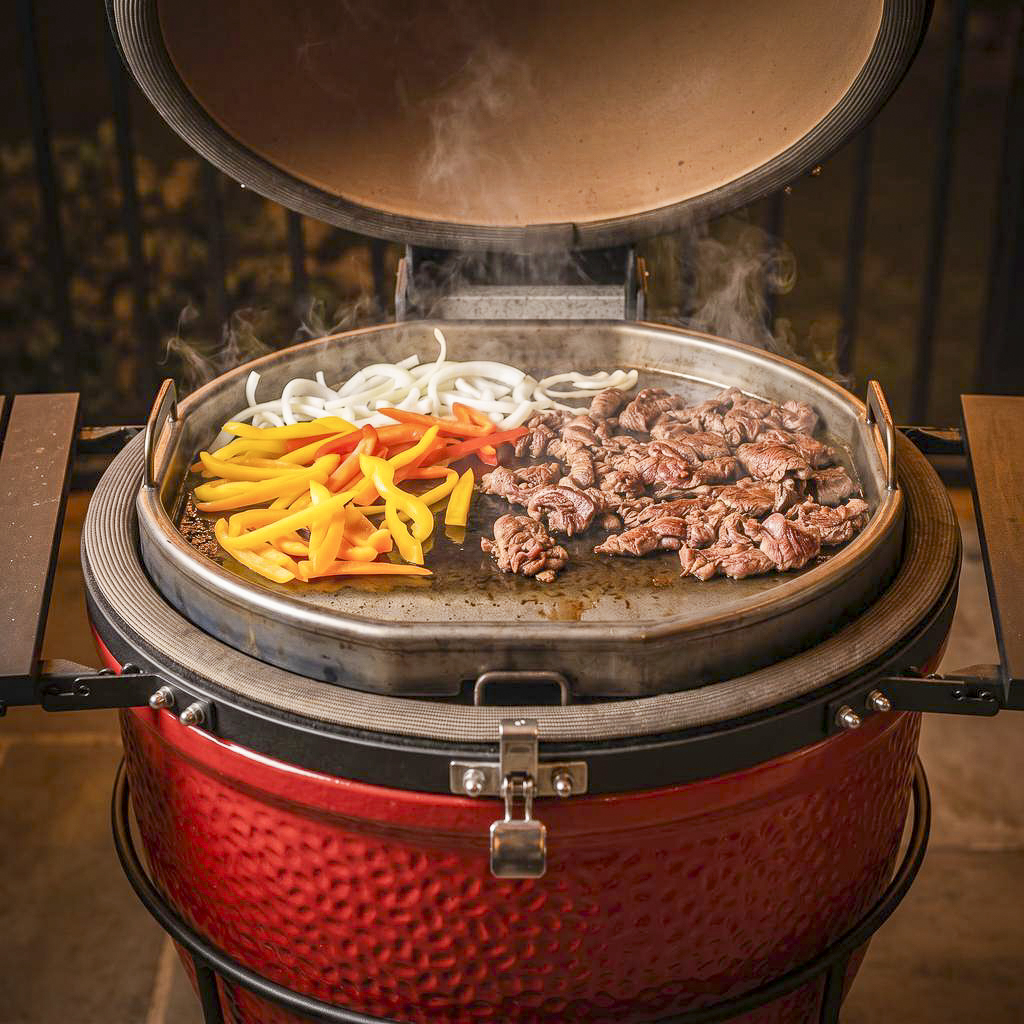
The Kamado Joe Karbon Steel Griddle turns your ceramic grill into a full-size flat-top griddle, but is it really worth buying? After cooking steaks, smash burgers, fajitas, cheesesteaks, and complete breakfasts on mine, here's my in-depth review.
Summary
After extensively testing the Kamado Joe Karbon Steel Griddle, I really like it. In fact, I've stopped using my small dedicated flat-top griddle for most cooks. The Karbon Steel Griddle gives me the large cooking area I wanted while still producing the aggressive, high-temperature sear I expect from cast iron.
Keep in mind that carbon steel is not maintenance-free. You need to season it. You need to clean and dry it properly. You need to oil it before storing it. You also need an infrared thermometer to monitor the grill's surface temperature.
This griddle is the most versatile accessory for the Kamado Joe I own. If you want to turn your Kamado Joe into a full-size flat-top griddle without adding another cooker to your patio, this is the upgrade you've been looking for.
What I Liked
- Excellent high-heat searing
- Produces cast-iron-quality crust on steaks
- Large cooking surface
- Seasoned surface becomes increasingly nonstick
- Heavy-duty stainless-steel handles
- Built-in grease drain
- Works for breakfast, burgers, fajitas, and complete meals
- Surface temperature can be controlled across a wide range
- Preheats while the Kamado Joe heat-soak (30 mins)
What I Wish Was Different
- Heavy (approximately 13.5 pounds)
- Requires regular cleaning and oiling (like cast iron)
- The underside should also be cleaned and oiled
- Must be stored somewhere dry to prevent rust
- Acidic foods can damage the seasoning
- Temperature adjustment is slower than a gas flat top
- Requires an IR thermometer for accurate surface temps
The Kamado Joe Karbon Steel Griddle turns your ceramic grill into a full-size flat-top griddle, but is it really worth buying? After cooking steaks, smash burgers, fajitas, cheesesteaks, and complete breakfasts on mine, here's my in-depth review, including the best setup, how to season it, temperature control, cleaning, and the pros and cons you should know before buying.
I've owned a small flat-top griddle for years, and I've always liked it for cooking breakfast, burgers, patty melts, Philly cheesesteaks, and grilled cheese. But I never loved it for everything. The cooking surface heated unevenly, and when it came time to sear a really good steak, I always felt my trusty cast-iron skillet did a better job.
Then I discovered the cast-iron half-moon griddle plate for my Kamado Joe. That thing became my secret weapon for searing steaks. It was heavy, held heat incredibly well, and could get screaming hot. I could build a crust on a ribeye that rivaled my cast-iron skillet. Unfortunately, the half-moon griddle had problems of its own.
Food could slide off the edge. Grease dripped directly onto the coals. And trying to remove a delicate steak from a flat piece of cast iron without pushing it into the fire could become a little sporting. That's when I decided to try the Kamado Joe Karbon Steel Griddle.
After putting it through everything from A5 Wagyu ribeye to smash burgers, fajitas, pancakes, bacon, and breakfast potatoes, I've formed a pretty strong opinion about it.
So, is the Kamado Joe Karbon Steel Griddle worth it? For me, the answer is yes, but there are a few things you absolutely need to know before buying one.
Disclosure: I purchased this griddle at full retail myself and was not compensated for this review. The opinions in this article are based entirely on my own experience using it on my Kamado Joe.
Jump to:
- What Is the Kamado Joe Karbon Steel Griddle?
- Kamado Joe Karbon Steel Griddle Features
- Carbon Steel vs. Cast Iron for Searing
- How Heavy Is the Kamado Joe Karbon Steel Griddle?
- How to Season the Kamado Joe Karbon Steel Griddle
- The Best Kamado Joe Setup for the Karbon Steel Griddle
- How Long Does the Karbon Steel Griddle Take to Heat Up?
- How to Control Karbon Steel Griddle Temperature
- Why You Need an Infrared Thermometer
- How Well Does the Karbon Steel Griddle Sear Steak?
- What Can You Cook on the Kamado Joe Karbon Steel Griddle?
- Does the Grease Drain Cause Flare-Ups?
- How to Clean the Kamado Joe Karbon Steel Griddle
- Don't Forget to Clean the Back
- Can You Cook Acidic Foods on Carbon Steel?
- Kamado Joe Karbon Steel Griddle Pros and Cons
- Karbon Steel Griddle vs. a Dedicated Flat-Top Griddle
- Is the Kamado Joe Karbon Steel Griddle Worth It?
- Top Tip
- Frequently Asked Questions
- Final Verdict
- Where to Buy
- More Kamado Joe Resources
What Is the Kamado Joe Karbon Steel Griddle?
The Kamado Joe Karbon Steel Griddle is a full-size carbon-steel cooking surface designed to turn a Kamado Joe into a flat-top griddle. Unlike Kamado Joe's half-moon griddle plate, the Karbon Steel Griddle uses the entire cooking area of the grill.
The Classic Joe version is compatible with the Classic Joe series, Konnected Joe, and other round 18-inch charcoal grills. Kamado Joe also offers a larger version for the Big Joe series and other round 24-inch charcoal grills.
In practical terms, it transforms your Kamado Joe from a charcoal grill and smoker into something much closer to a full-size outdoor flat top, and that dramatically expands what you can cook.
Kamado Joe Karbon Steel Griddle Features
The first thing I noticed was the size. This thing is massive. It provides almost as much cooking area as the standard grill grates, giving you enough room to cook complete meals instead of working with one small skillet or half-moon cooking surface.
The griddle also has two stainless-steel handles and a built-in grease drain. Those are standard advertised features of the griddle, but after using it, I think both are more important than they initially appear.
The raised sides keep food on the cooking surface. That doesn't sound terribly impressive, but if you've ever chased a steak, onion, or hamburger patty toward the edge of a flat half-moon griddle, you'll appreciate it immediately.
Carbon Steel vs. Cast Iron for Searing
My biggest question was simple: Can carbon steel sear a steak as well as cast iron?
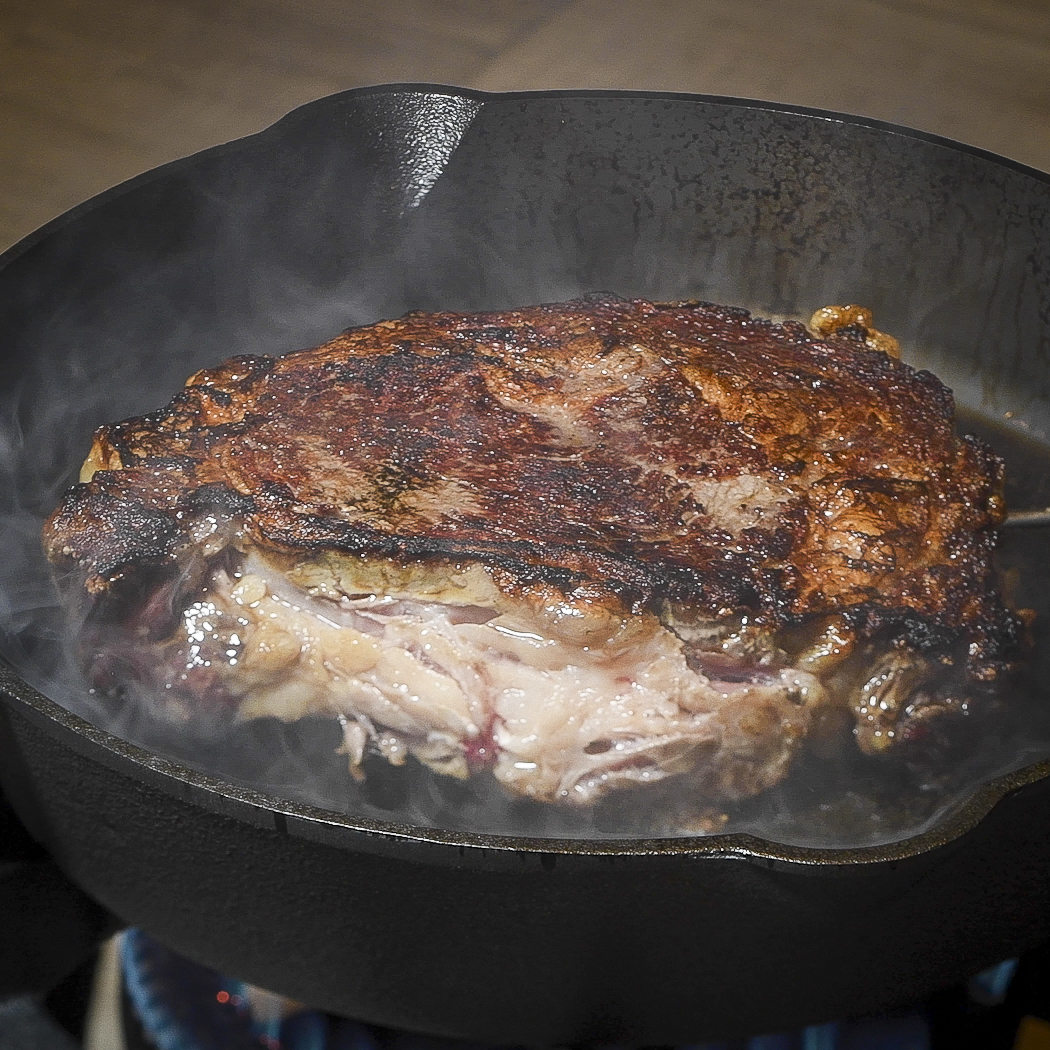
When you place a steak on screaming-hot cast iron, you get intense surface contact and a beautiful Maillard reaction. That's the flavorful brown crust I'm looking for when I sear a steak. I've used cast-iron skillets for years, and I wasn't willing to give up that performance just to gain a larger cooking surface.
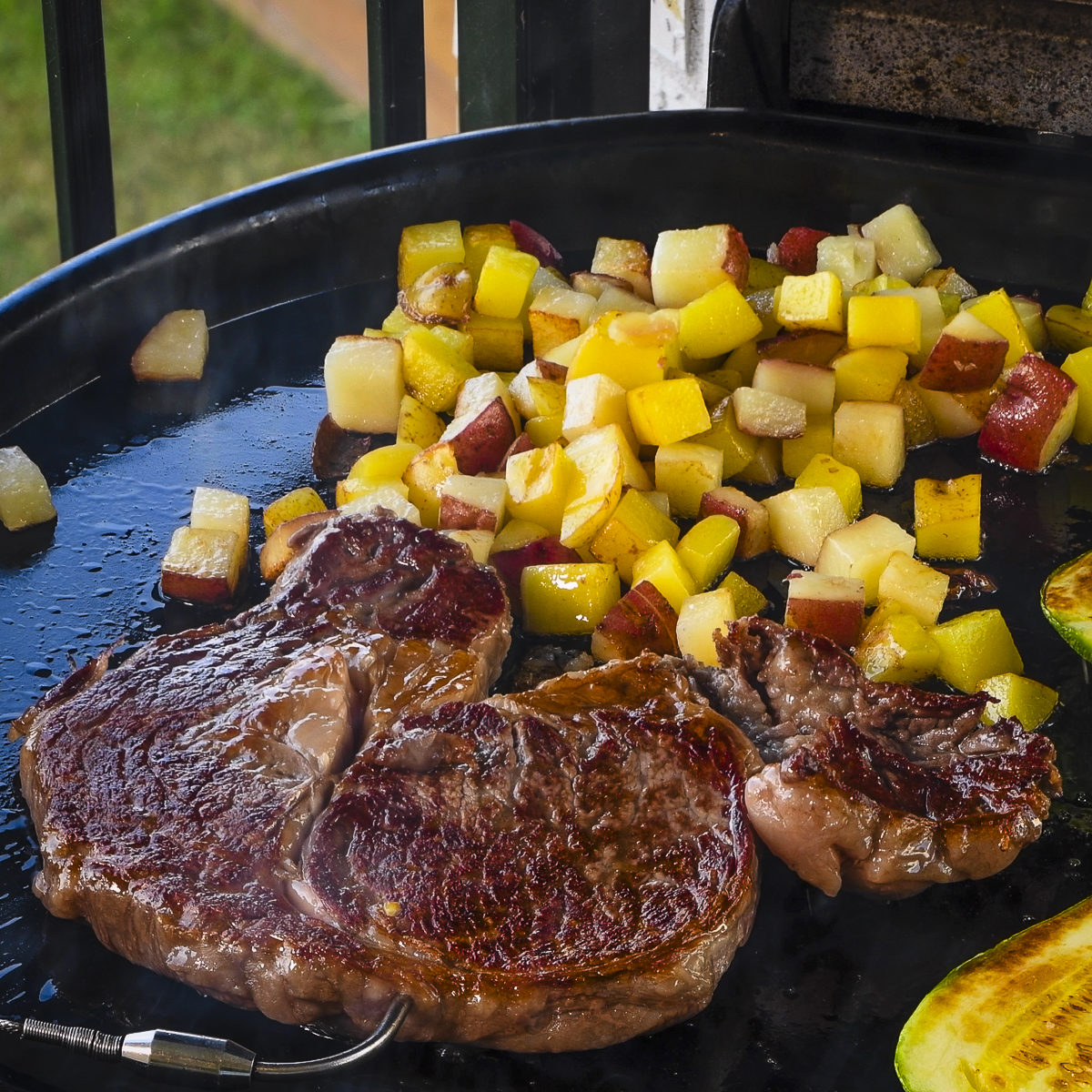
Carbon steel, however, has many of the characteristics I like about cast iron. It can handle high temperatures, develops a seasoned cooking surface, and becomes increasingly nonstick as you cook on it. After testing the Karbon Steel Griddle at high temperatures, my conclusion is: It is absolutely equal to cast iron for searing meat.
That's a big statement. But after seeing the crust it created on an A5 Wagyu ribeye, I stand by it.
How Heavy Is the Kamado Joe Karbon Steel Griddle?
Carbon steel is often described as lighter than cast iron, and Kamado Joe makes that comparison in its product description. Don't mistake that for saying this particular griddle is lightweight. I weighed three of my cooking surfaces.
- My cast-iron skillet weighed approximately 6.5 pounds
- The Kamado Joe half-moon cast-iron griddle came in at almost 9 pounds
- The Karbon Steel Griddle weighs 13.5 pounds
It's a big boy for sure. That's partly because the Karbon Steel Griddle is significantly larger than the other pieces. But make no mistake, this is a very substantial piece of steel. Fortunately, the two stainless-steel handles make it relatively easy to move when it's cold. Never attempt to move it when it's hot. Kamado Joe's instructions specifically warn that the griddle and handles become extremely hot during use. I believe that and have no desire to test it.
How to Season the Kamado Joe Karbon Steel Griddle
Before cooking on carbon steel, you need to understand seasoning. Seasoning isn't simply oil sitting on the metal. When properly heated, a very thin layer of oil polymerizes and bonds to the cooking surface. Over time, repeated seasoning and cooking create the dark, slick surface that makes carbon steel increasingly nonstick.
Although Kamado Joe describes the griddle as pre-seasoned, its instructions still provide a first-use seasoning process and call for three heating cycles.
Here's how I seasoned mine.
1. Wash the griddle
Wash the griddle before its first use and dry it completely. You don't want moisture trapped against carbon steel.
2. Apply a high-smoke-point oil
I used grapeseed oil. Kamado Joe's instructions also identify canola, sunflower, vegetable, flaxseed, grapeseed, and soybean oils as options for seasoning. Apply oil to the entire surface.
3. Wipe off almost all the oil
This is the most important part. You want an incredibly thin layer of oil. Apply the oil with a paper towel. Then wipe it off. Take another clean paper towel and wipe it again. Then wipe it again. It should almost look like you've removed all of the oil.
If you use too much, the surface can become sticky or tacky, a problem that ther Karbon Steel Griddle owners also frequently encounter when seasoning.
4. Heat the griddle at 400°F for one hour
My griddle was too large for my indoor oven, so I seasoned it inside my Kamado Joe. Place the griddle upside down. This prevents oil from pooling on the cooking surface. Heat it at approximately 400°F for one hour. Then close the vents and allow the griddle to cool completely.
5. Repeat the process three times
Apply another extremely thin layer of oil and repeat the heating process. Kamado Joe's seasoning instructions call for repeating the oil-and-bake process twice more after the initial cycle. Once you're finished, start cooking. The surface gets better the more you use it.
The Best Kamado Joe Setup for the Karbon Steel Griddle
This is probably the most important thing I learned during my testing. I don't recommend using the Karbon Steel Griddle directly over the charcoal. That's how I normally used my half-moon cast-iron griddle, so naturally, that's how I initially set up the Karbon Steel Griddle. I didn't like the results.
I developed noticeable hot and cold spots across the griddle. Worse, those hot spots changed depending on where the hottest charcoal happened to be burning. I constantly found myself using an infrared thermometer to figure out which part of the griddle was hot enough for meat and which section was cooler. Then I changed the setup.
I filled my charcoal basket approximately three-quarters full and lit the charcoal. Next, I installed both ceramic heat deflector plates on the accessory rack. Then I installed the Karbon Steel Griddle above them. That was the solution.
The ceramic heat deflectors help diffuse the heat before it reaches the steel, creating a much more even cooking surface. For me, indirect heat is absolutely the best setup for the Kamado Joe Karbon Steel Griddle.
How Long Does the Karbon Steel Griddle Take to Heat Up?
With my indirect setup, I allow approximately 30 minutes for the griddle to fully heat. Don't rush this. A large 13.5-pound cooking surface takes time to stabilize. Besides, you want the ceramic walls to heat soak a bit before you cook.
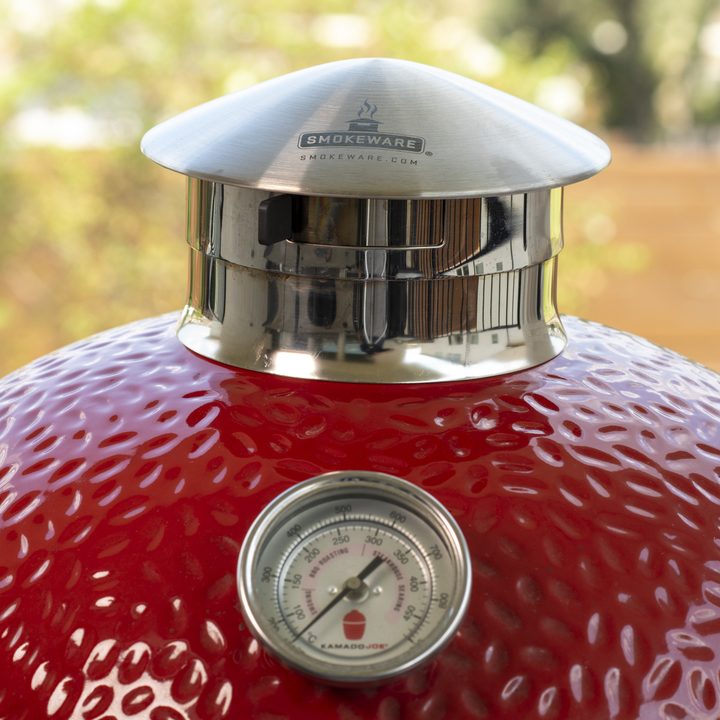
The dome thermometer also doesn't tell you the actual temperature of the steel. You're cooking on the griddle surface-not in the air above it. That distinction becomes important when you start trying to control precise griddle temperatures.
How to Control Karbon Steel Griddle Temperature
I tested the griddle at surface temperatures ranging from approximately 350°F to 600°F. You can absolutely control the temperature manually using the Kamado Joe vents. But I also wanted to see whether I could automate the process with my FireBoard 2 Drive temperature controller.
I installed the fan at the bottom vent and initially placed the ambient temperature probe directly on the griddle surface. Then I set my FireBoard to 500°F. Once everything stabilized, the FireBoard showed 503°F. My infrared thermometer measured the actual griddle surface at 585°F. That's an 82-degree difference. So I changed the probe position.
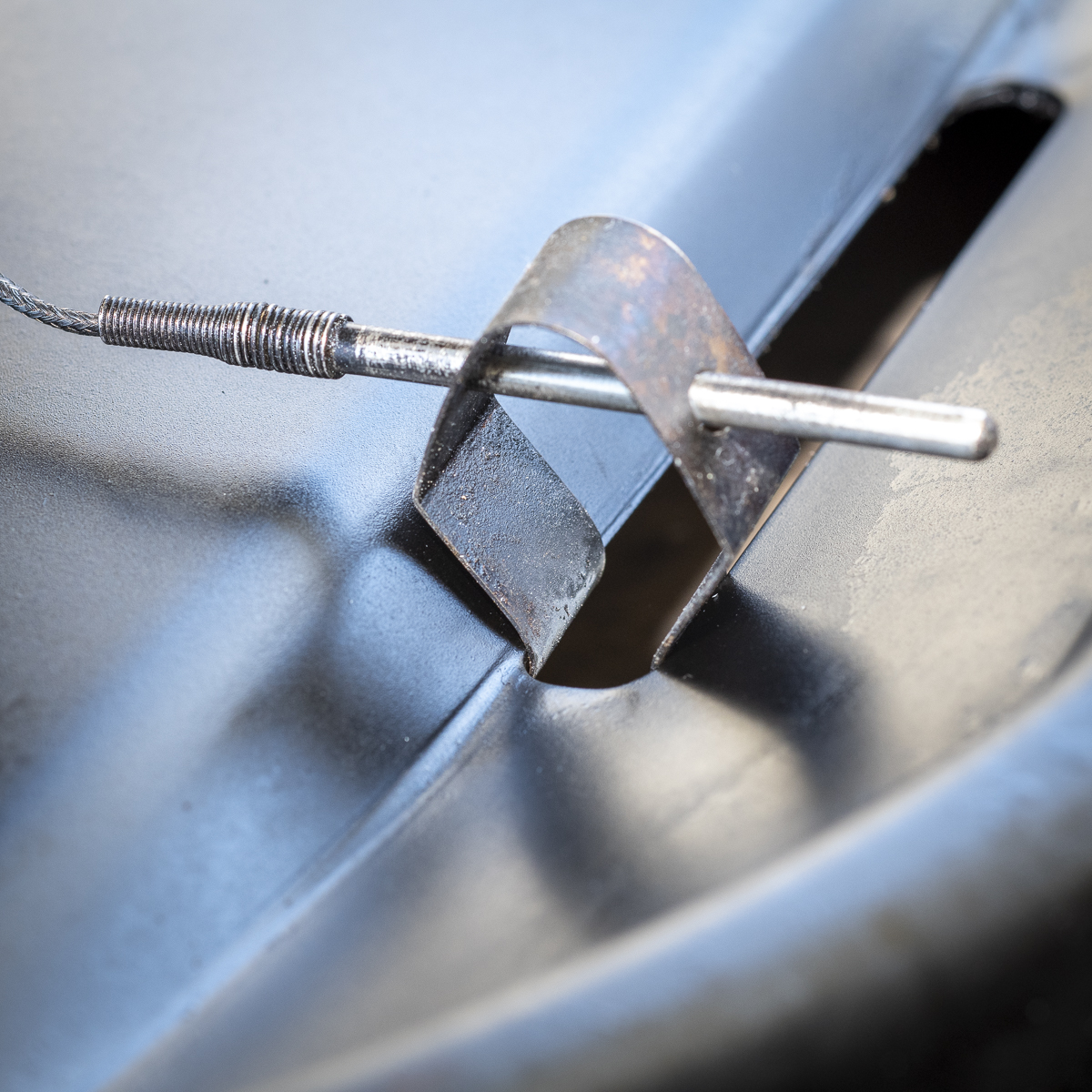
I moved the ambient probe to a clip positioned inside the griddle's grease spout. This time, with the FireBoard set to 500°F, the actual griddle surface stabilized at approximately 552°F. Based on my testing, I found a simple rule: With my FireBoard probe clipped in the grease spout, I set the controller approximately 50°F below my desired griddle surface temperature.
If I want a 550°F cooking surface, I start with the controller around 500°F. Your grill, charcoal, weather, and probe placement may produce slightly different results, so verify your own temperatures. But this gave me a repeatable starting point.
Why You Need an Infrared Thermometer
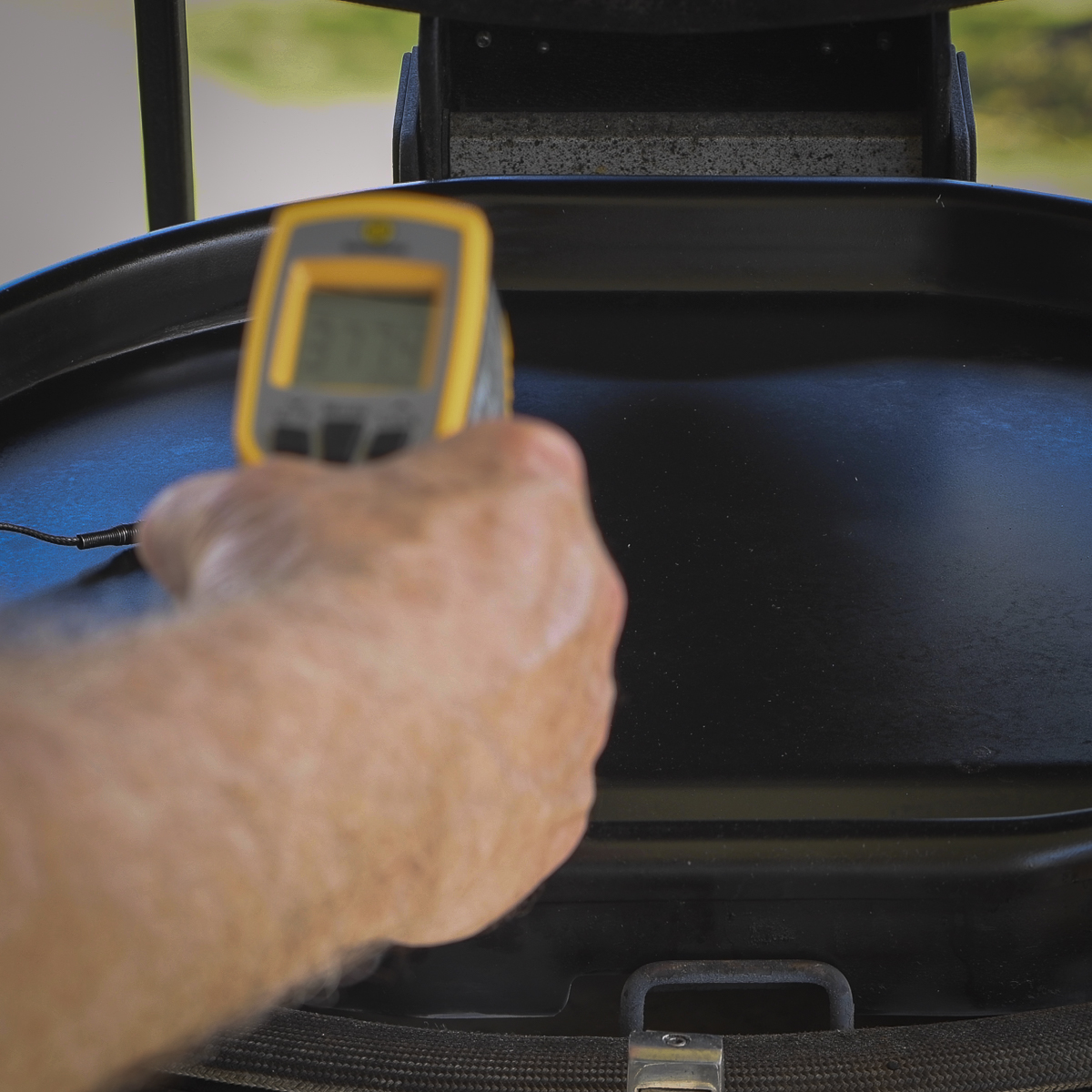
If you're going to cook on a griddle, you need a reliable infrared thermometer. Seriously. The dome thermometer tells you the air temperature inside the grill. An ambient probe measures the temperature at the probe. Neither necessarily tells you the exact temperature of the steel beneath your food.
An infrared thermometer allows you to scan the actual cooking surface. That tells you:
- Where your hottest area is
- Whether the griddle has fully preheated
- Where to sear meat
- Where to cook eggs or pancakes
- Whether your temperature has stabilized
For griddle cooking, surface temperature matters.
[AFFILIATE LINK: INFRARED THERMOMETER I USE]
How Well Does the Karbon Steel Griddle Sear Steak?
For my high-heat test, I decided not to mess around. I cooked an A5 Wagyu ribeye. I heated the griddle to searing temperature and added a small amount of beef tallow. Then the steak went down. Within minutes, I had exactly what I was looking for: a deep, brown Maillard crust across the surface of the steak. Not grill marks, crust. There's a difference.
Grill grates only make direct contact with portions of the meat. A flat griddle gives you complete surface contact. The crust on that Wagyu ribeye was every bit as good as what I've achieved with my cast-iron skillet or cast-iron half-moon griddle.
For searing steaks, the Karbon Steel Griddle absolutely passed my test.
What Can You Cook on the Kamado Joe Karbon Steel Griddle?
This is where the griddle really starts to make sense. Once I figured out the indirect setup and temperature control, my entire Kamado Joe became a stable flat-top griddle.
I've cooked:
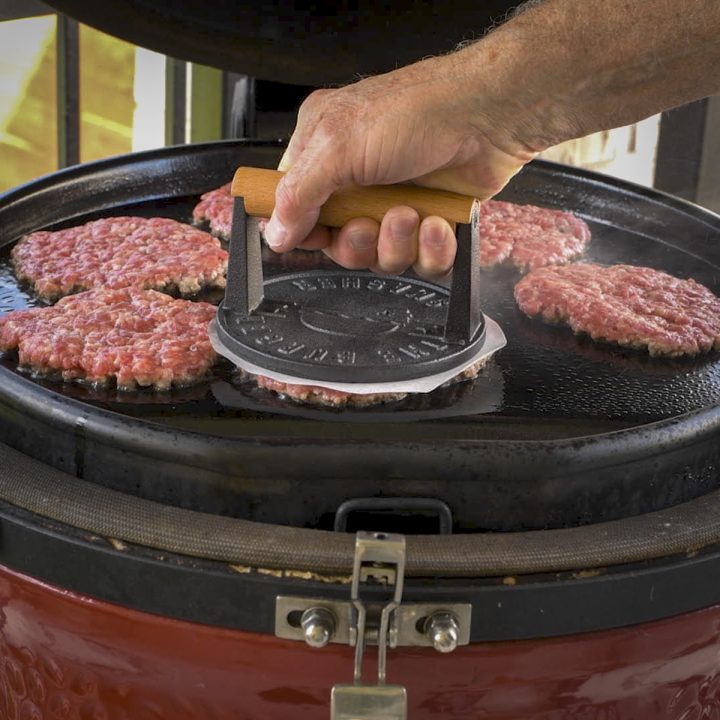
- Smash burgers in beef tallow
- Beef fajitas
- Wagyu skirt steak
- Onions and bell peppers
- Philly cheesesteaks
- Patty melts
- Buttermilk pancakes
- Bacon
- Breakfast sausage
- Breakfast potatoes
- Zucchini
- Duck fat potatoes
- Ribeye steaks
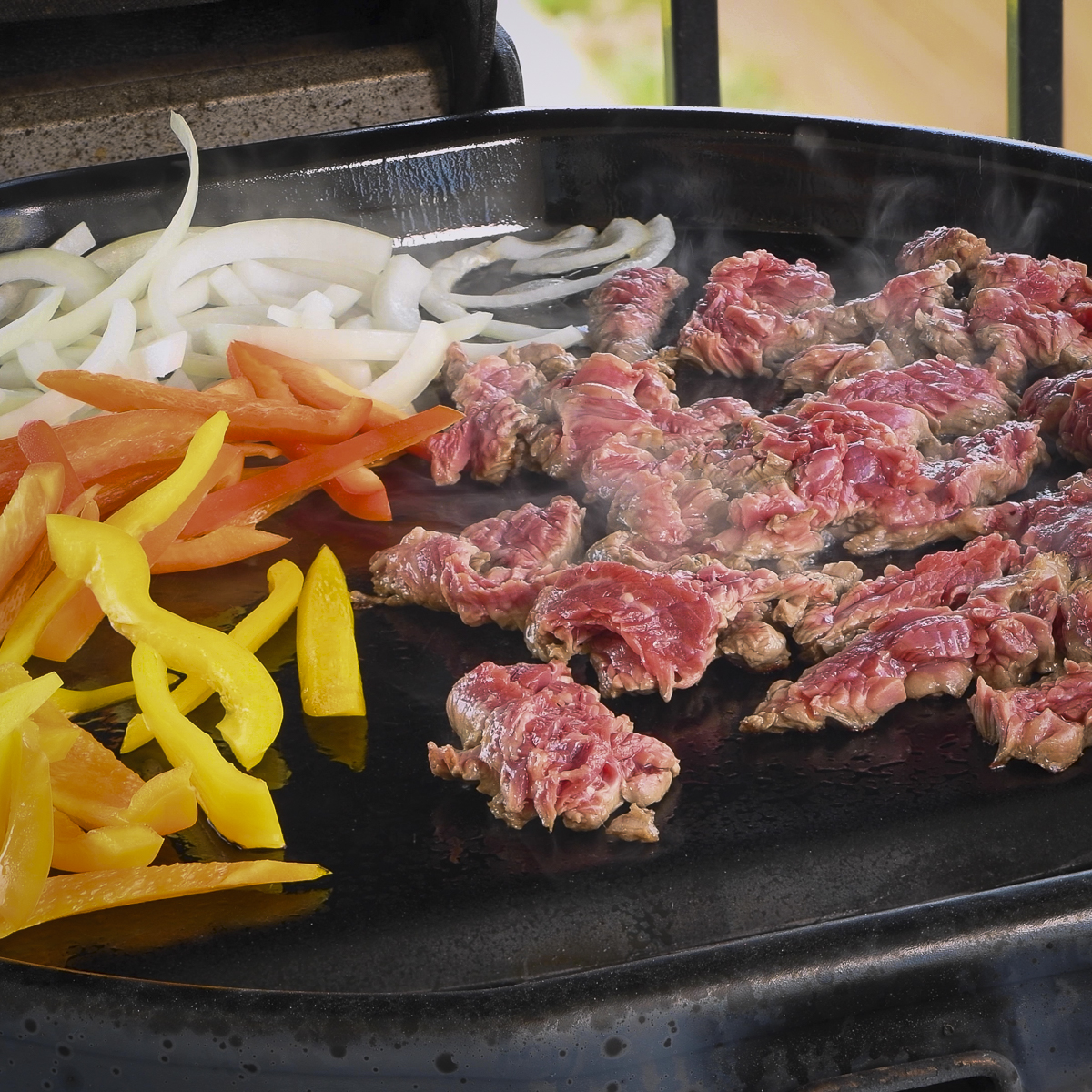
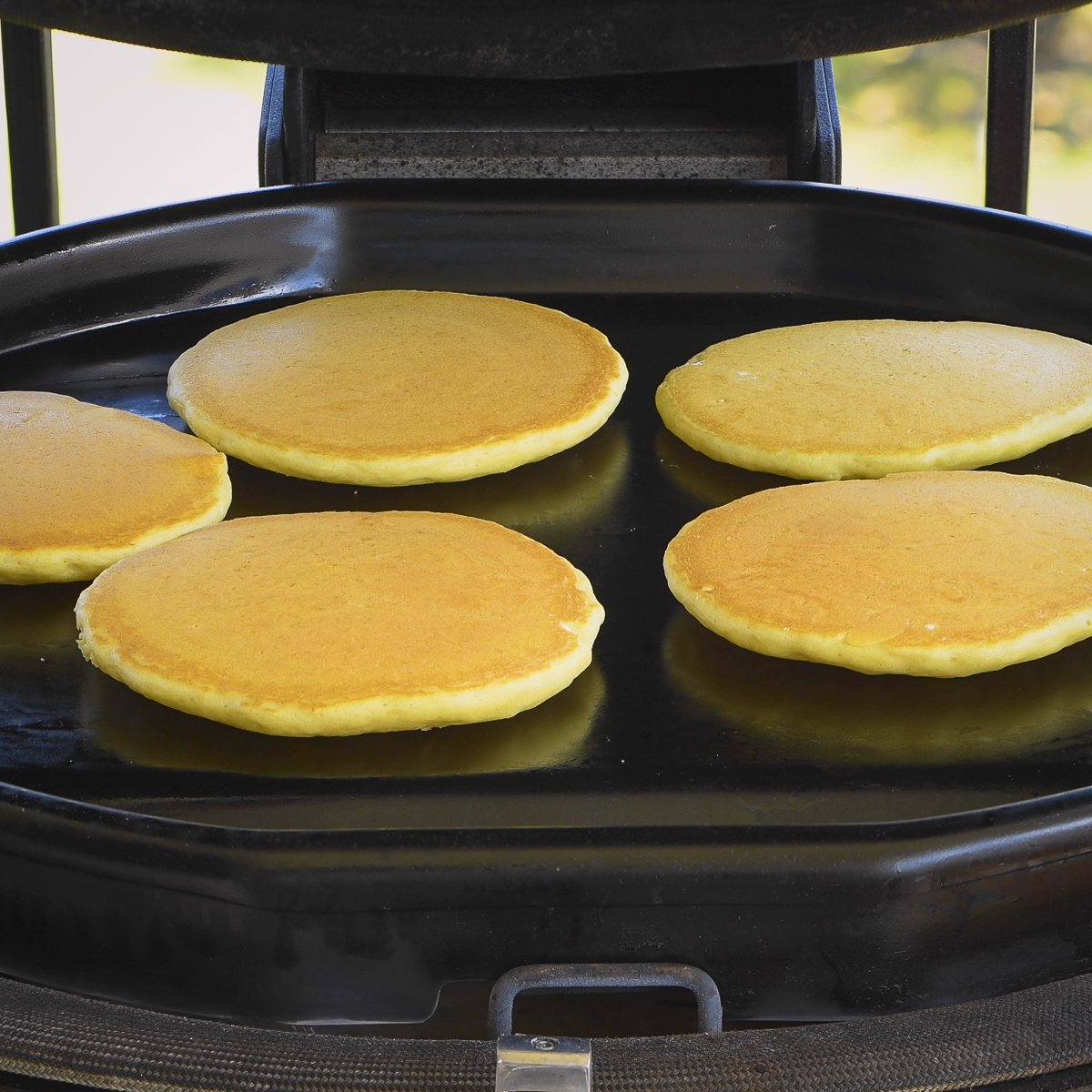
The large cooking area means you can cook several components of a meal at the same time. For fajitas, I can cook skirt steak on one section while sautéing onions and peppers on another. For breakfast, I can cook pancakes, bacon, sausage, and potatoes without juggling multiple pans. That's where this accessory becomes more than another cooking surface. It fundamentally changes how I use my Kamado Joe.
Does the Grease Drain Cause Flare-Ups?
This was one of my biggest concerns. My half-moon cast-iron griddle regularly dumped grease directly onto the charcoal. The result? Massive flare-ups.
The Karbon Steel Griddle has a built-in grease drain, so I wanted to see what would happen when a significant amount of bacon and sausage grease went down the opening.
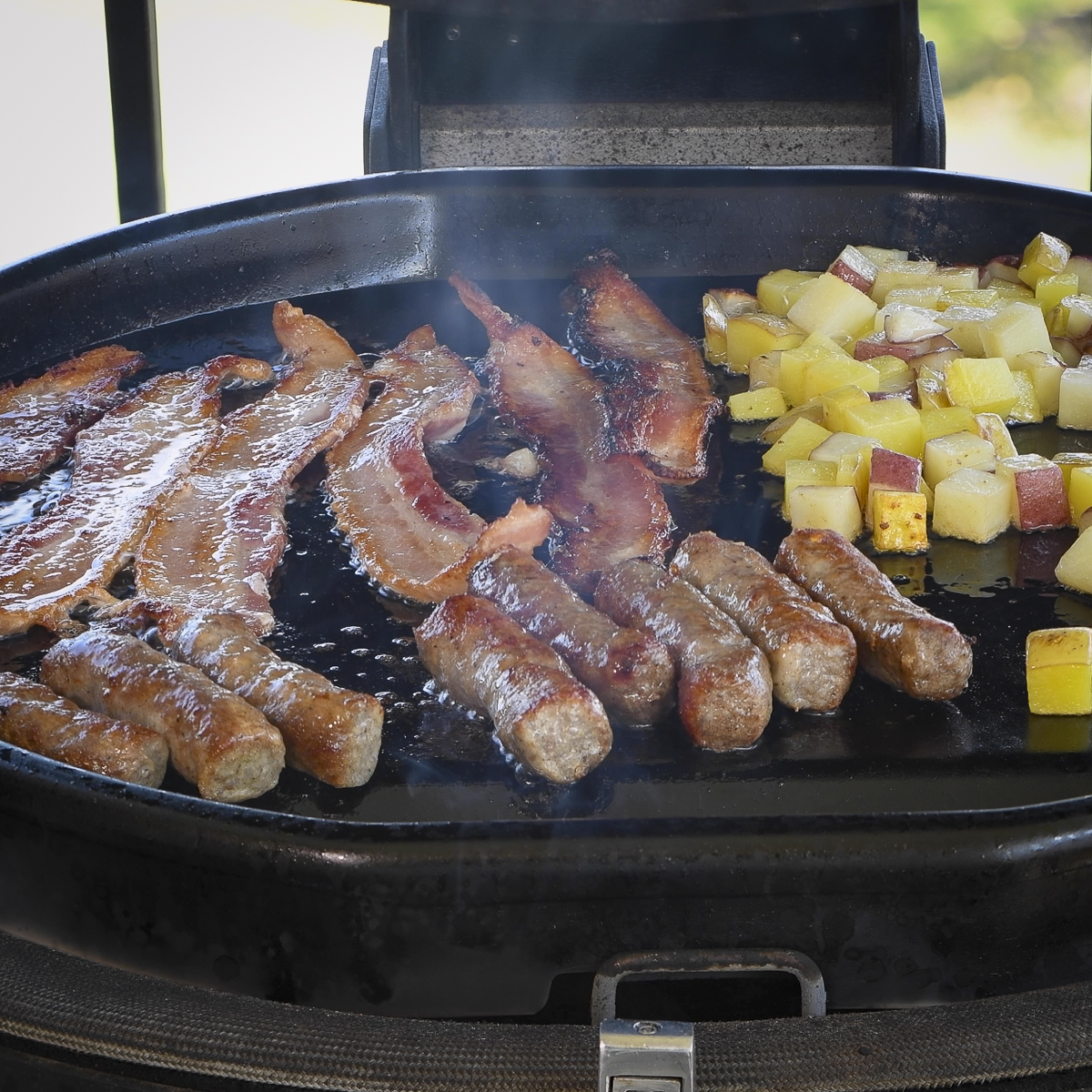
The result surprised me. Smoke, but no significant flare-ups. Using the heat deflectors likely played an important role because the grease wasn't dropping directly onto exposed charcoal. For me, that's another major advantage of the indirect setup.
How to Clean the Kamado Joe Karbon Steel Griddle
Carbon steel requires maintenance. If you want something you can ignore outside for six months, this probably isn't the accessory for you. Owner discussions also commonly mention storage and rust prevention as the griddle's biggest maintenance drawbacks.
My cleaning routine is simple. After cooking, I add a little warm water to the griddle and wipe the surface vigorously with paper towels.
For stuck-on food, I use either:
- A plastic food scraper
- Vegetable oil and kosher salt
The salt acts as a gentle abrasive. Once the cooking surface is clean, I dry it immediately and apply a very thin layer of oil. Never let carbon steel soak in water. Moisture is the enemy.
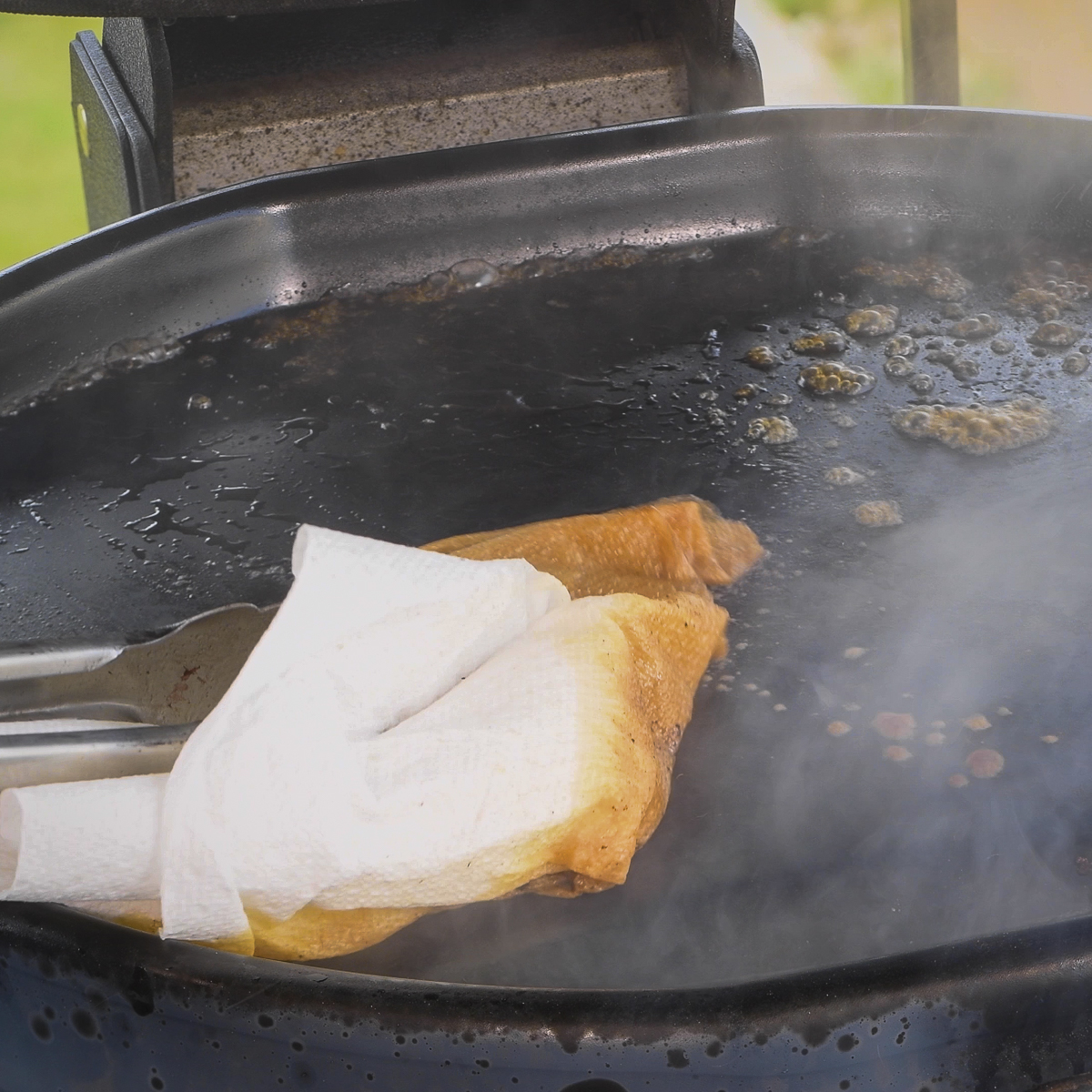
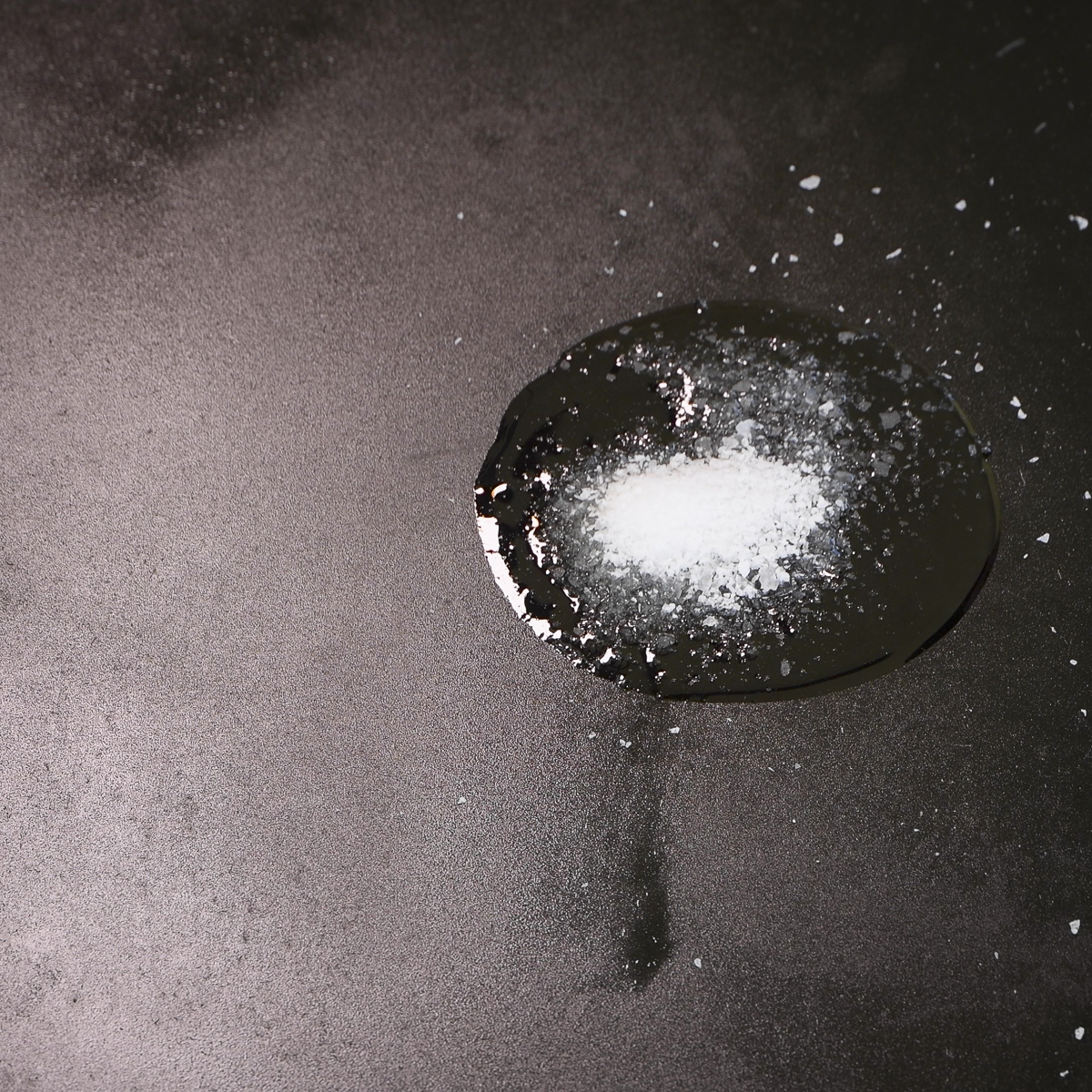
One thing you don't want to do is leave it inside your Kamado Joe and then forget about it. I did, and it developed rust. Fortunately, it was easy to resolve. Watch my video on How to remove rust from a Karbon Steel Griddle. [ADD LINk]
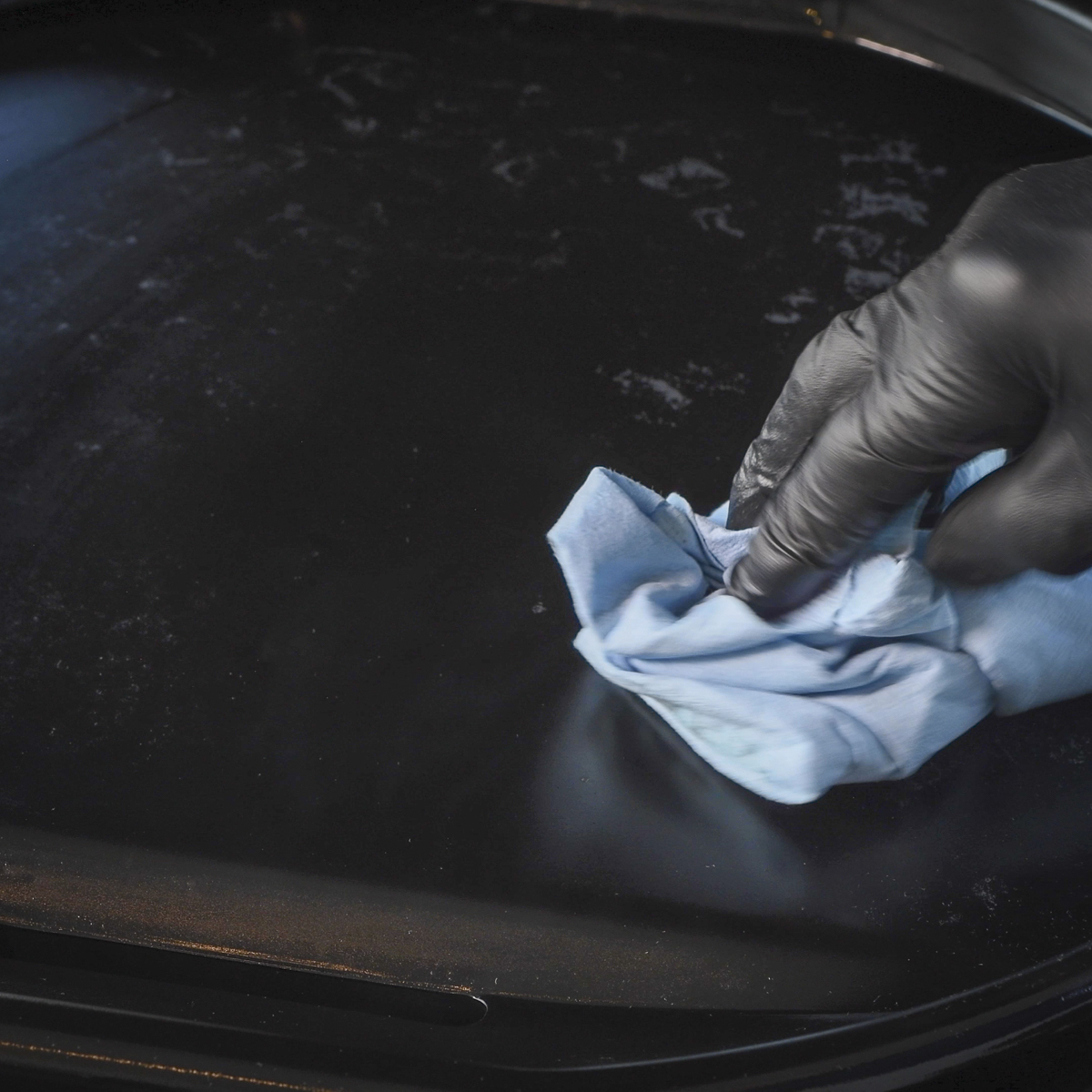
Don't Forget to Clean the Back
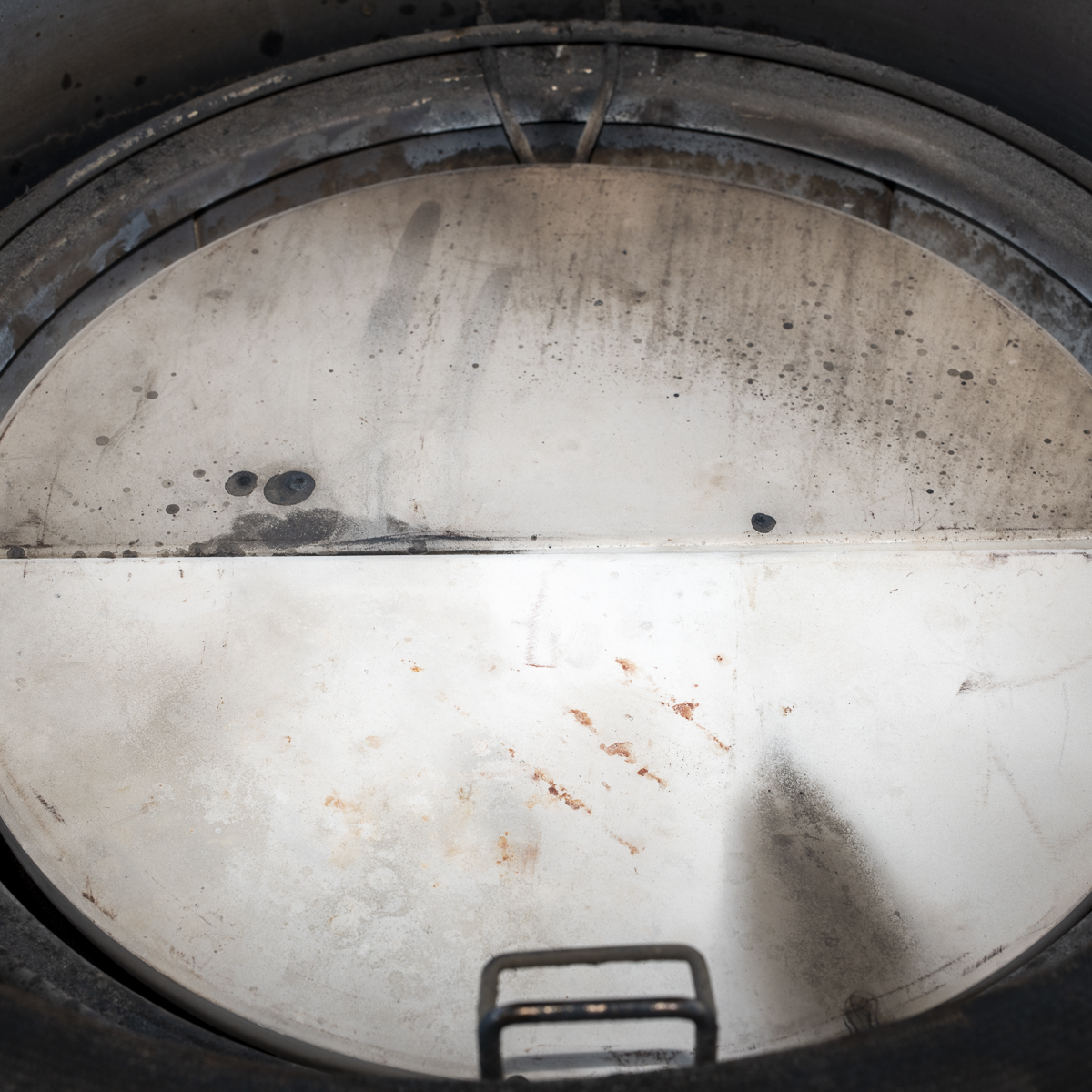
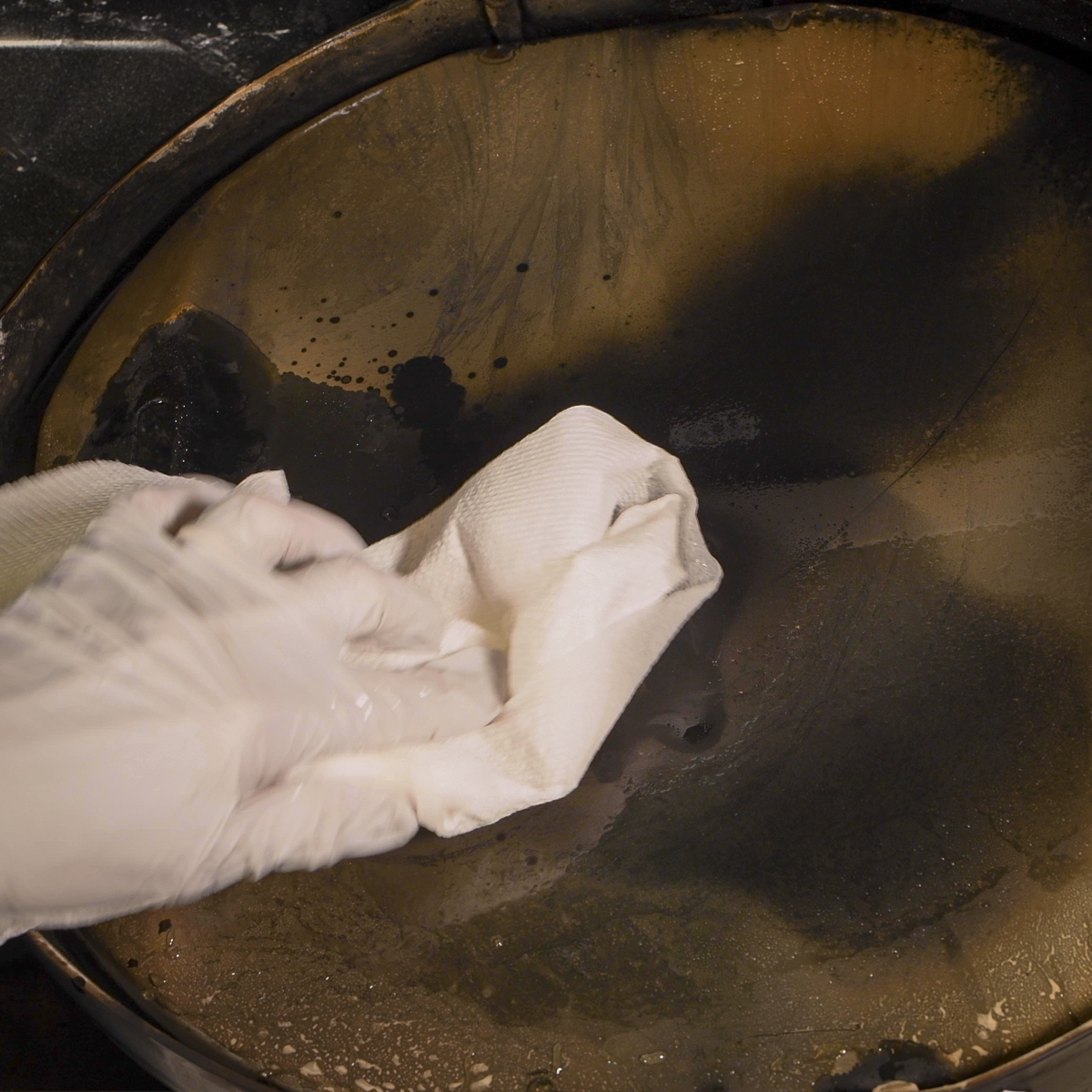
This is one maintenance step I think many people will skip. After the griddle cools, I bring it inside and clean the soot from the underside with warm water and a small amount of dish soap. Then I dry it completely and apply a thin layer of oil to the back. Why? Because the underside is carbon steel too. I would never put away a cast-iron skillet covered in moisture and residue. I'm not going to do it with this griddle either.
This extra maintenance takes a few minutes, but I believe it is worth doing if you want to prevent rust.
Can You Cook Acidic Foods on Carbon Steel?
I avoid acidic foods on my Karbon Steel Griddle.
That means I'm careful with:
- Tomatoes
- Lemon juice
- Lime juice
- Wine-based marinades
- Highly acidic sauces
Acid can attack the seasoning you've worked to build on carbon steel. If the seasoning becomes damaged, you may need to re-season the cooking surface. I treat the Karbon Steel Griddle the same way I treat my seasoned cast-iron cookware.
Kamado Joe Karbon Steel Griddle Pros and Cons
After extensive testing, here's where I land.
Pros
- Excellent high-heat searing
- Produces cast-iron-quality crust on steaks
- Large, full-size cooking surface
- Turns the Kamado Joe into a flat-top griddle
- Seasoned surface becomes increasingly nonstick
- Excellent stainless-steel handles
- Built-in grease drain
- Works for breakfast, burgers, fajitas, and complete meals
- Surface temperature can be controlled across a wide range
- More versatile than the half-moon cast-iron griddle
- Preheats while the Kamado Joe heat-soak (30 mins)
Cons
- Heavy (approximately 13.5 pounds)
- Requires regular cleaning and oiling
- The underside should also be maintained
- Must be stored somewhere dry to prevent rust
- Acidic foods can damage the seasoning
- Temperature adjustment is slower than a gas flat top
- Requires an infrared thermometer for accurate surface temperature management
Karbon Steel Griddle vs. a Dedicated Flat-Top Griddle
So, does the Karbon Steel Griddle replace a Blackstone-style flat top? For me, it did. But it won't for everyone. A dedicated gas griddle gives you faster startup and more immediate temperature adjustments. Turn a burner knob and the heat changes. A charcoal-fired Kamado Joe doesn't react that quickly.
On the other hand, the Karbon Steel Griddle lets me use a grill I already own. I don't need another large cooker taking up patio space, and for me, the Karbon Steel Griddle delivers the high-heat searing performance I always felt was missing from my small dedicated griddle.
I've now abandoned my little flat-top griddle and use the Karbon Steel Griddle for most of my high-heat flat-top cooking.
Is the Kamado Joe Karbon Steel Griddle Worth It?
If you rarely cook breakfast, burgers, fajitas, or other flat-top foods, you probably don't need it. But if you like griddle cooking and already own a Kamado Joe, I think this is one of the best accessories you can add.
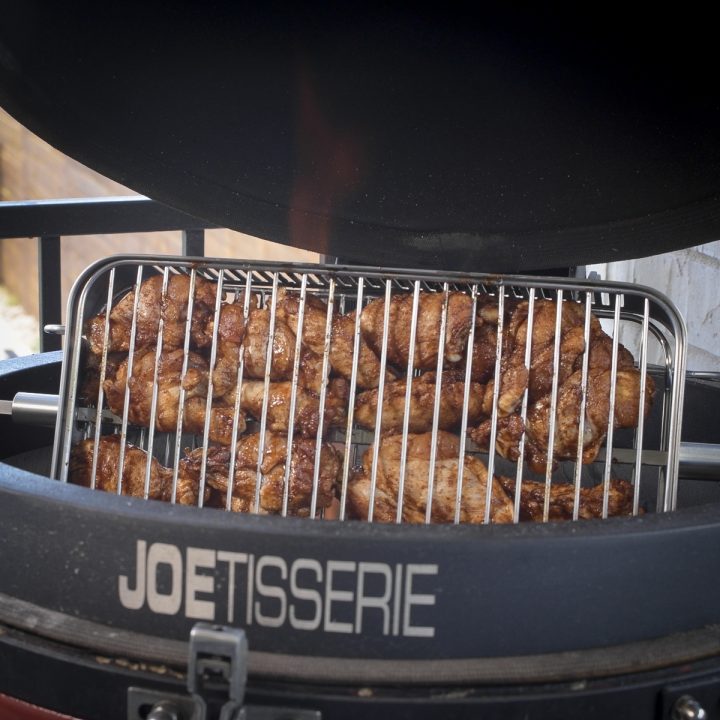
The official U.S. price is currently listed at $249 so this isn't an impulse-buy accessory. But it doesn't simply give you another grate. It changes what your Kamado Joe can do. I can smoke a brisket overnight, rotisserie a chicken, and cook pizza. And now I can turn the same grill into a full-size flat top for smash burgers, fajitas, cheesesteaks, and complete breakfasts. That's real versatility.
Top Tip
Clean the griddle after every use. Then apply a light coat of oil and store it in a dry location, like the garage.
Frequently Asked Questions
Yes. Although Kamado Joe markets the griddle as pre-seasoned, the manufacturer's first-use instructions still call for applying a very thin layer of high-smoke-point oil, heating the griddle for one hour at 400°F, cooling it completely, and repeating the oil and heat cycle twice more.
Based on my testing, I prefer indirect heat with both ceramic heat deflector plates installed. This produced much more even surface temperatures than placing the griddle directly over the charcoal.
I successfully controlled my cooking surface between approximately 300°F and 600°F. But if carbon steel gets too hot, it can warp. Always follow the current manufacturer's instructions and temperature limitations for your griddle.
It can. Carbon steel needs to be dried immediately after cleaning and protected with a thin layer of oil. Store the griddle indoors or in a dry location.
In my testing, yes. The Karbon Steel Griddle produced a deep, even crust on steak that was equal to what I've achieved with my cast-iron cooking surfaces.
Absolutely. In fact, smash burgers are one of the foods this griddle does exceptionally well. The large flat surface gives you plenty of room for patties, onions, and buns.
Yes. I've used mine for pancakes, bacon, sausage, and breakfast potatoes. The full-size surface makes it possible to cook multiple breakfast foods simultaneously.
A properly seasoned carbon-steel surface becomes increasingly nonstick with regular use. The key is building and maintaining the seasoning rather than treating the griddle like a factory coated nonstick pan.
You can, but I didn't like the results. Direct heat created hot and cold spots based on the charcoal below. I found indirect heat with the ceramic heat deflectors produced a much more even cooking surface.
Final Verdict
After extensively testing the Kamado Joe Karbon Steel Griddle, I really like it. In fact, I've stopped using my small dedicated flat-top griddle for most cooks. The Karbon Steel Griddle gives me the large cooking area I wanted while still producing the aggressive, high-temperature sear I expect from cast iron.
It's not maintenance-free. You need to season it, clean and dry it properly, and apply oil it before storing it.
I strongly recommend using an infrared thermometer to understand what's happening on the cooking surface. Once I figured out the right setup, indirect heat with the ceramic heat deflectors, the griddle became one of the most versatile accessories I own.
If you want to turn your Kamado Joe into a full-size flat-top griddle without adding another cooker to your patio, this is the upgrade you've been looking for.
Where to Buy
These are paid affiliate links. As a customer, you do not pay any more or less because of an affiliated link. A small percentage of the sale will go to the person who generated the link. Thank you for supporting my website and channel.
- Kamado Joe Cover
- Kick Ash Basket & Kick Ash Can
- SMOKEWARE Chimney Cap for Kamado Joe
- FireBoard 2 Drive
- Napoleon 57013 Rotisserie Basket
- Kamado Joe Karbon Steel Griddle for Classic
- Kamado Joe Karbon Steel Griddle for Big Joe
- Kamado Joe Joetisserie
- Kamado Joe Karbon Steel Griddle
- Kamado Joe Classic
- Smithey Ironware 10" Cast-Iron Skillet
- Thermoworks Circle IR Laser
- Kamado Joe Fiberglass Gasket (for Big Joe)
More Kamado Joe Resources
If you found this review helpful, here are a few more resources that will help you get the most out of your Kamado Joe:
- Kamado Joe Owner's Handbook
- The Texas Backyard Kitchen - Complete Meals from Fire to Table
- Kamado Joe 101 Playlist
- How to Control Temperature on a Kamado Joe
- Kamado Joe vs. Big Green Egg: Which Ceramic Grill Would I Buy After Owning Five of Them?
Leave a Reply