If your Kamado Joe, Big Green Egg, or other ceramic cooker struggles to exceed 500°F, the cause is usually restricted airflow, and the charcoal can also be part of the problem. A hot fire needs a clear path for plenty of air to flow through the grill and a full load of fresh, large lump charcoal. When the air path is obstructed or the charcoal load falls short, the grill cannot reach high temperatures.
In this article, I'll explain how to check the air path from the ash below the charcoal, through the charcoal grate and the charcoal itself, to the Kontrol Tower. I'll also share the results of a vent test on my Classic II that raised the temperature by more than 300°F, and explain how to confirm your dome thermometer is accurate.
Jump to:
- How Air Moves Through a Kamado Joe
- Check the Dome Thermometer
- Clear the Ash Below the Charcoal
- Improve Airflow with a Charcoal Basket
- Load the Charcoal for High Heat
- Check the Kontrol Tower
- Light the Fire and Adjust the Vents
- Reaching High Heat in Cold Weather
- Quick Reference
- Final Thoughts
- Frequently Asked Questions
How Air Moves Through a Kamado Joe
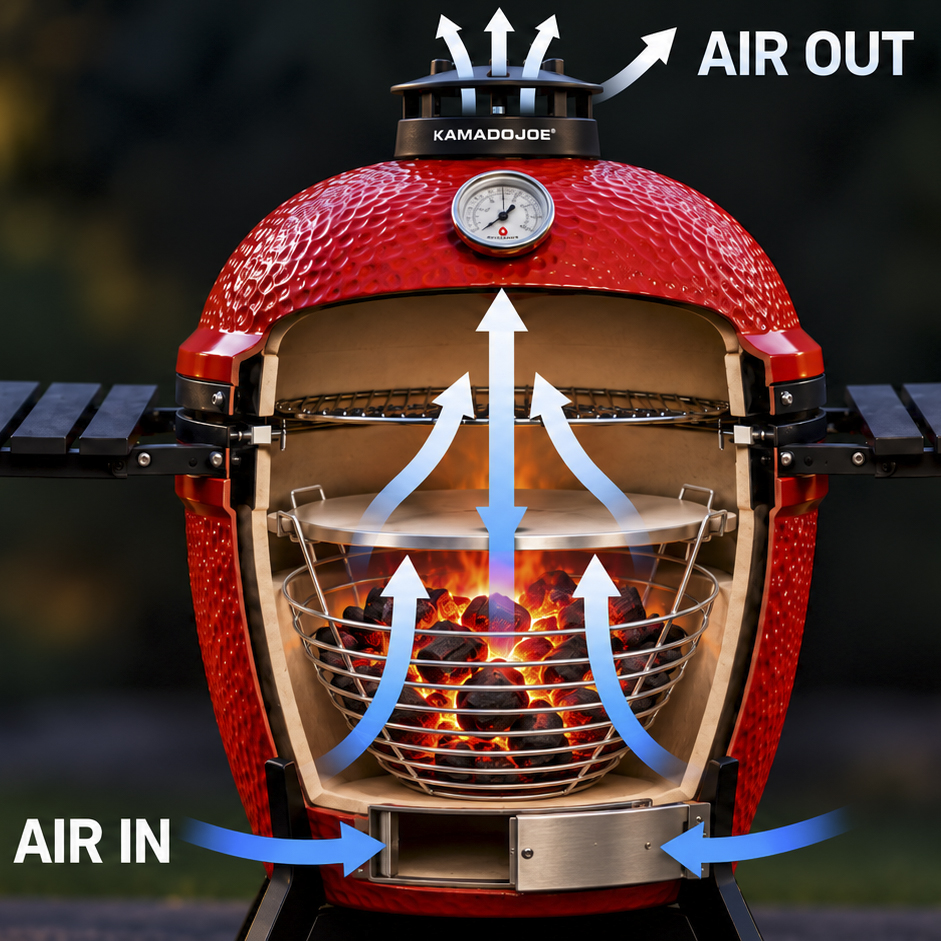
To maintain a hot fire, ceramic cookers rely on good airflow. As the fire heats the air inside the grill, the hot air rises and escapes through the top vent. This draws fresh air in through the bottom vent and up through the charcoal. The incoming air supplies the oxygen the fire needs.
Both vents are important, but they are only part of the air path. A hot fire also needs enough open space for air to move around and through the charcoal. Even with the bottom vent fully open, ash buildup behind the vent can restrict airflow into the firebox.
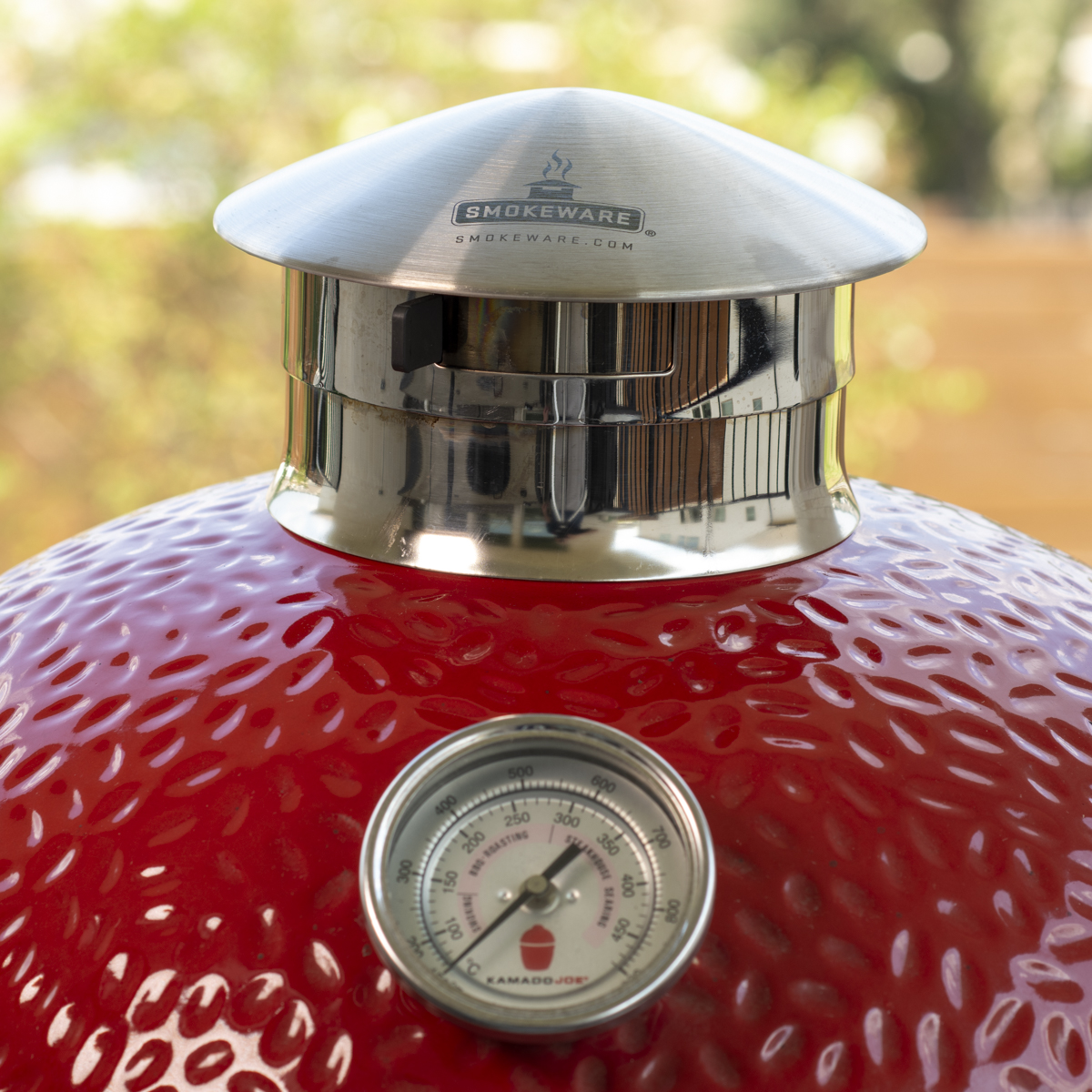
The Kontrol Tower regulates airflow at the top of the grill in two ways. Swiveling the cap open exposes the full opening, allowing more air to escape and quickly raising the temperature. When the cap is closed, air can escape only through the smaller openings in the adjustable vent. The adjustable vent provides finer control over airflow, but even when fully open, it allows much less air to escape than swiveling the cap open, as my vent test later in the article demonstrates.
Check the Dome Thermometer
First, calibrate the dome thermometer. Every adjustment depends on an accurate temperature reading, and dome thermometers can be inaccurate. I've had a brand-new dome thermometer read as much as 30°F off right out of the box. Although that error won't explain a stalled fire, it can throw off every temperature reading you take while diagnosing the problem.
Fortunately, dome thermometers are easy to test and recalibrate. Remove the dome thermometer and place its tip in boiling water. Use the correct boiling point for your elevation. At my home in Austin, about 1,300 feet above sea level, water boils at 209°F. At sea level, it boils at 212°F. If the reading is inaccurate, turn the adjustment nut on the back of the thermometer until the needle shows the correct temperature. If you cannot correct the reading, replace the thermometer.
Clear the Ash Below the Charcoal
Ash and small pieces of charcoal collect beneath the fire and can restrict airflow through the bottom vent. Most of the ash falls into the sliding ash drawer, but some settles under the ash drawer assembly. Emptying the drawer does not reach that ash, and the only way to remove it is to take out the firebox, as described below.
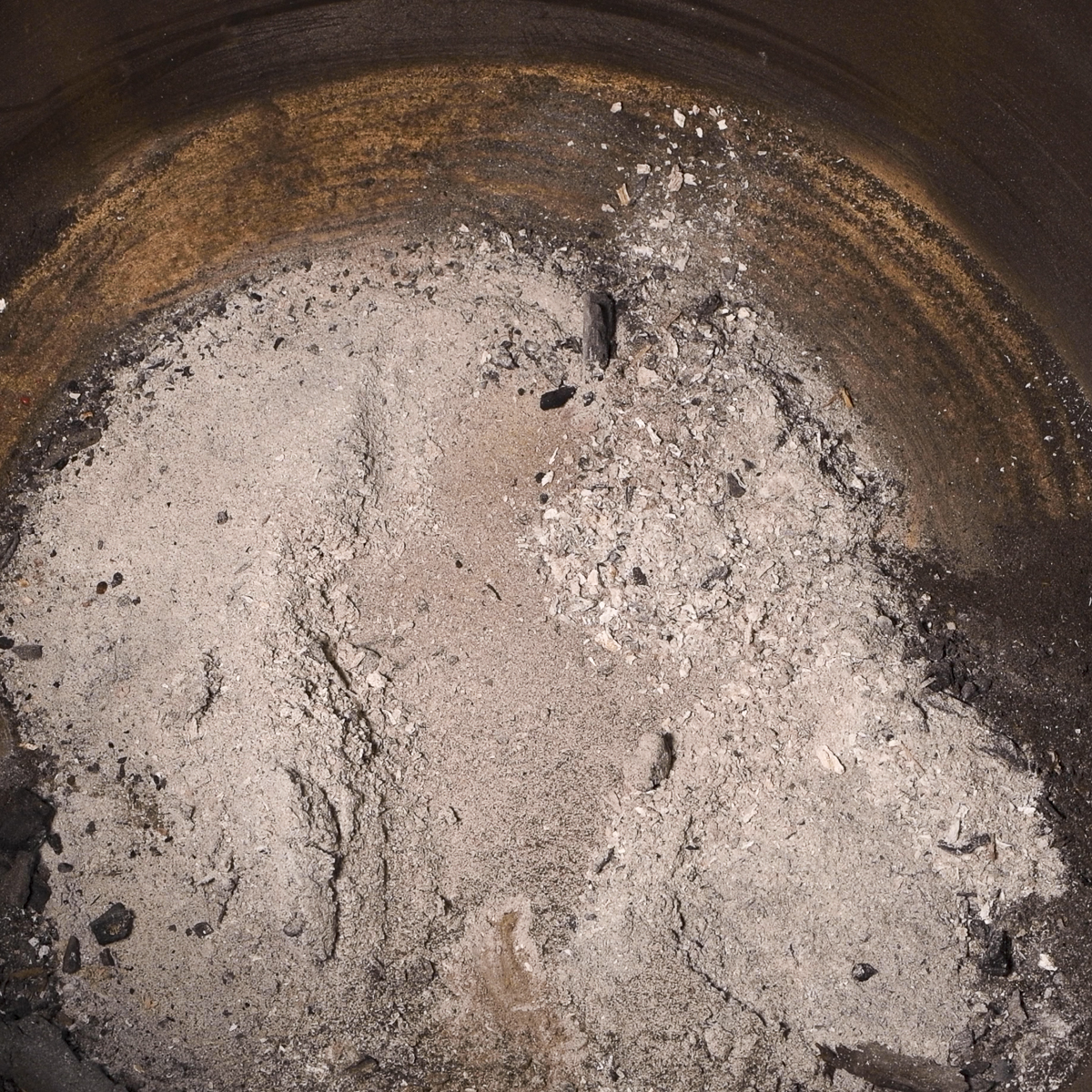
Make sure the grill and all the ash are completely cold before you begin. Remove the ash drawer and empty the contents into a metal container. Clear the small intake holes on the front of the drawer, just above the handle. Shine a flashlight through the bottom vent to check for ash blocking the air path into the firebox.
If you see packed ash beneath the ash drawer assembly, the grill needs a deeper cleaning. Remove the cooking grates and the internal ceramics, including the firebox ring, firebox panels, and bottom firebox. Then vacuum out the ash. My Kamado Joe Cleaning Guide walks through the complete teardown.
Improve Airflow with a Charcoal Basket
Ash can also block airflow where the air enters the charcoal. Some newer Kamado Joe grills come with a circular cast-iron charcoal grate, like the one shown here. The grate separates the burning charcoal from the ash drawer and allows air to flow up through its small holes. However, ash and small pieces of charcoal can still clog these holes and restrict airflow to the fire. Once the grill is hot, the holes remain blocked until the grill cools down.
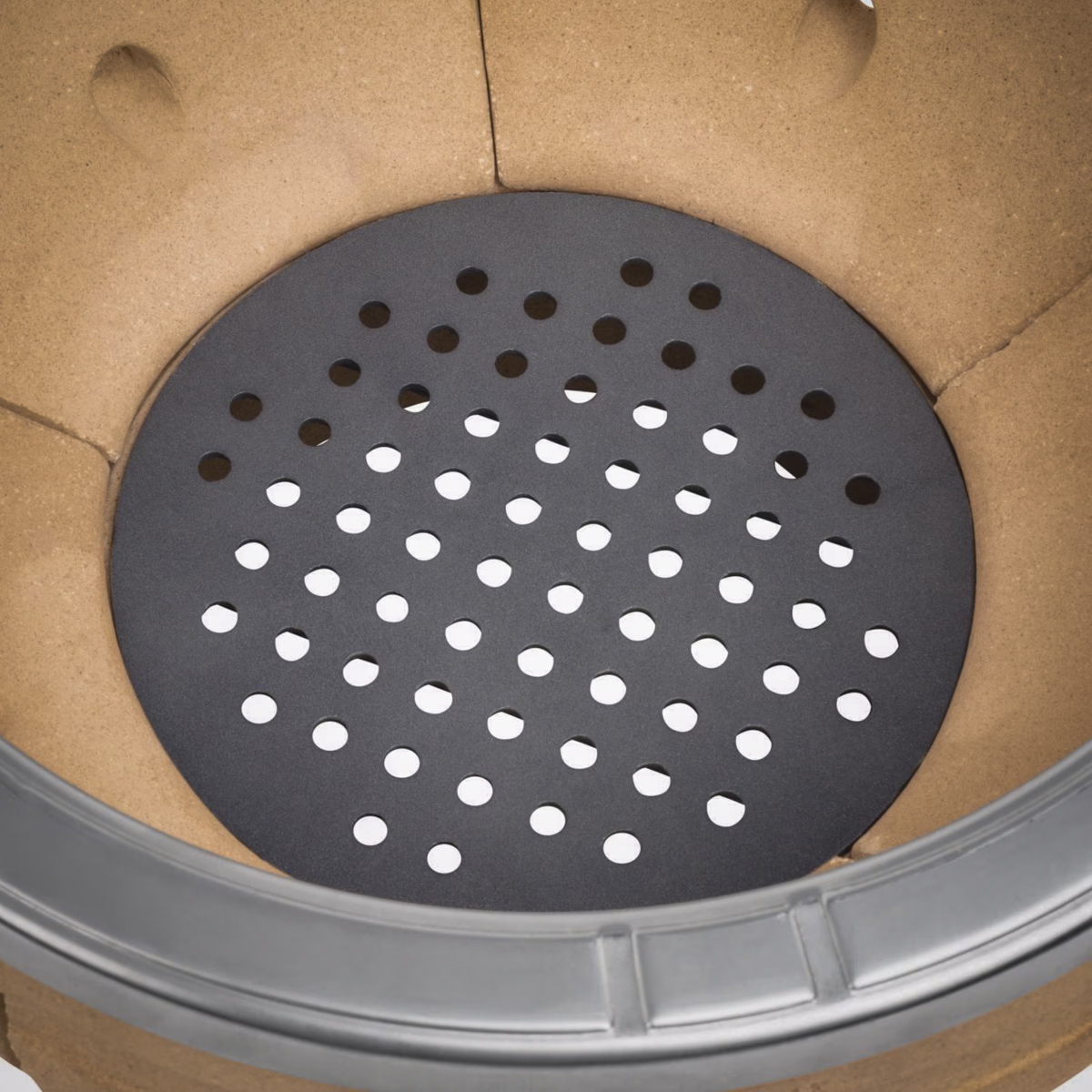
Replacing the cast-iron grate with a charcoal basket solves this problem. The basket holds the charcoal between open bars, allowing air to flow around and through the charcoal rather than squeezing through small holes. The increased airflow helps the fire burn hotter. The open spaces between the bars also allow ash to fall through instead of accumulating and blocking airflow.
After replacing my cast-iron charcoal grate with a Kick Ash Basket, I noticed that the charcoal lit faster and the temperature climbed more quickly. My Kick Ash Basket and Can Review covers the basket in more detail. Kamado Joe also makes its own charcoal basket.
Load the Charcoal for High Heat
For high-heat cooking, always use fresh lump charcoal. In my experience, previously lit charcoal does not burn as hot as fresh charcoal. Small pieces of leftover charcoal and accumulated ash can also restrict airflow by filling the spaces between larger pieces. For a normal cook, you can shake the basket to remove loose ash, then add fresh charcoal on top of the remaining pieces.
Start with an empty charcoal basket. Place pieces of fresh lump charcoal at least 4 inches long on the bottom, then add 2- to 3-inch pieces of charcoal on top. A hot fire consumes charcoal quickly, so fill the basket to the maximum amount allowed for your grill. The Classic II Owner's Manual specifies a maximum of 6 pounds of charcoal.
Check the Kontrol Tower
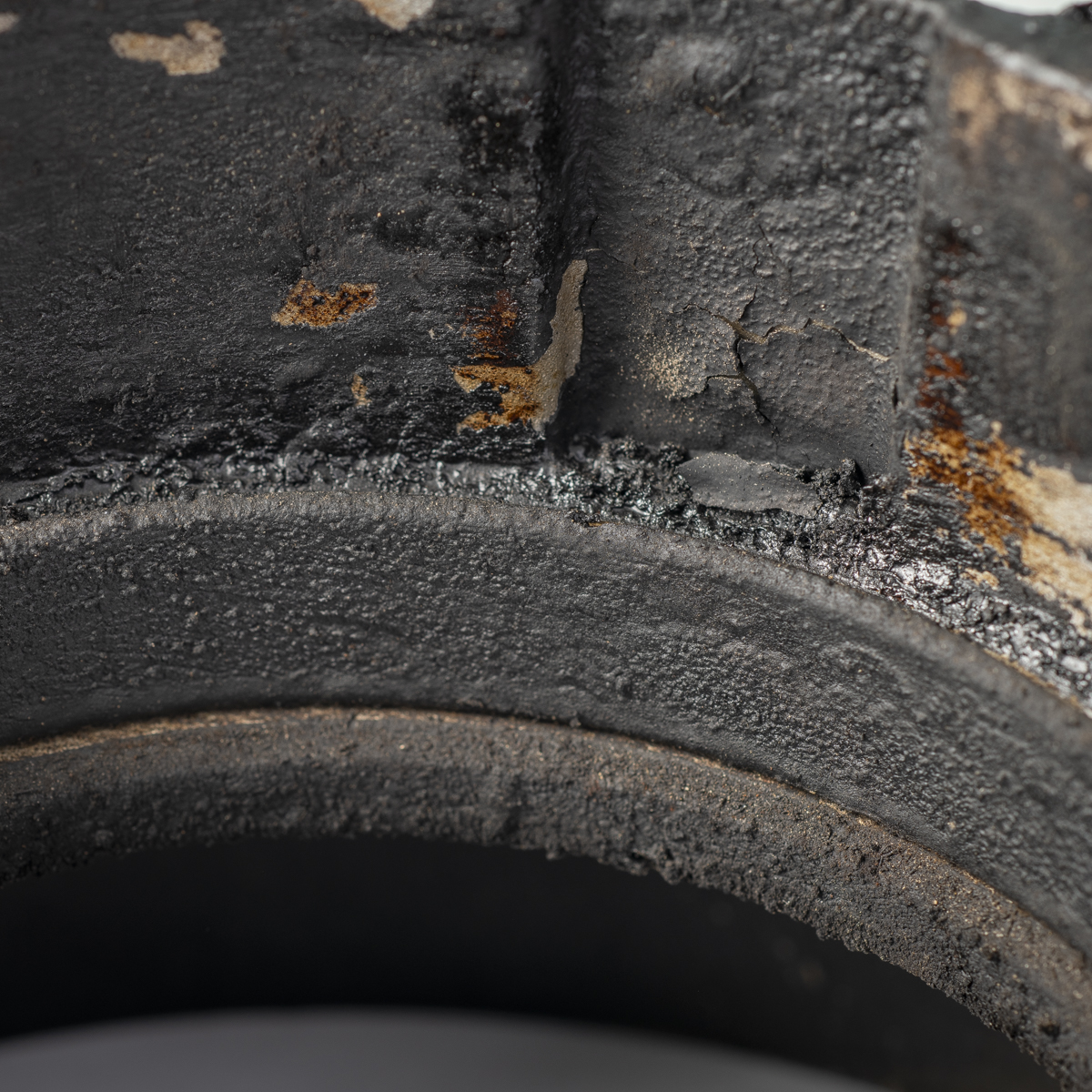
Grease and cooking residue can build up inside the Kontrol Tower, restricting airflow and making the top vent difficult to adjust. High-heat cooking requires maximum airflow, so the cap needs to open freely. Before lighting the grill, inspect the Kontrol Tower and remove any buildup. If the cap is still difficult to adjust after cleaning, see my SmokeWare Chimney Cap Review for the replacement I chose.
Light the Fire and Adjust the Vents
Open the bottom vent fully and light the charcoal in three places so the fire spreads across the charcoal bed. Leave the dome open for about 10 minutes, until the smoke thins. Then close the dome and swivel the Kontrol Tower cap fully open to maximize airflow. As the grill approaches your target temperature, start swiveling the cap closed to regulate the temperature.
For this demonstration, my target temperature was 600°F. As the grill approached 550°F, I swiveled the Kontrol Tower cap closed and left the adjustable vent fully open. Over the next 10 minutes, the temperature dropped and settled at 520°F. With the cap closed, air could escape only through the smaller openings in the adjustable vent, even though the bottom vent and adjustable vent were fully open.
To build a hotter fire, I swiveled the cap halfway open. After 10 minutes, the temperature stabilized at 630°F. I then swiveled the cap completely open, and the temperature finally stabilized at 830°F.
The halfway-open position was enough to exceed my target temperature of 600°F. The 830°F temperature comes with an important caution, because it exceeds the Classic II's published temperature range of 225°F to 750°F. This was an observation from my test, not a recommended cooking temperature. Choose a target temperature within your grill's published range, then adjust the Kontrol Tower cap to reach and maintain that temperature.
Burp the Grill Before Opening the Dome
When the grill temperature is above 350°F, burp the grill before opening the dome. Keep your face and body away from the front of the grill. Raise the dome 2 to 3 inches and pause for about 5 seconds before opening it fully. Burping allows oxygen to reach the fire gradually and reduces the risk of flashback, a sudden burst of heat and flame.
Reaching High Heat in Cold Weather
Cold or snowy weather draws heat away from the grill faster, making a full load of charcoal even more important. On a Classic II, load 6 pounds of charcoal and keep the dome closed as much as possible. Allow extra time for the grill to reach your target temperature.
Quick Reference
| Check | What to Do |
| Dome Thermometer | Test the thermometer in boiling water, using the boiling point for your elevation as the reference. Recalibrate or replace the thermometer if the reading is inaccurate. |
| Ash Beneath the Charcoal | When the grill is completely cold, clear the intake holes on the ash drawer. Use a flashlight to inspect the air path behind the bottom vent and remove any accumulated ash. |
| Charcoal Grate | Replace the cast-iron grate with a charcoal basket to improve airflow. |
| Charcoal | Start with an empty basket. Place pieces of fresh lump charcoal at least 4 inches long on the bottom, then add 2- to 3-inch pieces on top. Load up to 6 pounds in the Classic II. |
| Kontrol Tower | Before lighting the grill, remove any buildup that restricts airflow or makes the cap difficult to move. |
| Top Vent Setting for High Heat | Swivel the Kontrol Tower cap halfway open, then adjust it to hold your target temperature. |
| Cold Weather | Start with a full load of charcoal. Keep the dome closed as much as possible, and allow extra time for the grill to reach your target temperature. |
Final Thoughts
With a clear air path and a full load of fresh lump charcoal, your Kamado Joe should be able to reach temperatures above 500°F. You can now trace a stalled fire to its cause, whether that is an inaccurate dome thermometer, ash below the charcoal, a cast-iron grate, leftover charcoal, or a Kontrol Tower that needs cleaning, and correct it before the next cook.
Most importantly, you know where maximum airflow comes from. Swiveling the Kontrol Tower cap open provides far more airflow than fully opening the adjustable vent, so the cap position is the setting to change when the grill needs more heat.
Frequently Asked Questions
Ash beneath the charcoal, small or leftover pieces of charcoal, or a closed Kontrol Tower cap can keep the grill from reaching higher temperatures, even with the bottom vent and adjustable vent fully open.
Yes. Ash can restrict airflow if it accumulates beneath the charcoal or blocks the small intake holes on the front of the ash drawer. Opening the bottom vent fully cannot compensate for a blockage farther inside the grill.
Put the largest pieces, at least 4 inches long, on the bottom of an empty basket, and place smaller 2- to 3-inch pieces on top. The large pieces leave open spaces for air to move up through the fire. Use fresh lump charcoal, because previously lit charcoal does not burn as hot.
For a target temperature around 600°F, start with the Kontrol Tower cap swiveled halfway open. Adjust the cap as needed until the grill maintains a stable temperature between 600°F and 630°F. Swiveling the cap open provides substantially more airflow than the adjustable vent. When the cap is closed, the adjustable vent allows smaller airflow adjustments to regulate the temperature.

Leave a Reply