
I use a water pan for long, low-and-slow cooks in both my Kamado Joe and my offset smoker. The exact benefits and placement vary depending on the type of smoker, but I've found that a water pan helps create a more stable and humid cooking environment during long barbecue cooks.
A water pan doesn't add moisture directly to the inside of the meat. Instead, the water evaporates and increases the humidity inside the cooking chamber. That slows evaporation from the surface of the meat, can help smoke adhere to it and can make temperature fluctuations easier to manage.
The Bottom Line: I recommend using a water pan for long, low-and-slow cooks such as brisket, pork shoulder and ribs. It can increase humidity inside the smoker, help moderate temperature swings and keep the surface of the meat moist longer. A water pan won't put moisture directly into the meat, but it can create a more forgiving cooking environment. Plain water is all you need.
Jump to:
- What Does a Water Pan Do in a Smoker?
- Do You Need a Water Pan in a Smoker?
- Should You Use a Water Pan for Brisket, Ribs and Pork Shoulder?
- How a Water Pan Changes the Cooking Environment
- Where Should You Put a Water Pan in a Smoker?
- Does a Water Pan Help Create a Smoke Ring?
- Should You Put Anything Besides Water in a Water Pan?
- How to Use a Water Pan
- Does a Water Pan Affect Bark?
- Final Thoughts
What Does a Water Pan Do in a Smoker?
A water pan holds water inside the cooking chamber while the meat is smoking. As the water heats and evaporates, it increases the humidity inside the smoker and changes the cooking environment around the meat.
A water pan serves several purposes. It can help stabilize cooking temperatures, slow evaporation from the surface of the meat and keep that surface moist longer so smoke can adhere to it. Depending on where the pan is positioned, it can also act as an additional barrier between the meat and the heat source and catch grease and drippings.
What a water pan doesn't do is force water into the meat. The juiciness of brisket, pork shoulder or ribs depends much more on the cut of meat, rendering fat and collagen properly, cooking to the right degree of tenderness and allowing the meat to rest properly.
Think of the water pan as a way to help control the cooking environment, not as a way to put moisture into the meat.
Do You Need a Water Pan in a Smoker?
You don't necessarily need a water pan every time you use a smoker. Whether I use one depends on the type of cooker, what I'm cooking and the result I'm trying to achieve.
Offset Smoker
I generally use a water pan for long cooks in my offset smoker. Offset smokers move a considerable amount of hot air through the cooking chamber, which can dry the surface of the meat more quickly. The added humidity from a water pan can make that cooking environment a little more forgiving.
A pan of water can also help moderate temperature fluctuations. That's useful with a traditional offset because maintaining a clean-burning fire while keeping the cooking chamber at a consistent temperature requires more attention than cooking on a ceramic grill.
Kamado Joe or Big Green Egg
I use a water pan when cooking low and slow on a Kamado Joe, and I recommend using one for long cooks such as brisket, pork shoulder and ribs.
Kamado Joe and Big Green Egg ceramic grills are already very efficient cookers. Their thick ceramic walls retain heat extremely well, and the restricted airflow used for low-temperature cooking helps them maintain a relatively humid cooking environment. But that doesn't mean a water pan has no benefit.
The water adds thermal mass to the cooker and helps moderate temperature changes during a long cook. As it evaporates, it also increases humidity inside the cooking chamber and helps keep the surface of the meat from drying too quickly. That moist surface can be beneficial during the early stages of smoking when you want smoke to adhere to the meat.
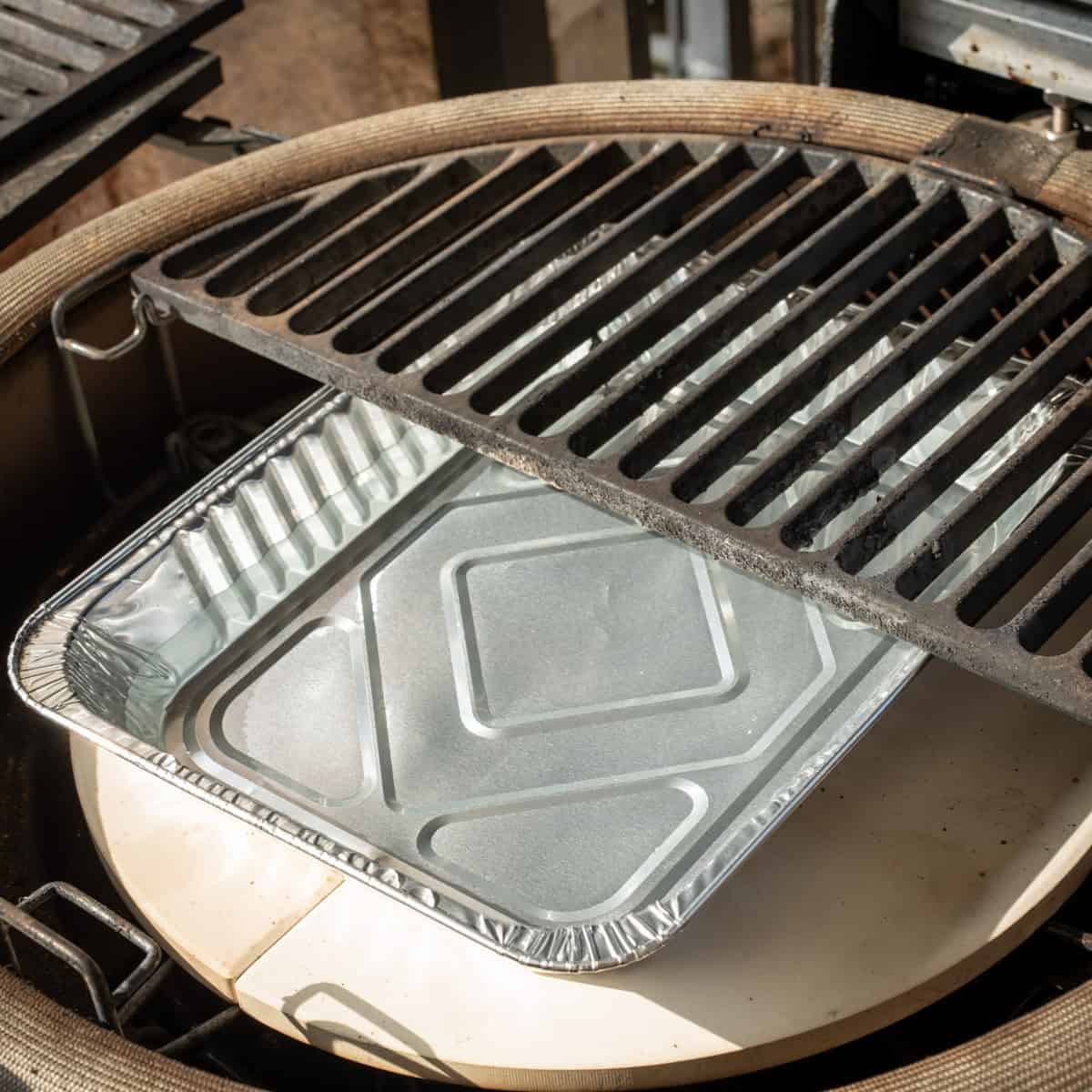
In my Kamado Joe, I place the water pan above the heat deflectors and below the cooking grate. I use it for long, low-and-slow cooks because I've had consistently good results with that setup.
Pellet Smoker
A water pan can be useful in a pellet smoker because the fan continuously moves heated air through the cooking chamber. That airflow can increase evaporation from the surface of the meat.
You don't have to use one, but it's worth experimenting with during long cooks such as brisket and pork shoulder, particularly if you find the surface of the meat drying more quickly than you'd like.
Electric or Vertical Smoker
This depends heavily on the design of the smoker. Many vertical and electric smokers are designed around a water pan and may even include one from the manufacturer.
If your smoker came with a water pan, I would generally use it as the manufacturer intended unless you've experimented with the cooker enough to know that you prefer the results without it.
Should You Use a Water Pan for Brisket, Ribs and Pork Shoulder?
I use a water pan when smoking brisket, ribs and pork shoulder low and slow. These are long cooks where I want to maintain a stable cooking environment and keep the surface of the meat from drying too quickly, particularly during the early stages of the cook.
For brisket and pork shoulder, the added humidity can be especially useful during a long cook. I still get the bark I'm looking for when using a water pan, so I don't consider the added humidity a reason to leave it out.
I also use a water pan when smoking ribs. Ribs have much less mass than a brisket or pork shoulder and can dry out more quickly, so I like the more humid cooking environment a water pan provides.
As with everything else we've discussed, the water isn't soaking into the meat or making it juicy from the inside. It's helping control the environment around the meat while it cooks.
How a Water Pan Changes the Cooking Environment
Water has a very high capacity for absorbing heat. As the water in the pan heats and eventually evaporates, it absorbs energy from the cooking chamber. That added thermal mass can help moderate temperature changes during a long cook.
Evaporation also increases the humidity inside the smoker. The more humid environment slows evaporation from the surface of the meat, allowing that surface to remain moist and tacky longer. That's important because smoke adheres more readily to a moist surface than to one that has dried out.
This doesn't mean the water is soaking into the meat or making the inside of a brisket juicier. The water pan is changing the environment around the meat. Properly cooking and resting the meat still has a much greater effect on how juicy and tender it ultimately becomes.
In his book, Franklin Barbecue - A Meat-Smoking Manifesto, renowned Austin, Texas pitmaster and author Aaron Franklin says, "You need a very humid environment, as it slows down the rate of moisture evaporation, collagen breakdown, and fat melt so that they all happen in concert." He also says that, "the humid environment helps preserve the moist, tacky surface of the meat, which is desirable to attract smoke."
Where Should You Put a Water Pan in a Smoker?
The best location for a water pan depends on the design of the smoker. In general, you want the pan somewhere that it can absorb heat and add humidity to the cooking chamber without interfering with airflow.
When possible, placing the water pan between the heat source and the meat also allows it to function as an additional heat barrier.
Where to Put a Water Pan in an Offset Smoker
In my Yoder Cheyenne offset smoker, I place the water pan on the cooking grate between the firebox opening and the meat. That puts the pan close to the hottest part of the cooking chamber, where it can absorb some of the heat entering from the firebox while adding humidity as the water evaporates.
I don't want the pan blocking airflow through the smoker, so I leave enough room around it for the hot air and smoke to move freely through the cooking chamber and toward the chimney.
Where to Put a Water Pan in a Kamado Joe
In my Kamado Joe, I place the water pan above the heat deflectors and below the cooking grate. That keeps it between the charcoal and the meat while still allowing indirect heat and smoke to circulate around the cooker.
You don't need a huge pan. Choose one that fits comfortably above the heat deflectors without restricting airflow around the edges.
Where to Put a Water Pan in a Pellet Smoker
In a pellet smoker, put the water pan on a cooking grate where it won't interfere with the smoker's temperature sensor or airflow. If you have enough room, placing it relatively close to the heat source generally encourages evaporation, but follow the manufacturer's recommendations for your particular smoker.
Where to Put a Water Pan in an Electric or Vertical Smoker
If the smoker was designed with a dedicated water-pan location, use it. Manufacturers typically position the pan where it can absorb enough heat to produce evaporation without interfering with airflow or the heating element.
Does a Water Pan Help Create a Smoke Ring?
Aaron Franklin discusses this in Franklin Barbecue - A Meat-Smoking Manifesto, noting that starting with a cold brisket can produce a wider smoke ring because the meat takes longer to heat. So if you're looking for a more pronounced smoke ring, concentrate on starting with cold meat and maintaining a clean-burning fire rather than trying to manipulate the position of the water pan.
A water pan can help create a humid cooking environment, but it isn't what creates the smoke ring. The smoke ring is a chemical reaction involving nitric oxide from combustion and myoglobin in the meat. That reaction can occur only while the myoglobin remains in a state that allows it to retain the characteristic pink color.
This is one reason I put brisket into the smoker while it's still cold rather than letting it come up to room temperature first. Starting with cold meat gives the smoke-ring-forming reaction more time to occur as the outside of the brisket heats up.
Should You Put Anything Besides Water in a Water Pan?
Some people add apple juice, apple cider, beer or other liquids to a water pan because they believe the vapor adds flavor to the meat. I've tried all kinds of combinations over the years, and I'm not convinced it makes a noticeable difference. The smoke, seasoning and meat itself have a much greater effect on flavor.
That said, my longtime mixture has been about 50% water, 40% apple juice or apple cider and 10% beer. Why only 10 ounces of beer? Because I drink the first two ounces and pour the remaining 10 into the water pan.
If you're wondering what you actually need to put in a water pan, though, the answer is simple: plain water works just fine.
How to Use a Water Pan
Using a water pan is simple, but I recommend putting the empty pan in the smoker before bringing the cooker up to temperature. Position it according to the type of smoker you're using, following the placement recommendations above.
Once the pan is in place, use a pitcher to fill it about 75% full. I've learned from experience that this is much easier than trying to maneuver a pan full of water into a smoker. A full aluminum pan can flex or tilt, spilling water onto the charcoal and creating a mess.
Check the water level occasionally during a long cook and refill the pan if necessary. You don't want it to run completely dry. Once the water has evaporated, you lose the humidity it was providing, and the temperature of the cooker may also change because the pan is no longer absorbing the same amount of heat.
I prefer inexpensive disposable aluminum pans rather than reusable metal pans. Water pans get covered with smoke, grease and drippings during a long cook, and I've found that cleaning them isn't worth the trouble. Choose a pan that fits comfortably inside your smoker without restricting airflow.
Should You Use Hot or Cold Water?
The initial water temperature isn't particularly important. I generally use cold or room-temperature water because there's no real advantage to heating it first. The smoker will bring the water up to temperature soon enough.
Does a Water Pan Affect Bark?
A water pan can affect how bark develops because bark formation depends partly on moisture evaporating from the surface of the meat. Increasing the humidity inside the smoker can slow that evaporation and keep the surface moist longer.
That doesn't mean a water pan prevents good bark from forming. I use a water pan when smoking brisket and pork shoulder and still get the bark I'm looking for. The goal isn't to keep the meat wet throughout the entire cook; it's to create a more humid cooking environment during the long smoking process.
If your bark isn't developing the way you want, don't automatically blame the water pan. Cooker temperature, airflow, rub, wrapping the meat too early and the amount of moisture on the surface can all affect bark development.
Final Thoughts
I use a water pan for long, low-and-slow cooks because I've found that it helps create a stable, humid cooking environment. I use one in both my Kamado Joe and my offset smoker, although where I place it depends on the design of the cooker.
A water pan isn't going to inject moisture into a brisket or rescue meat that's been overcooked. What it can do is slow evaporation from the surface, help smoke adhere to the meat and add thermal mass that can help moderate temperature changes during a long cook.
You don't need anything elaborate, either. I use an inexpensive disposable aluminum pan and plain water is all that's necessary. Put the empty pan in the smoker before the cook, fill it about three-quarters full and keep an eye on the water level during particularly long cooks.
After years of cooking this way, it's simply part of my normal setup whenever I'm smoking brisket, pork shoulder, ribs or other meats low and slow.
If you're planning your next long, low-and-slow cook, my How to Smoke a Brisket on a Charcoal Grill guide walks through the entire process. You may also want to read How to Know When a Brisket Is Done and my guide to using pink butcher paper in a smoker.
Leave a Reply