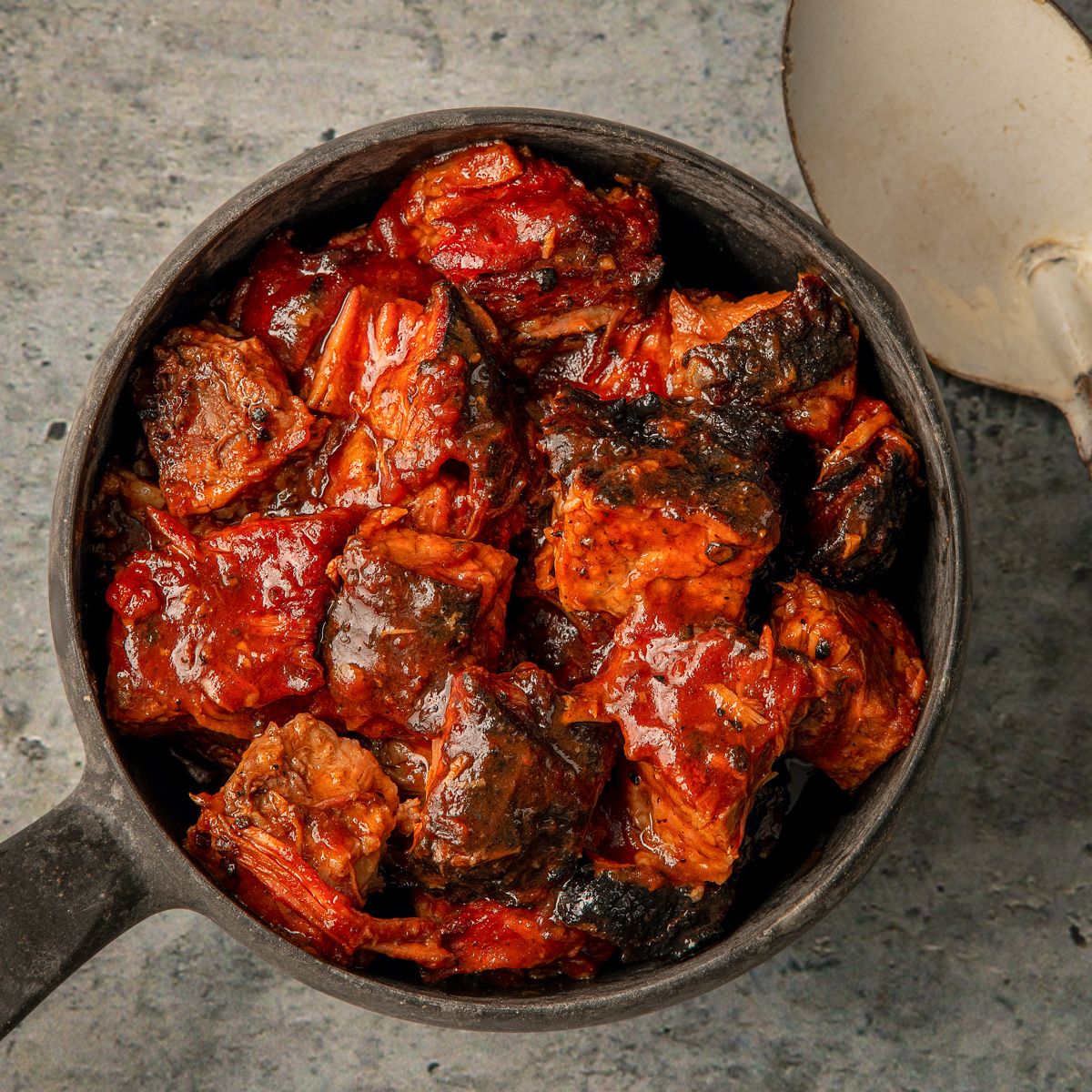
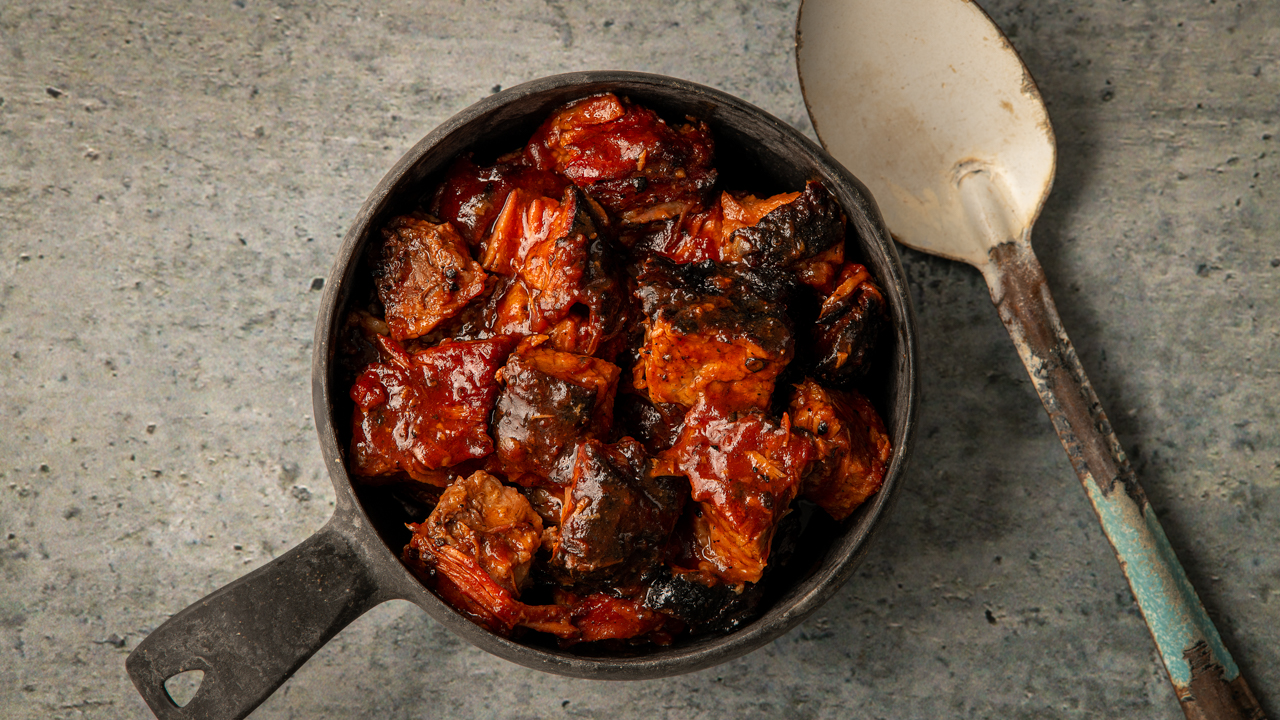
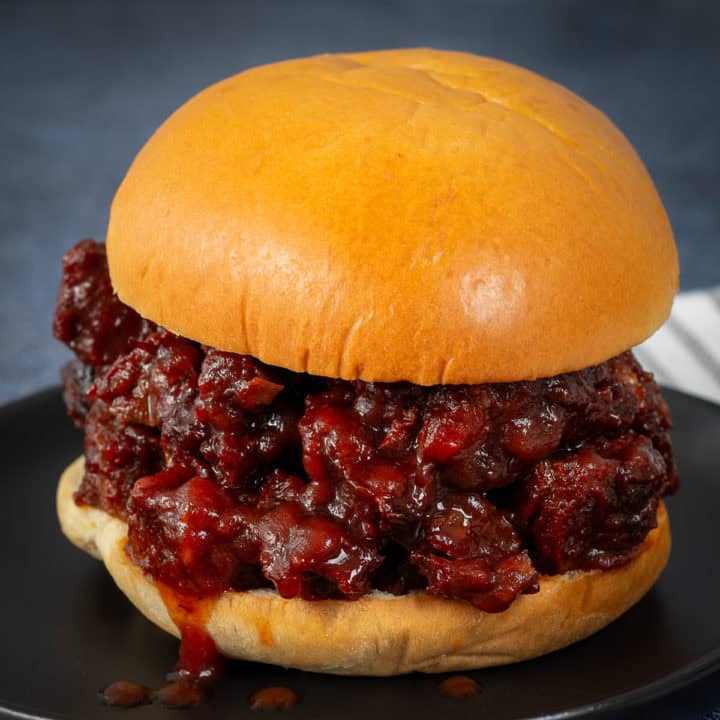
Brisket burnt ends are made from the point of a whole packer brisket. The point is the fattier, richer section of the brisket, which makes it perfect for cutting into cubes, saucing and returning to the smoker until the edges caramelize and the meat becomes exceptionally tender.
I love sliced brisket, but burnt ends are the part I look forward to most. Around Austin, many barbecue restaurants leave the point attached and serve it as fatty brisket. I usually go the other direction: once the brisket is cooked, I separate the point from the flat and turn the point into burnt ends.
The Bottom Line: Smoke a whole packer brisket until tender, separate the point from the flat, cut the point into 1½- to 2-inch cubes, toss them with barbecue sauce and return them to the smoker until the sauce sets and the cubes are tender and caramelized.
Jump to:
- Ingredients
- What are Brisket Burnt Ends?
- What Part of the Brisket Is Used for Burnt Ends?
- Smoke the Brisket First
- Separate the Point from the Flat
- Cut the Brisket Point into Cubes
- Sauce the Burnt Ends
- Return the Burnt Ends to the Smoker
- Rest the Brisket Flat
- Can You Make Burnt Ends Without a Whole Brisket?
- Should You Separate the Point Before or After Smoking?
- Storage
- Frequently Asked Questions
- Final Thoughts
- Related
- Pairing
- 📖 Recipe
Ingredients
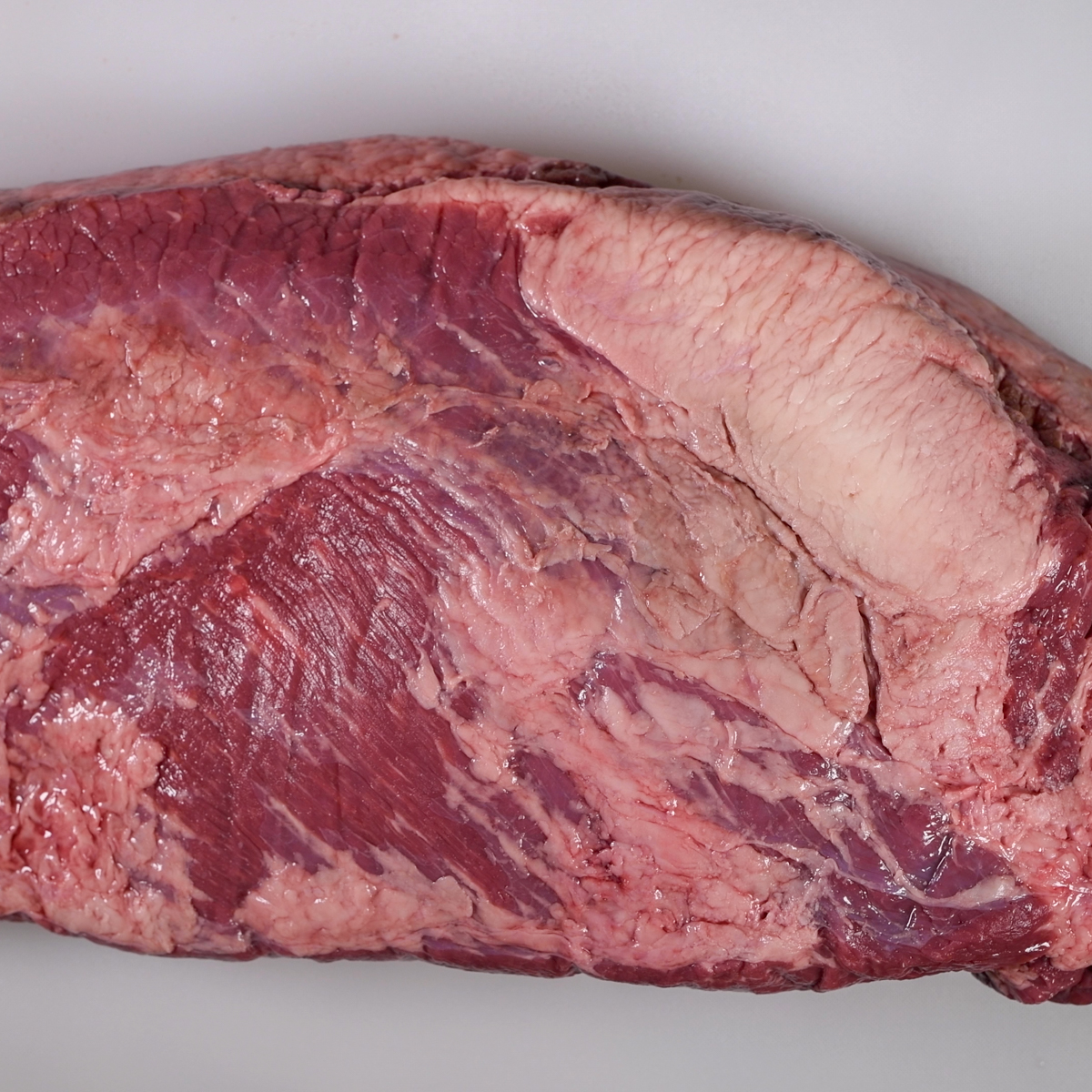
This recipe starts with a 12 pound whole brisket.
- Whole packer brisket
- Kosher salt
- Black pepper
- Barbecue sauce
See recipe card for quantities.
What are Brisket Burnt Ends?
Brisket burnt ends are cubes cut from the brisket point and cooked a second time after the brisket is smoked. The point contains more fat and marbling than the flat, which gives burnt ends their rich flavor and soft, almost buttery texture.
Despite the name, good burnt ends should not be burned. The goal is dark, smoky bark on the outside with tender, juicy meat inside.
What Part of the Brisket Is Used for Burnt Ends?
Use the point, not the flat. A whole packer brisket contains two muscles: the flat and the point. The flat is the leaner section typically used for slices. The point sits partly on top of the flat and contains considerably more fat, which makes it ideal for burnt ends.
I would buy brisket points by themselves if I could find them regularly. Since I usually can't, I smoke a whole brisket and separate the point after it is finished cooking.
Smoke the Brisket First
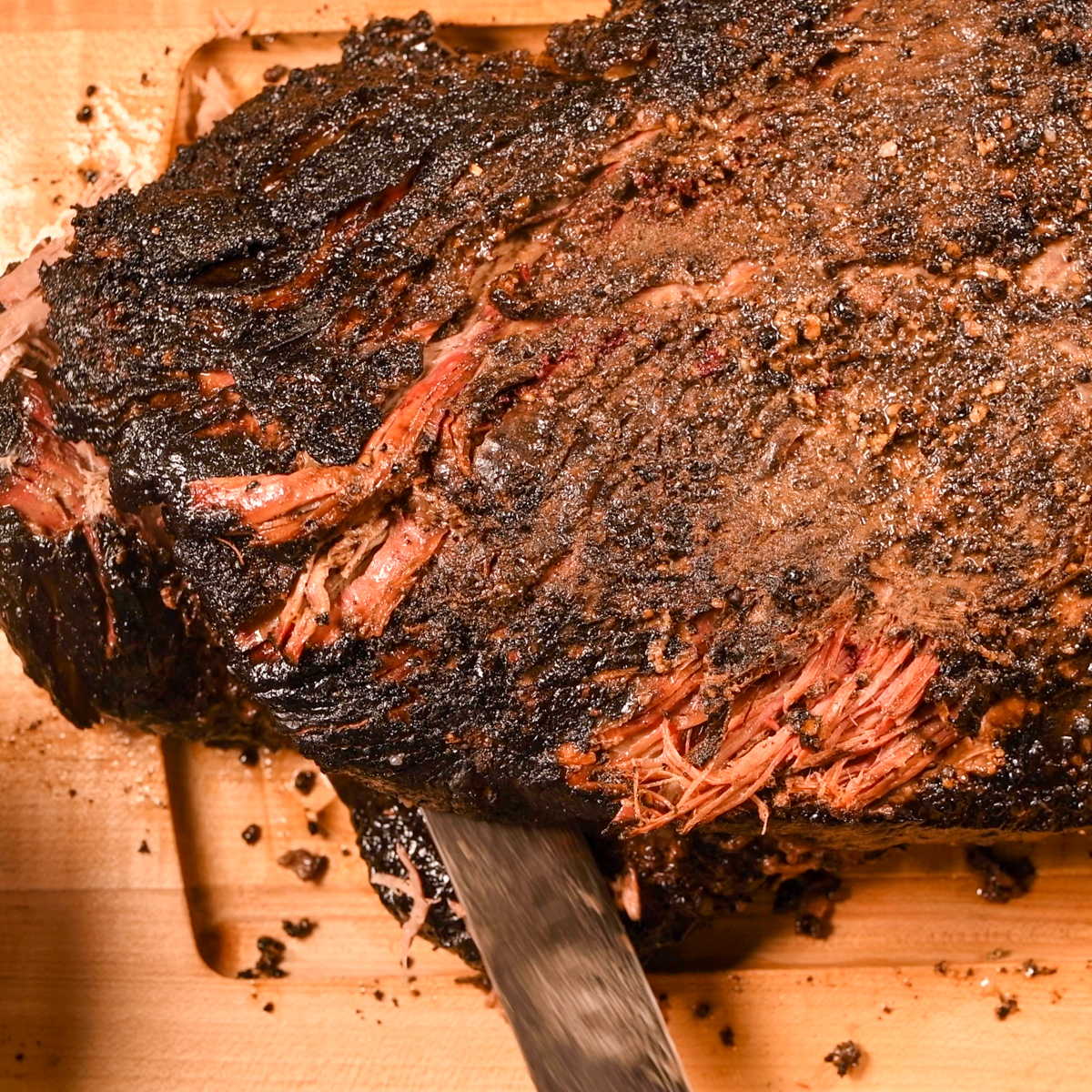
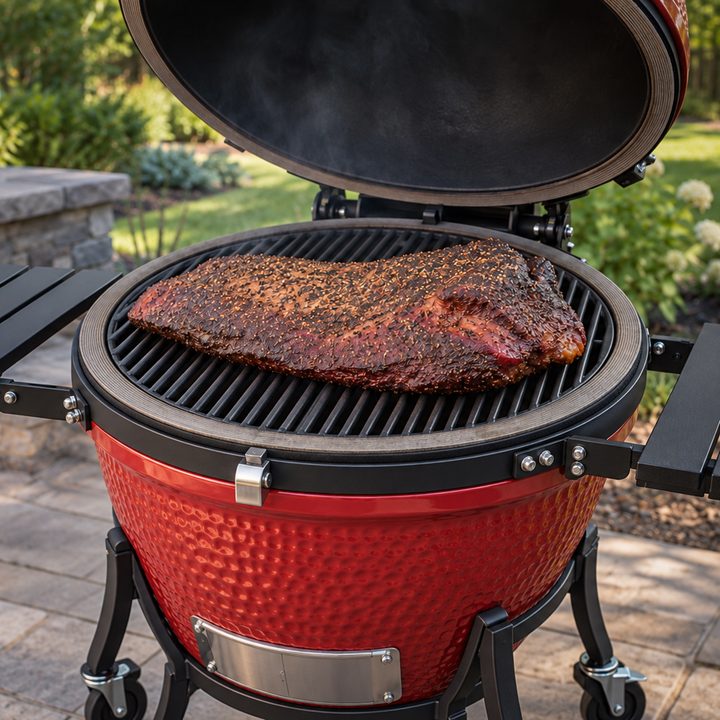
This recipe starts with a fully smoked whole packer brisket. I season brisket Texas-style with kosher salt and black pepper, smoke it low and slow until the bark is set, then wrap it in pink butcher paper and continue cooking until tender.
For the complete process, see my How to Smoke a Brisket on a Kamado Joe guide.
Separate the Point from the Flat
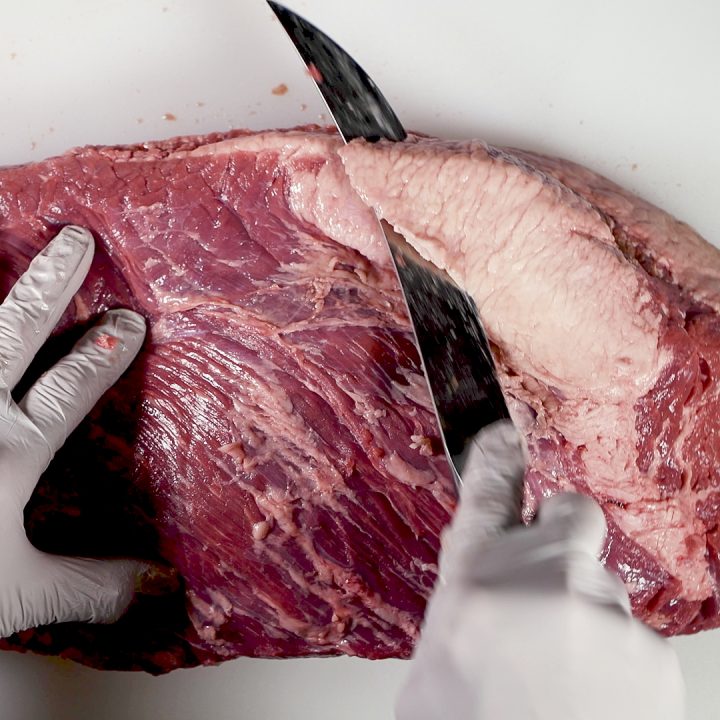
Once the brisket is finished cooking, remove it from the smoker and separate the point from the flat. There is a layer of fat running between the two muscles. Insert a knife into that seam and follow it carefully, using the fat layer as your guide. The point should separate fairly easily once the brisket is fully cooked.
Slice through the fat separating the point from the flat.
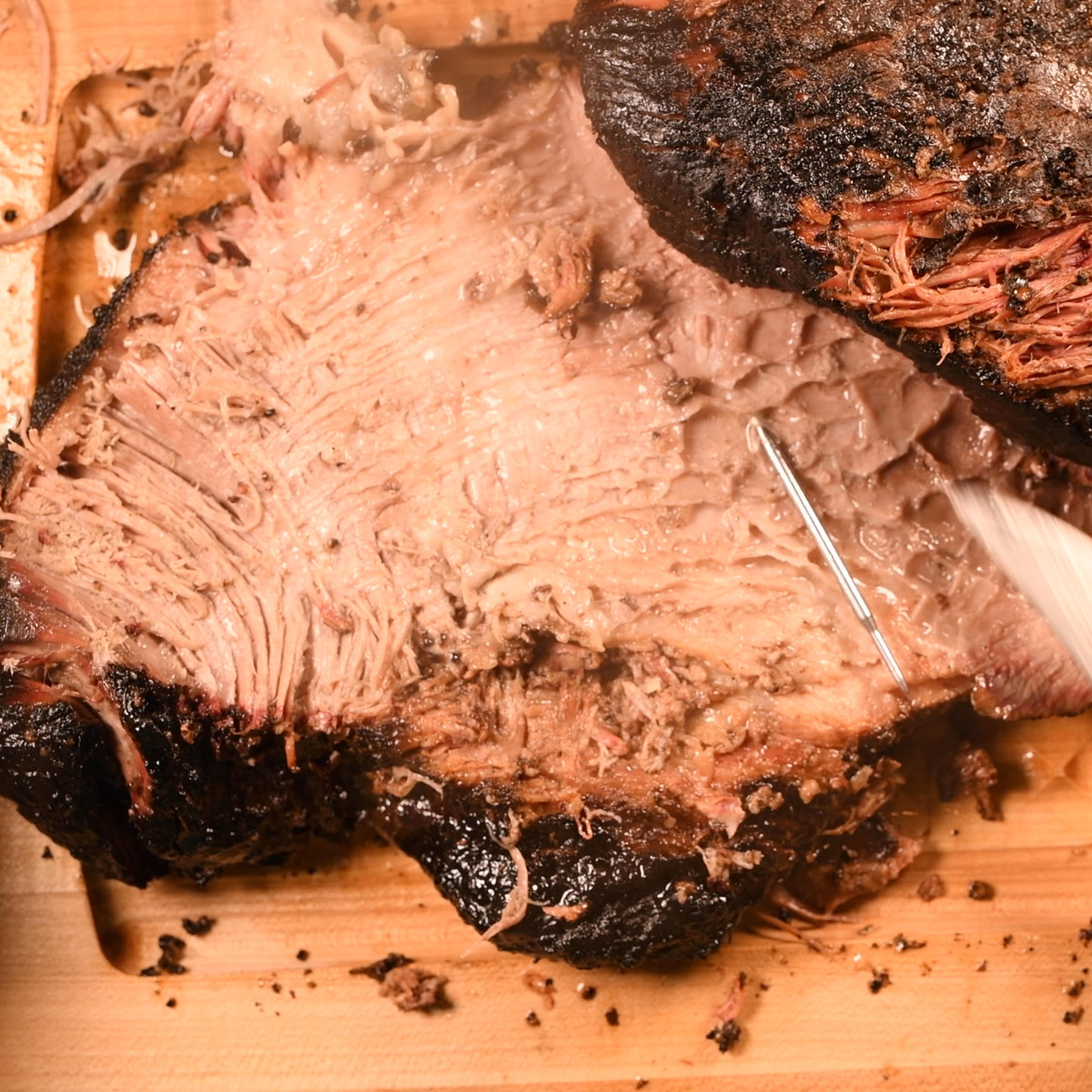
Then slide the separated point out from under the flat.
Once the point is removed, wrap the flat and let it rest while you finish the burnt ends.
Cut the Brisket Point into Cubes
Cut the point into pieces about 1½ to 2 inches square. Don't make the pieces too small. Burnt ends continue cooking after they're cut, and smaller pieces can dry out before the sauce and exterior have time to caramelize.
The irregular pieces are part of the appeal. You don't need perfectly uniform cubes, but keeping them reasonably close in size will help them cook evenly.
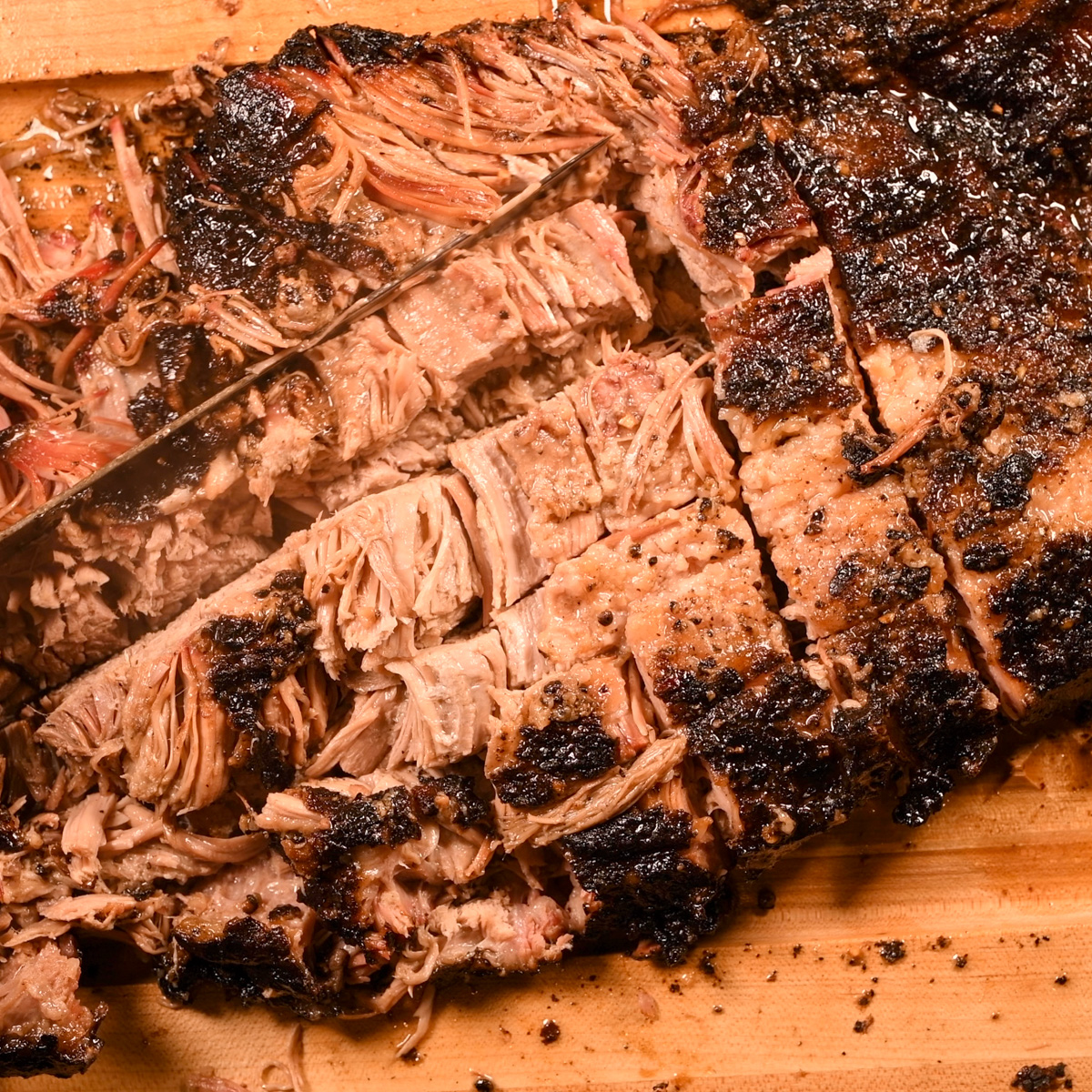
Cut the brisket point into pieces for burnt ends.
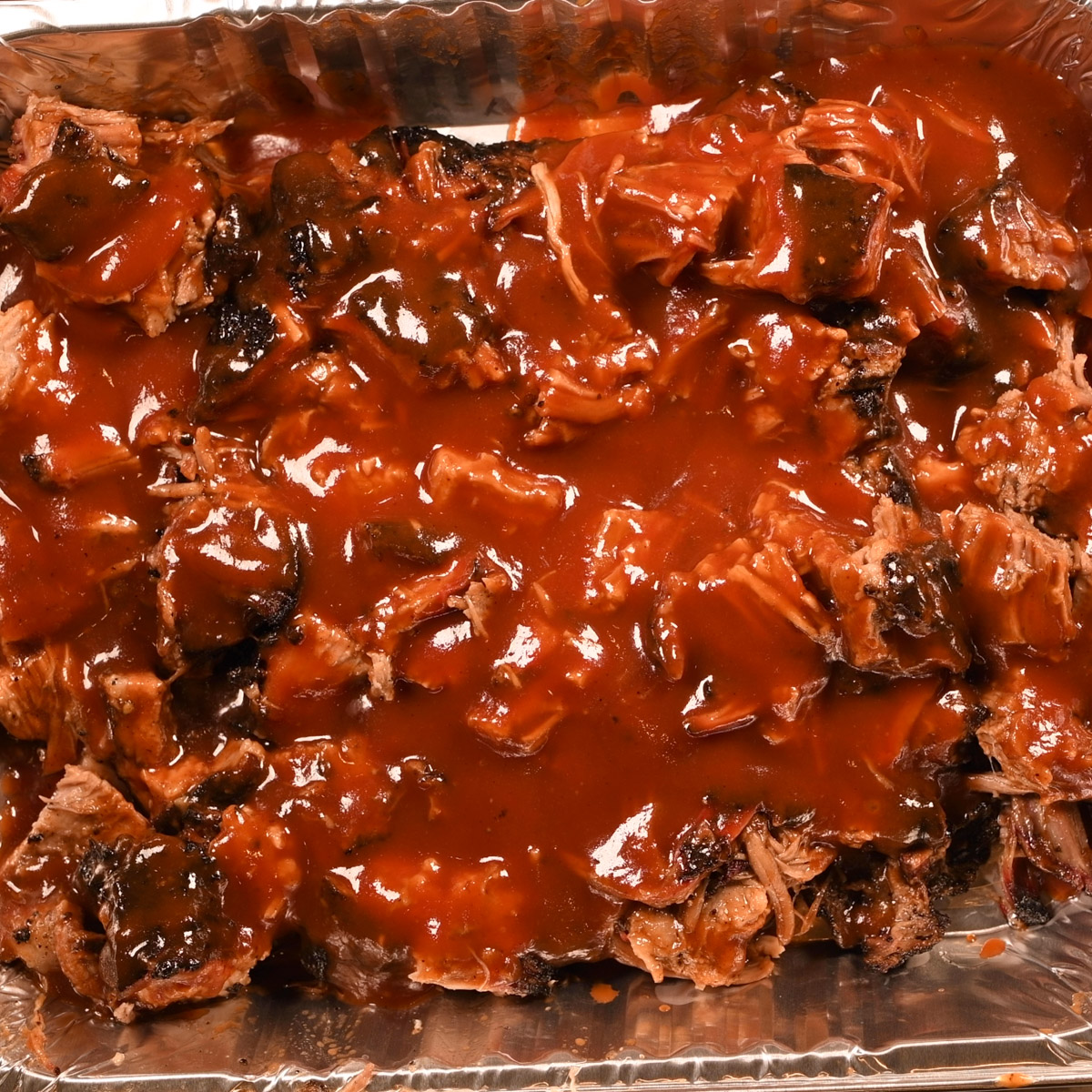
Coat the brisket point pieces with barbecue sauce before returning them to the smoker.
Sauce the Burnt Ends
Place the brisket cubes in an aluminum pan and coat them with your favorite barbecue sauce. You want enough sauce to coat the pieces without drenching them. Toss the cubes so the sauce reaches all sides, then spread them into a fairly even layer. I like the contrast between a sweet, tangy barbecue sauce and the rich, smoky brisket point.
Return the Burnt Ends to the Smoker
Place the pan back in the smoker uncovered. Continue cooking until the sauce thickens, the edges darken and the cubes become very tender. The additional cooking time also allows more of the fat in the point to render.
The burnt ends should have a sticky, caramelized exterior and should feel very tender when pierced.
Rest the Brisket Flat
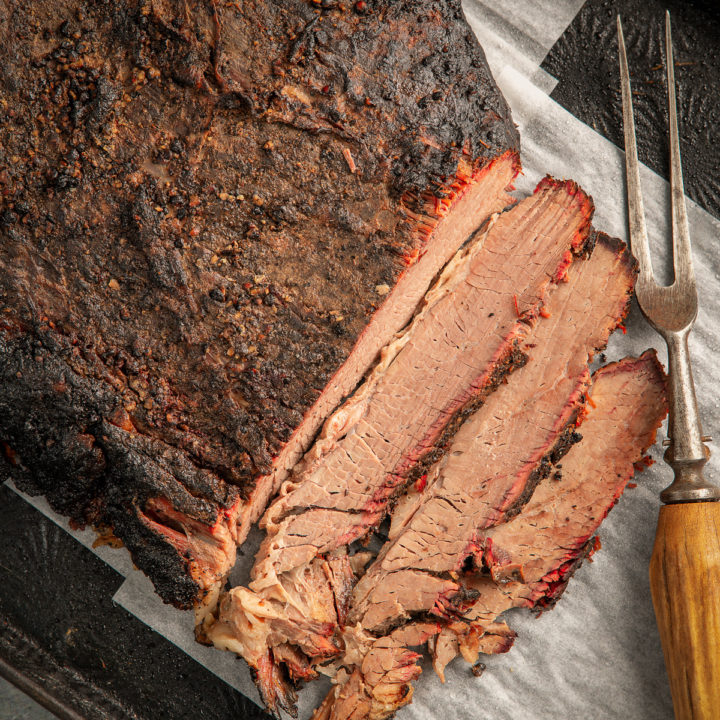
While the burnt ends finish, let the flat rest. I wrap the flat in butcher paper, then towels, and place it in a room-temperature cooler for about two hours. A proper rest is one of the most important steps in producing juicy sliced brisket.
Once the flat has rested, slice it across the grain and serve it alongside the burnt ends.
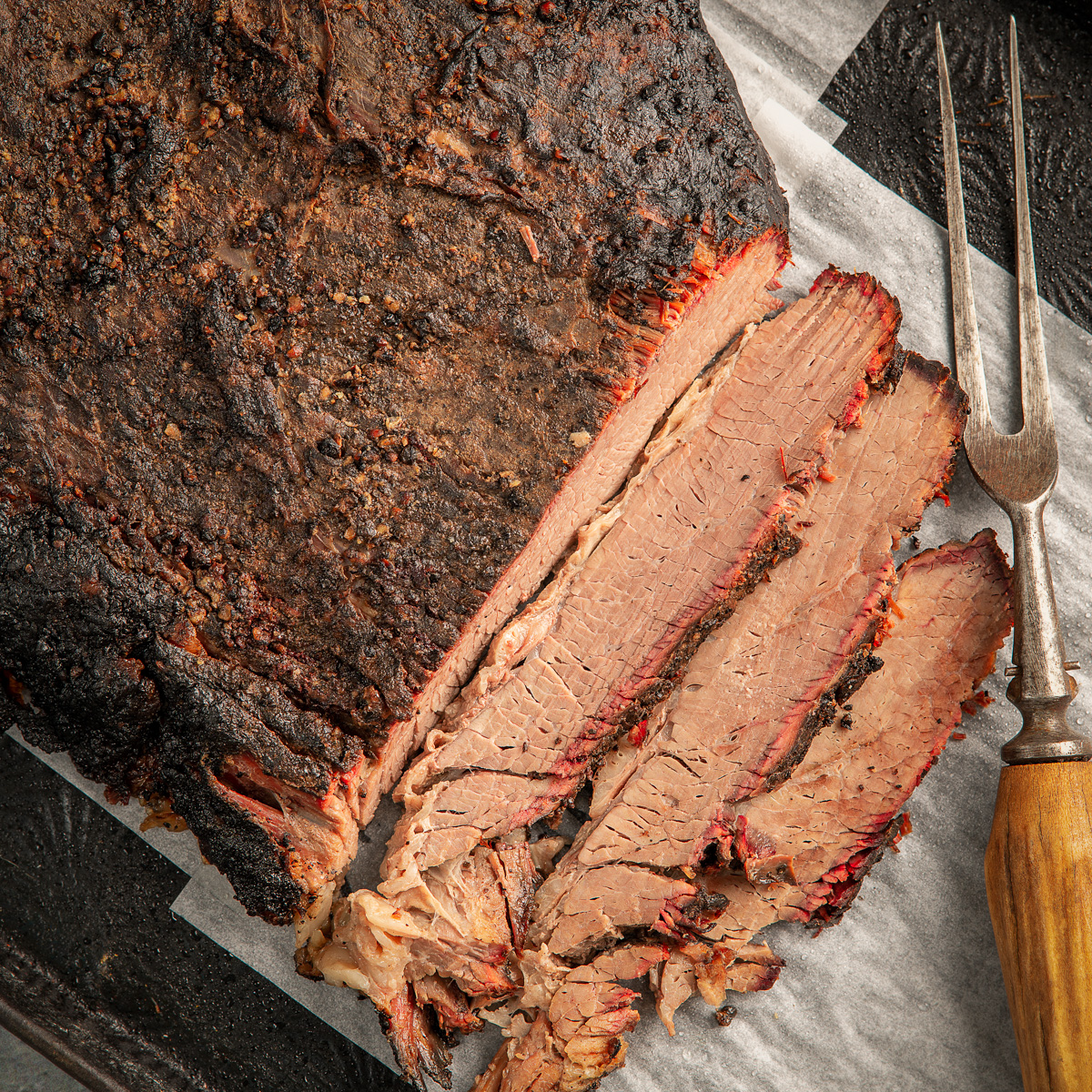
Brisket cut right away was dried out because the juice ran out.

The brisket that rested for two hours is nice and juicy.
Can You Make Burnt Ends Without a Whole Brisket?
Yes, if you can find a brisket point sold separately. That's actually an excellent option if burnt ends are your main goal because you don't have to cook an entire packer brisket.
If you can buy a brisket point separately, see my How to Make Brisket Burnt Ends Without a Whole Brisket recipe for the complete method.
Should You Separate the Point Before or After Smoking?
I separate the point after the brisket is cooked. Leaving the brisket intact during the main cook keeps the process simple and lets the point and flat cook together.
Once the brisket is tender, the fat seam between the two muscles is easy to follow and the point can be removed for burnt ends.
Storage
Store leftover burnt ends in an airtight container for up to 3 days.
Frequently Asked Questions
You can, but I prefer the point. The point contains considerably more fat and marbling, which helps the cubes stay rich and tender during the second cook. The leaner flat is better suited for sliced brisket.
I cut the brisket point into pieces about 1½ to 2 inches square. That gives you enough surface area for bark and sauce without creating pieces so small that they dry out.
They don't absolutely require it, but I use barbecue sauce because it creates the sticky, caramelized exterior that makes burnt ends so good.
No. The name is misleading. Good burnt ends should be dark and caramelized on the outside but tender and juicy inside.
Final Thoughts
For me, burnt ends are one of the best parts of cooking a whole brisket. The fatty point already has incredible flavor, and cutting it into cubes, adding barbecue sauce and giving it more time in the smoker transforms it into something completely different from sliced brisket.
If you're already smoking a whole packer brisket, making burnt ends doesn't add much difficulty. Serve them with the sliced flat-or keep a few for yourself. I won't tell.
Related
Looking for other recipes like this? Try these:
Pairing
These are my favorite dishes to serve with this recipe.

📖 Recipe
Brisket Burnt Ends Recipe
Equipment
- 1 Smoker
Ingredients
- 12 pound whole packer brisket about 12 pounds
- 2 tablespoons kosher salt
- 1 tablespoon black pepper freshly ground
- 12 ounce barbecue sauce
- 2 ounce beef tallow as needed
Instructions
- Preheat the smoker to 250°F. Trim the whole packer brisket as needed, then season it evenly with kosher salt and freshly ground black pepper.
- Place the brisket in the smoker and cook at 250°F. Once the bark is set, spritz the brisket as needed and continue smoking until it is ready to wrap.
- Wrap the brisket in pink butcher paper coated with beef tallow and return it to the smoker. Continue cooking until the brisket is probe tender. Use internal temperature as a guide, but tenderness should determine when the brisket is done.
- Remove the brisket from the smoker. Follow the fat seam between the two muscles to separate the point from the flat. Rewrap the flat and set it aside to rest while you make the burnt ends.
- Cut the brisket point into pieces about 1½ to 2 inches square and place them in an aluminum pan.
- Add enough barbecue sauce to coat the brisket pieces without drenching them. Toss until coated on all sides, then spread the pieces into a fairly even layer.
- Return the pan to the smoker uncovered. Continue cooking until the sauce has thickened, the edges are dark and caramelized, and the burnt ends are very tender when pierced.
- Rest the wrapped brisket flat for about two hours. Slice the flat across the grain and serve it with the burnt ends.
Leave a Reply