A new Kamado Joe Classic II currently retails for about $1,500, while a used one may sell for $500 to $1,000 depending on its age, condition, and what is included. That makes a used Kamado Joe one of the best values in backyard cooking. You can get a high-quality ceramic grill built to last for years, often at a fraction of the cost of buying new.
But there is a catch. If you walk into someone's backyard, give the grill a quick once-over and hand over your money, you could be buying somebody else's problems. I've cooked on Kamado Joe grills for years. Along the way, I've maintained and repaired them, replaced parts, dealt with warranty claims, and seen firsthand what happens to these grills as they age. Some problems are inexpensive to fix. Others can wipe out everything you saved by buying used.
The good news is that a used Kamado Joe can be an excellent purchase. The cooking performance does not deteriorate simply because the grill is several years old. The ceramic body is extremely durable under normal use, and most of the components that wear out can be replaced. The key is knowing what you are buying.
This guide walks you through the inspection I would perform before buying a used Kamado Joe, and it goes beyond just checking the condition of the grill. I'll tell you what to ask before you make the trip, how to identify the model, which problems are relatively minor, which ones should influence your offer, and which issues might be serious enough to make you walk away.
Jump to:
- Before You Go: Ask the Seller These Questions
- Before You Inspect the Grill: Bring a Flashlight and Gloves with You
- Make Sure You Know Which Kamado Joe You Are Buying
- Understand the Warranty Before Buying Used
- Inspect the Ceramic Body First
- Remove and Inspect the Firebox
- Inspect the Kontrol Tower Top Vent
- Inspect the Gasket
- Check the Alignment of the Dome and Base
- Test the Lid Latch
- Test the Air Lift Hinge
- Check the Dome Thermometer
- Inspect the Cooking Grates
- Test the Cart and Casters
- Inspect the Side Shelves
- Find Out Which Tools and Accessories Are Included
- Five More Things to Check Before Making an Offer
- Used Kamado Joe Replacement Costs at a Glance
- Used Kamado Joe Problems: What Is a Dealbreaker?
- What Problems Are Acceptable on a Used Kamado Joe?
- When Should You Walk Away from a Used Kamado Joe?
- How Much Should You Pay for a Used Kamado Joe?
- How to Negotiate the Price
- Used Kamado Joe Inspection Checklist
- Frequently Asked Questions About Buying a Used Kamado Joe
- Final Thoughts
Before You Go: Ask the Seller These Questions
You can learn quite a bit about a used Kamado Joe before you ever get in the car. Start by asking the seller which model it is, how old it is, whether they are the original owner, and whether they still have the original receipt. I would also ask where the grill has been stored and whether it has been kept covered when not in use.
Ask whether any parts have ever been replaced, particularly the firebox, gasket, hinge, bands, or other ceramic components. Finally, find out exactly what is included in the sale. Heat deflectors, cooking racks, the Divide & Conquer system, ash tool, grate gripper, SlōRoller, cast iron grates, covers, and other accessories all add value. A low asking price becomes less attractive if you later discover that several pieces you expected to receive are not included with the grill.
Photos can help too. Ask for clear pictures of the outside of the grill, inside the dome, the firebox, the cart, and any accessories that come with the grill. You are not trying to perform the entire inspection remotely. You are simply trying to determine whether the grill is worth the trip.
Before You Inspect the Grill: Bring a Flashlight and Gloves with You
Bring two things: a flashlight and a pair of disposable gloves. The flashlight will help you inspect the interior of the ceramic, especially around the dome, hinge area, and the firebox. Because a used grill will almost certainly contain grease, soot, and charcoal dust, the gloves are useful to protect your hands from all that gunk.
Plan to give yourself enough time to actually inspect the grill. Do not let the seller rush you through the process. You are potentially spending hundreds of dollars on a very heavy grill, without warranty coverage. Ten or fifteen minutes spent inspecting it carefully is time well spent.
Make Sure You Know Which Kamado Joe You Are Buying
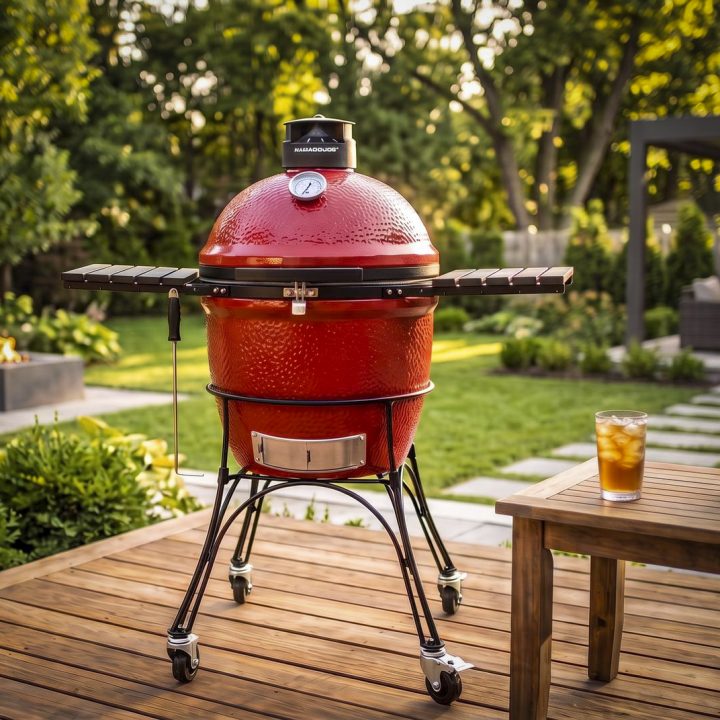
Before you start inspecting individual components, identify the model. Do not assume the Facebook Marketplace or Craigslist description is correct. Sellers sometimes call almost any red ceramic Kamado Joe a "Classic," and they may not know whether they own a Classic I, Classic II, or Classic III.
The Kamado Joe Classic I is the easiest of the three to distinguish because it has the older hinge design rather than the Air Lift Hinge. It also has the cast iron daisy-wheel style top vent.
The Classic II has some of the features most people expect with newer Kamado Joe grills, including the Air Lift Hinge, Kontrol Tower top vent, lid latch, and wire mesh fiberglass gasket.
The Classic III shares many of the features of the Classic II, but the ceramic body is taller and more elongated. It also has a taller cart and was usually sold with Kamado Joe's SlōRoller hyperbolic smoke chamber.
These differences are important because they affect both the original price and the used value of the grill. They also determine which components you need to inspect. There is no reason to test a Classic I for a failed Air Lift Hinge, for example, because it does not have one.
Make sure you know exactly which grill is sitting in front of you and what equipment should have originally come with it before making an offer.
Understand the Warranty Before Buying Used
One of the biggest differences between buying new and buying used is warranty coverage. Kamado Joe's current limited lifetime warranty on key ceramic parts lasts for as long as the original purchaser owns the grill. You should therefore assume that a secondhand grill does not have the same warranty protection you would receive if you bought it new.
That changes the economics of the purchase. A cracked firebox panel may not concern the original owner very much if it qualifies for warranty replacement. As the second owner, you should assume that replacement parts are coming out of your pocket. This is why the condition of the grill matters so much when buying used.
Inspect the Ceramic Body First
The ceramic body is the foundation of the entire grill, so this is where I begin every inspection. Ceramic damage is different from a worn gasket, rusty grate, or bad thermometer. Most of those components can be easily replaced. Damage to the ceramic dome or base can turn what looked like a bargain into an expensive project.
Start with the outside of the grill. Ask whether it was kept covered when not in use. A grill that has been protected with a properly fitted grill cover is generally a good sign. I would rather see that than a grill that has been sitting uncovered or wrapped under a tarp that can trap moisture, which can cause mold.
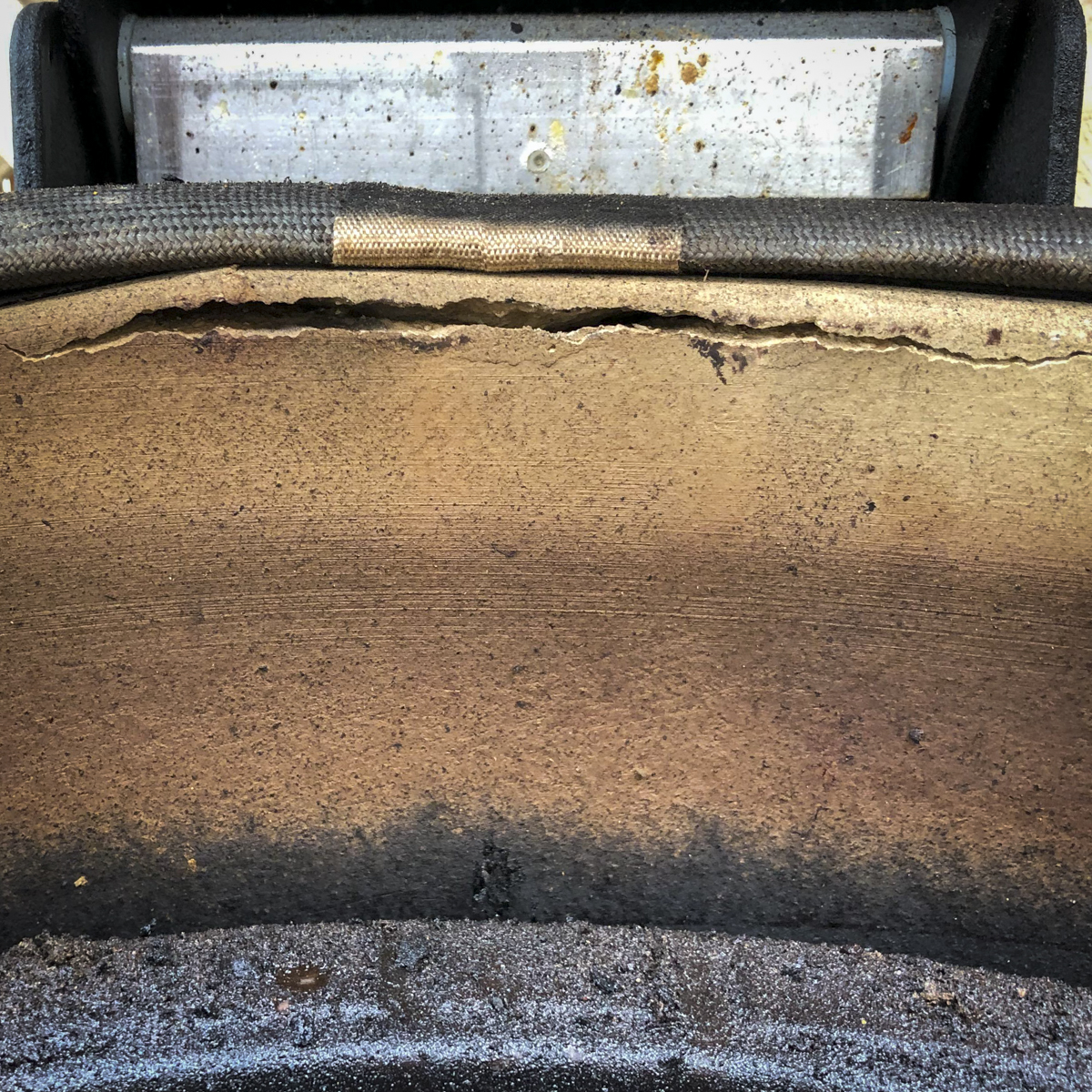
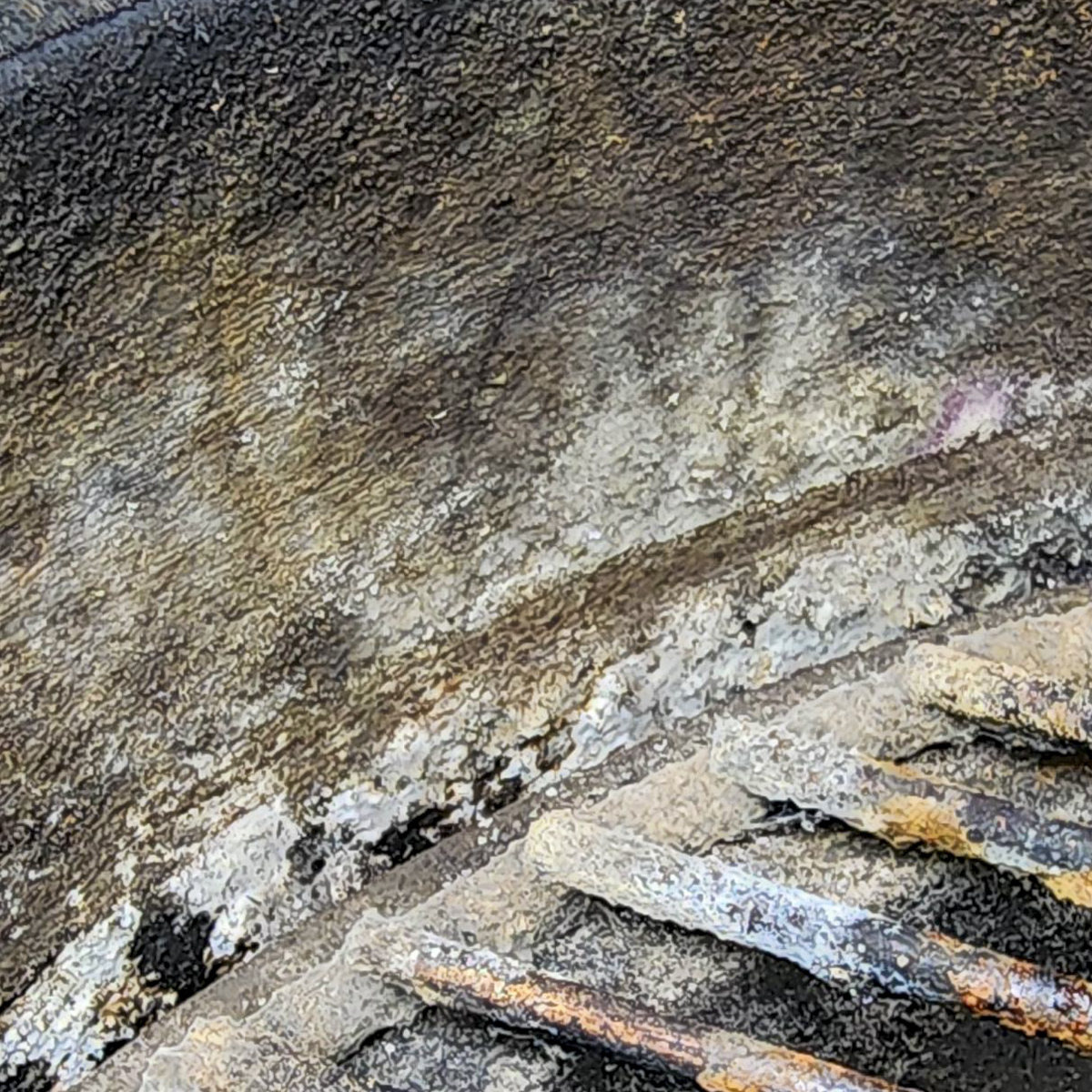
Slowly run your hand over the dome and base while visually inspecting the ceramic. Small chips in the exterior glaze are usually cosmetic. They may not look great, but they do not necessarily affect the grill's performance. Look for structural cracks or deep fractures that extend into the ceramic rather than merely affecting the exterior glaze. As a general rule, I would take any crack large enough to catch your fingernail seriously.
Check Inside the Dome
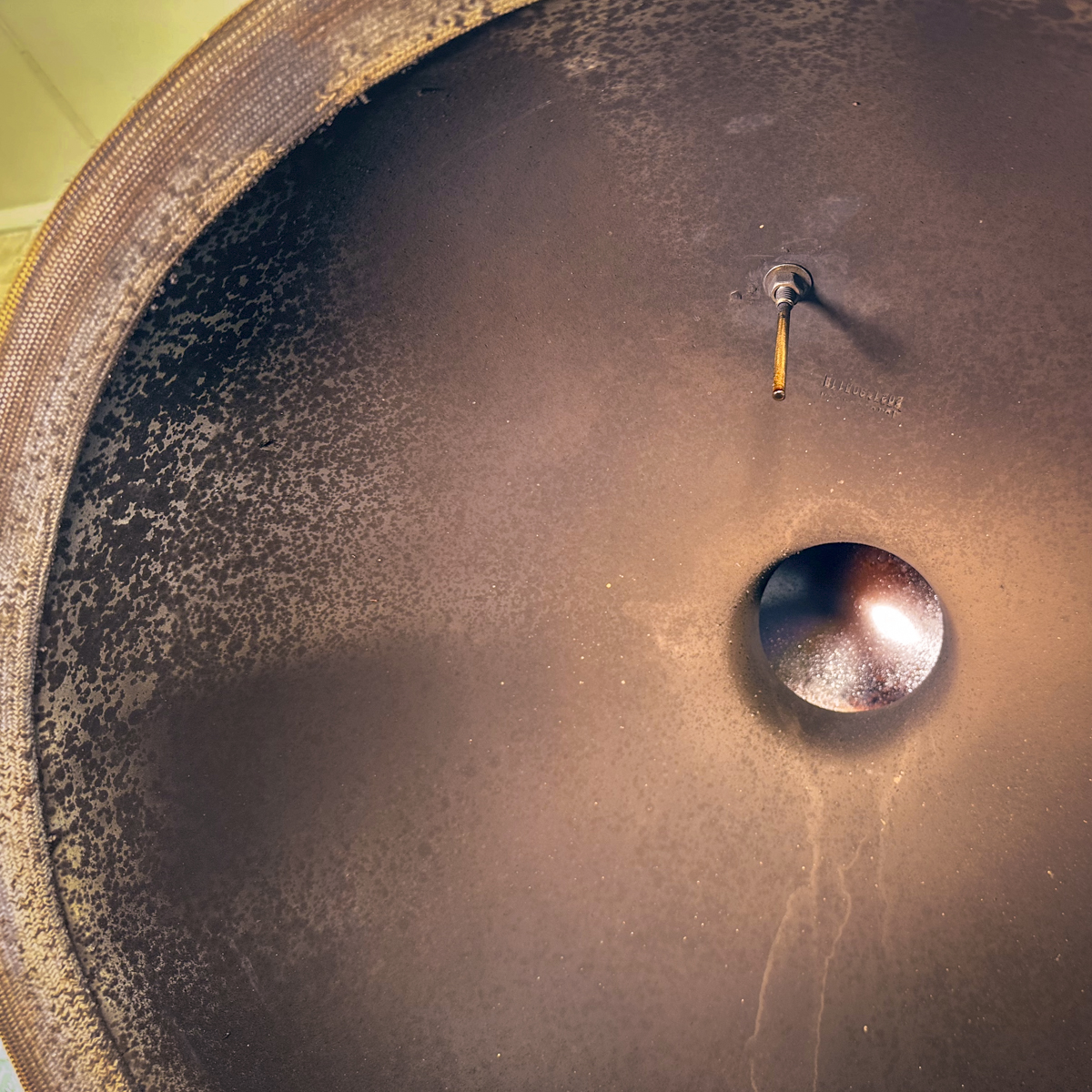
Open the grill and use your flashlight to inspect the inside of the dome. Pay particular attention to the area around the top vent opening and the back of the dome near the hinge hardware. The inside of the dome is subjected to substantial heat, and you want to look carefully for fractures in the ceramic. Do not give it a quick glance. Check the entire interior surface.
Check the Base Near the Hinge
Next, inspect the inside of the ceramic base, particularly around the back of the grill near the hinge. A structural crack in the base is serious. A cracked base can require replacement of the entire ceramic base, which makes it one of the most important things to identify before you buy.
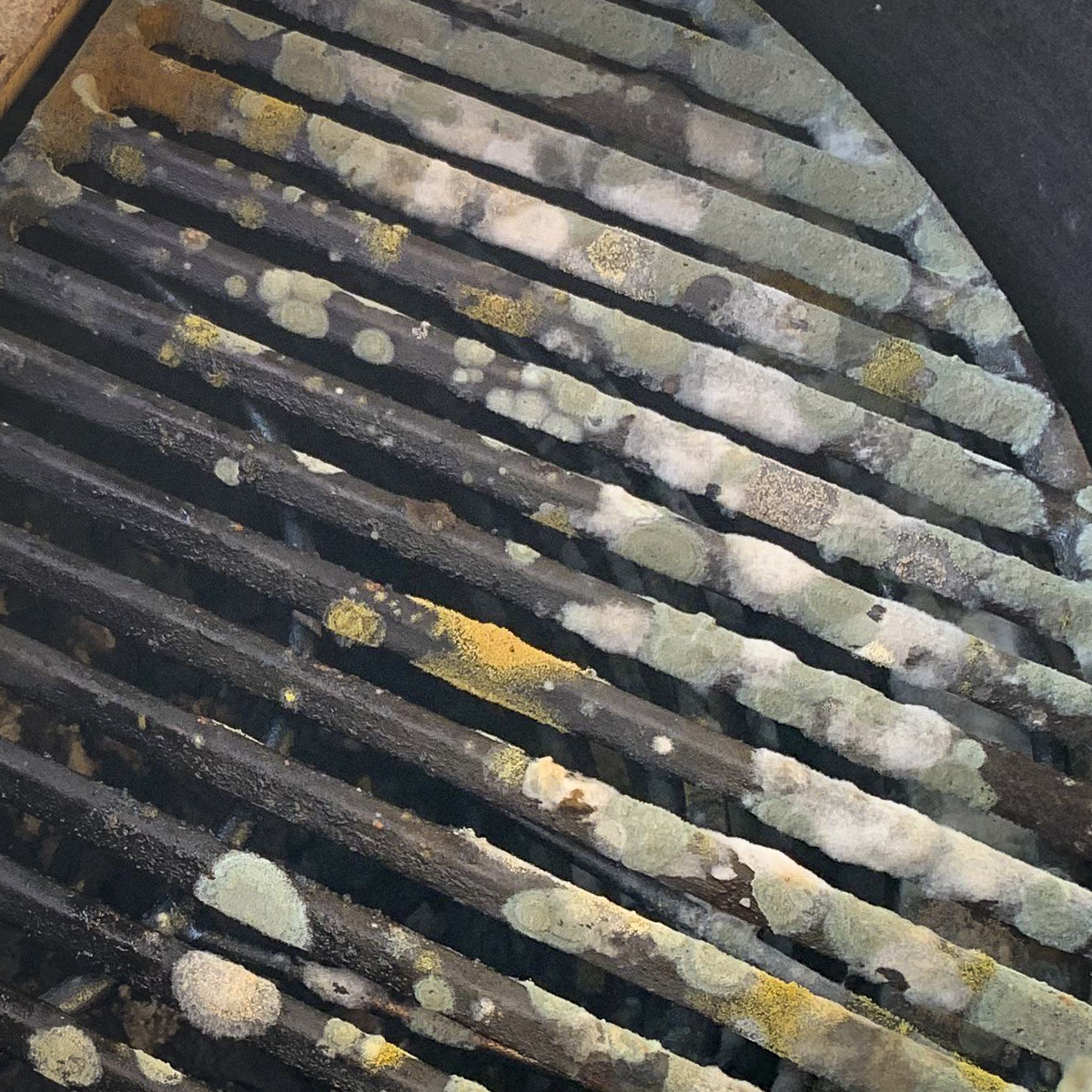
What About Mold Inside a Used Kamado Joe?
Mold looks terrible, but I would not automatically walk away from an otherwise good Kamado Joe because there is mold inside it. Mold is surprisingly common in ceramic grills that have been sitting unused, particularly in humid climates and when the grill has been stored with the vents closed. A proper high-temperature burn will usually eliminate it.
However, mold tells you something about the history of the grill. It suggests the grill has probably not been adequately maintained. In my experience, neglected grills frequently have more than one issue. If I see mold, I become even more careful about inspecting the gasket, hardware, cart, top vent, and other components. Think of mold as a clue that the grill may have been neglected rather than an automatic dealbreaker.
Remove and Inspect the Firebox
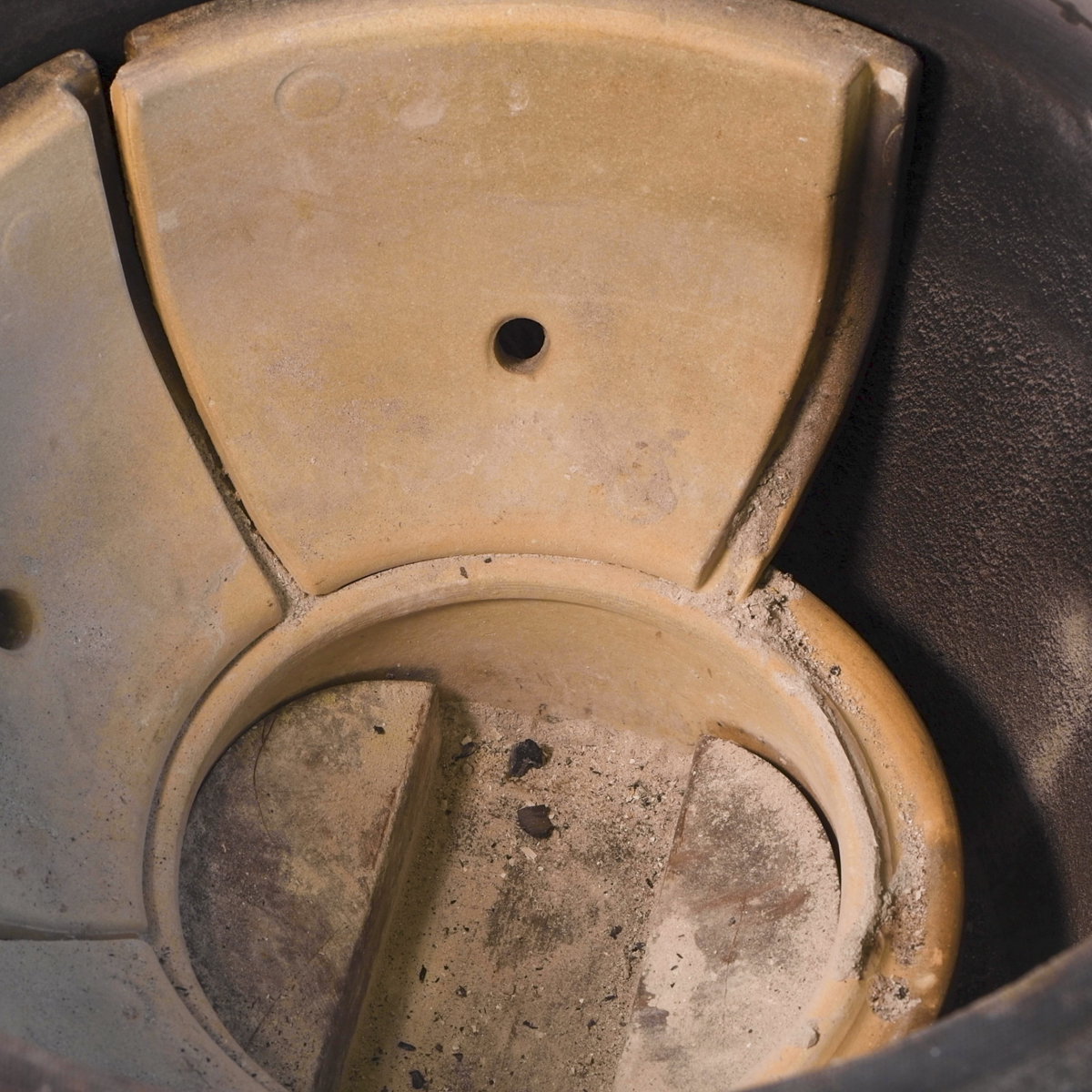
Do not buy a used Kamado Joe without doing a thorough inspection of the firebox, and that means doing more than looking down through the cooking grate. The firebox should be completely disassembled and removed from the grill so you can inspect its individual components. If the seller refuses to let you do this, I would walk away. There is too much expensive ceramic hidden underneath the grates to simply assume it is intact.
Remove the cooking grates and heat deflector plates. Then remove the metal firebox retaining ring and carefully lift out the individual ceramic firebox panels. Set everything on a flat, safe surface. Finally, remove and inspect the firebox base.
Inspect the Metal Firebox Ring
Place the metal retaining ring on a flat surface. It should sit flat. If it rocks or is visibly warped, it may not properly hold the firebox panels in position and should be replaced. A replacement firebox ring costs approximately $39.
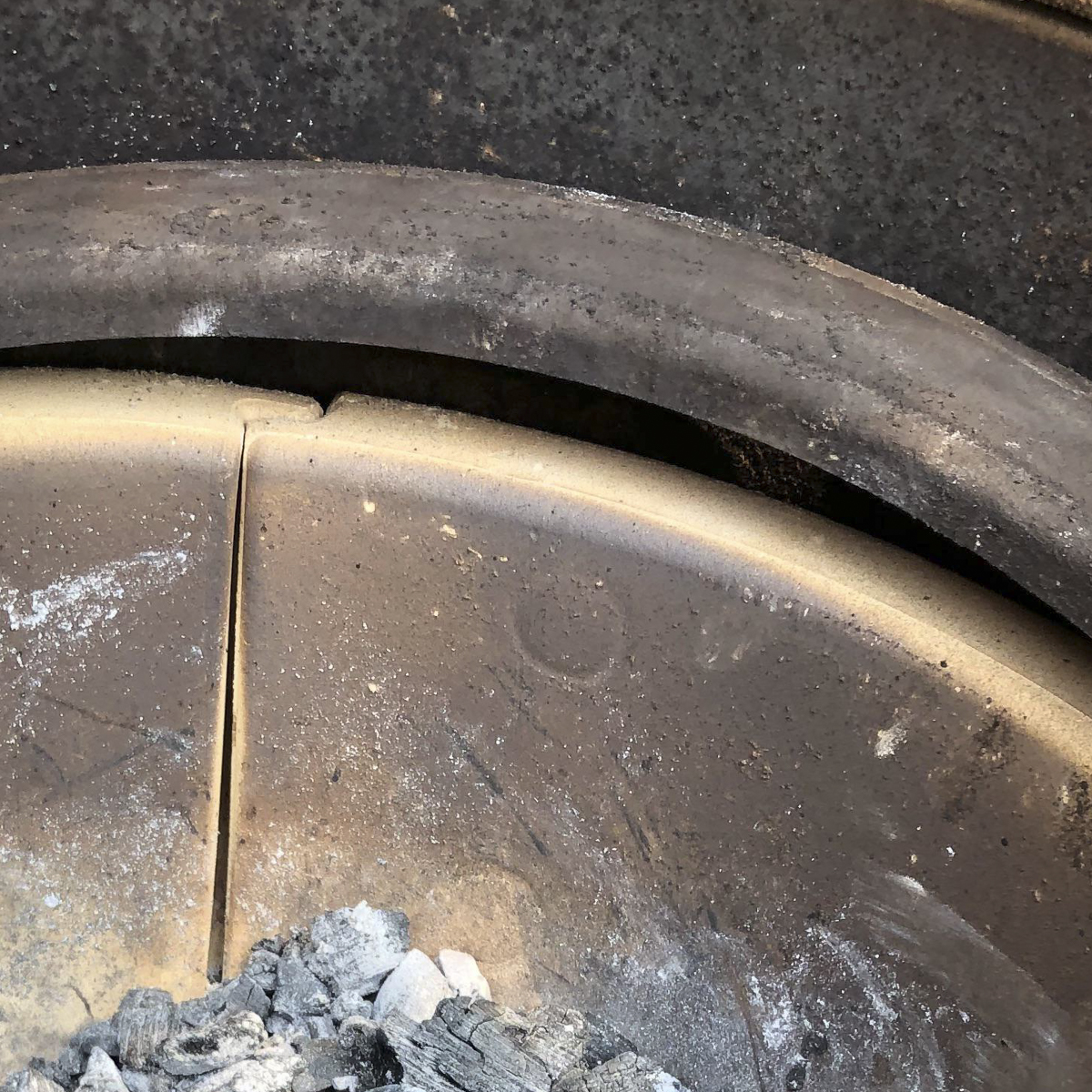
Inspect Every Firebox Panel
Make sure every ceramic panel is present, and inspect each one for cracks or broken sections. A cracked firebox panel is not necessarily a reason to walk away from the grill. These panels are replaceable, and a replacement panel costs approximately $25. This is exactly the type of defect that I would use during price negotiations.
Inspect the Firebox Base
Finally, inspect the ceramic base beneath the firebox panels. If the base is cracked, plan on replacing it. A replacement firebox base costs approximately $38. The individual costs may not sound significant, but they add up quickly. A grill that needs a firebox panel, retaining ring, gasket, and thermometer is suddenly worth considerably less than an otherwise identical grill that needs nothing.
Inspect the Kontrol Tower Top Vent
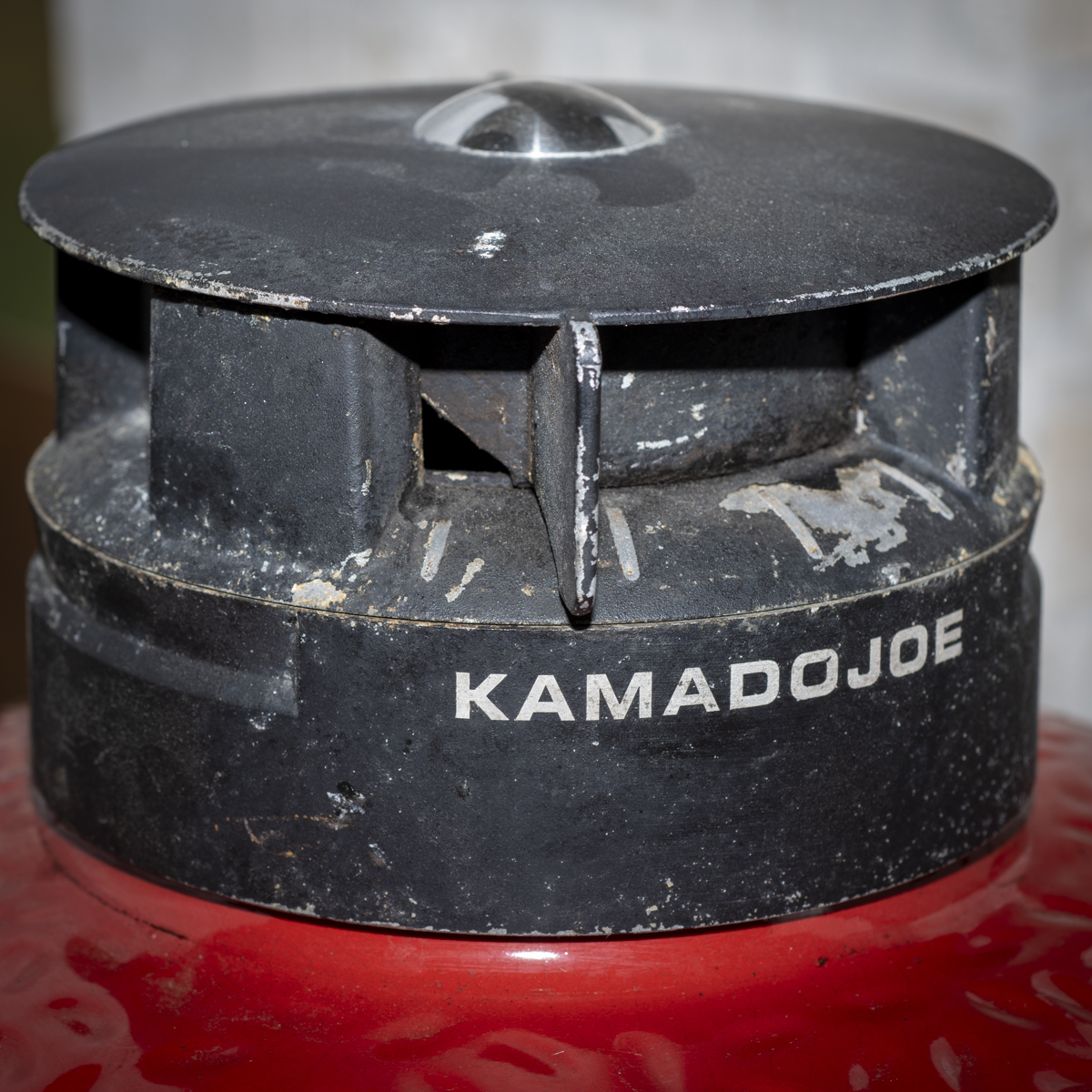
The Kontrol Tower is the aluminum top vent used on the Kamado Joe Classic II and Classic III. It is an important part of temperature control, and it can develop problems after years of exposure to heat, grease, and weather. Rotate the Kontrol Tower through its entire range of adjustment. It should move smoothly. If it is extremely stiff or difficult to adjust, that is a problem because fine adjustments to the top vent are an important part of controlling temperature.
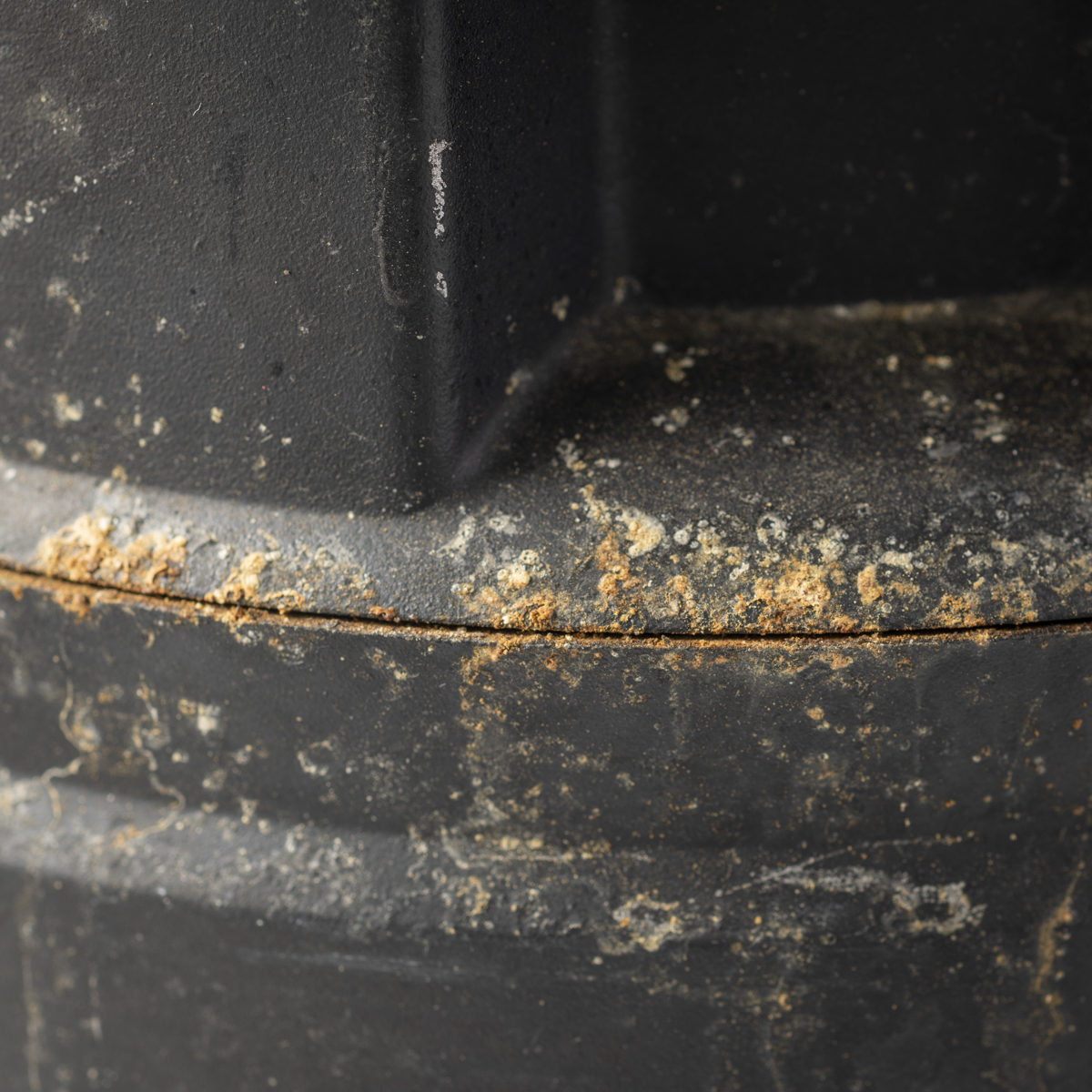
Next, pull the cap off and inspect the underside of the cap and the inside of the vent assembly. Look for chipped paint, corrosion, pitting, and deteriorating aluminum. Some cosmetic wear is one thing. Heavy corrosion that interferes with the operation of the vent is another. A replacement Kontrol Tower costs approximately $75.
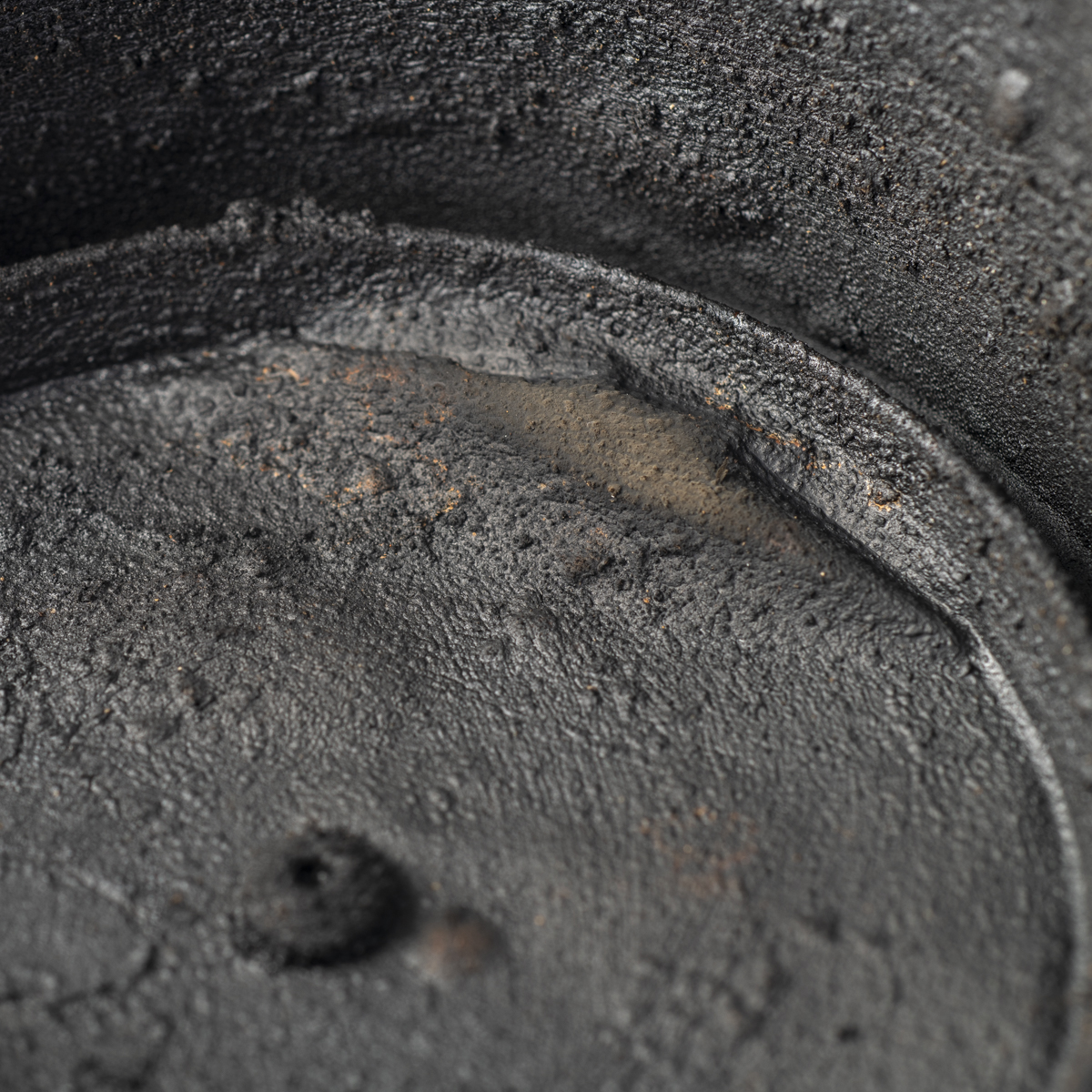
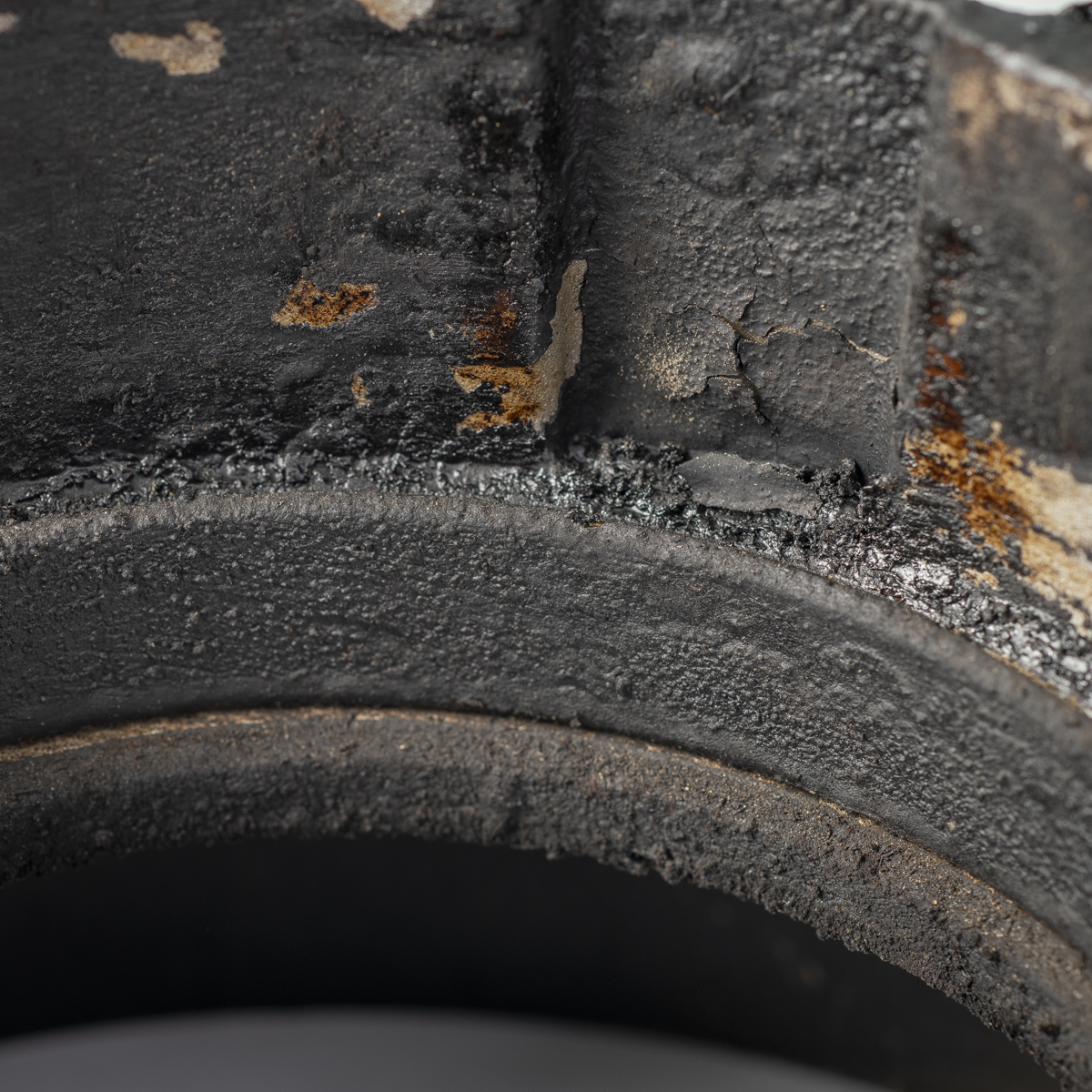
While you have the vent removed, inspect the ceramic underneath it. Damage in this area can remain hidden when the top vent is installed, so look carefully for chips or cracks around the opening of the chimney.
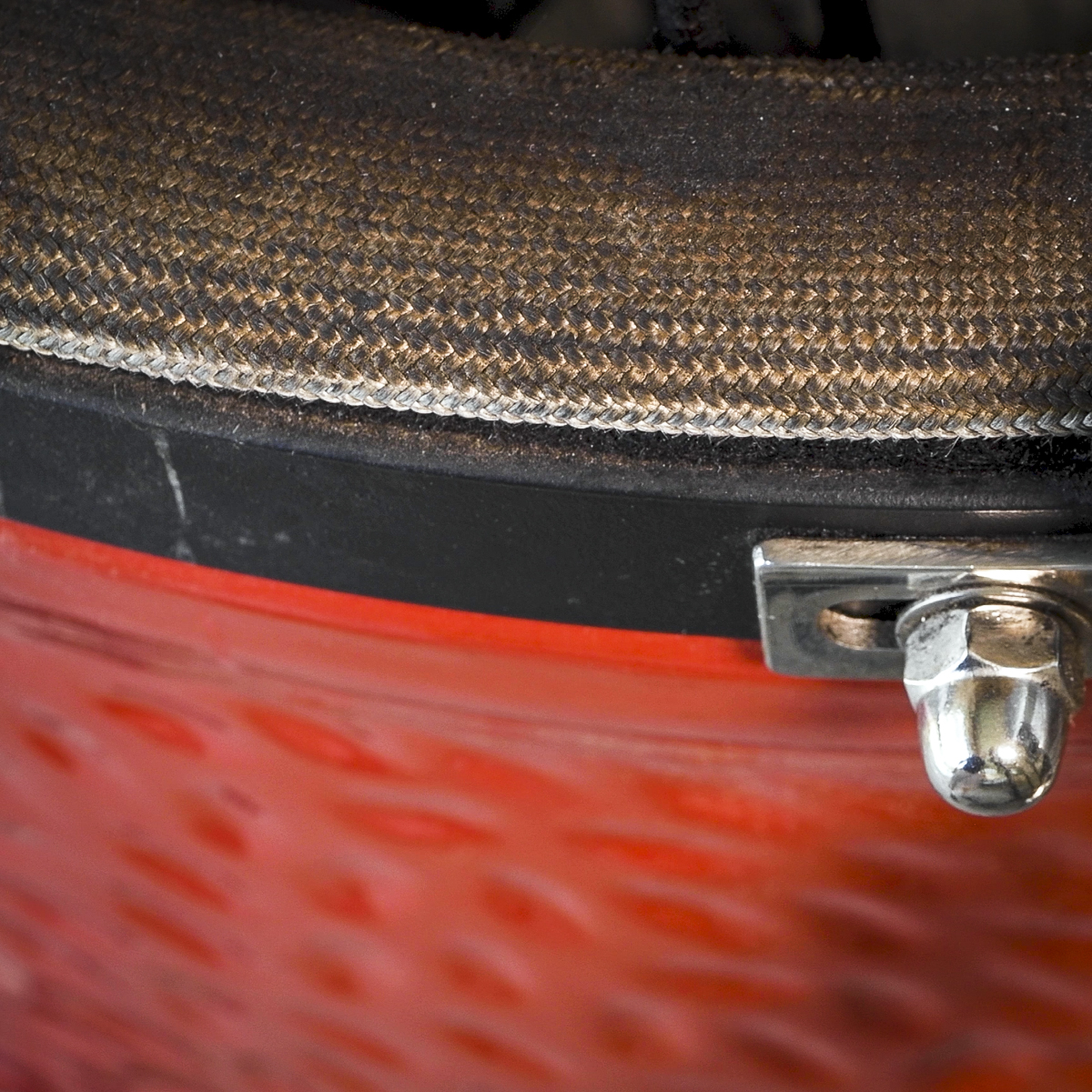
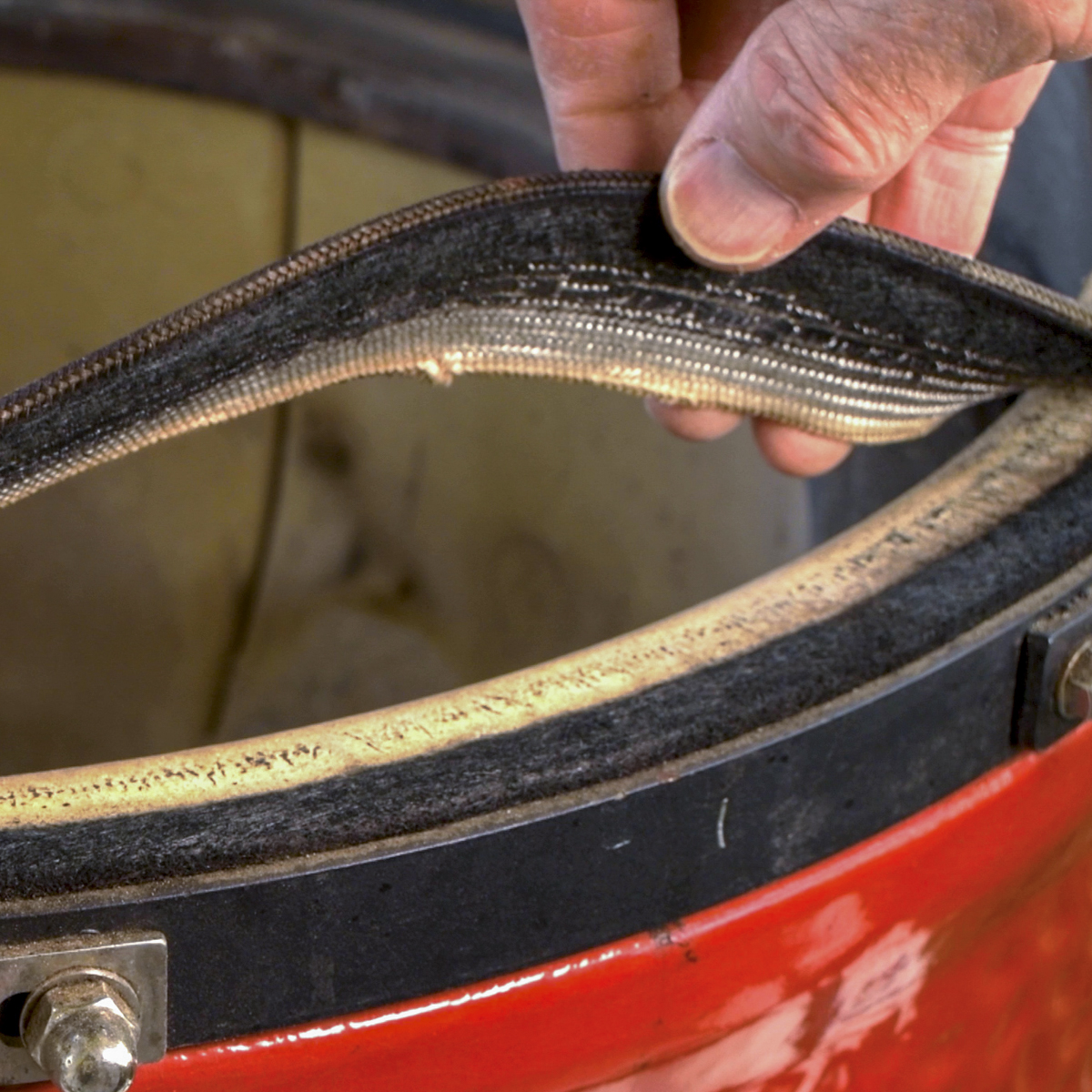
Inspect the Gasket
The gasket is seated around the perimeter of the dome and base and creates the seal that allows a Kamado Joe to control airflow. A worn gasket is one of the most common problems you are likely to encounter on a used grill.
Run your fingers around the entire gasket on both the dome and base. Check whether any sections are pulling away from the ceramic, whether areas have been compressed completely flat, and whether there are tears or missing sections. Also look for heavy grease saturation that has caused the gasket material to harden, deteriorate, or separate.
A damaged gasket is not a reason I would reject an otherwise good grill, but I would absolutely factor it into the price. Replacing the gasket is a project you can do yourself, but expect to spend roughly an hour doing it properly. A replacement gasket costs approximately $113.
Check the Alignment of the Dome and Base
Close the lid and take a few steps back. Look at the grill from both the front and the side. The dome and base should meet evenly around the perimeter of the grill. If one side sits correctly while another has a noticeable gap, the bands may have shifted or the hinge may have been improperly adjusted.
This is generally a correctable problem, so I would not necessarily walk away because of a minor alignment issue. However, it tells you that the grill needs adjustment and may indicate that someone has previously worked on the hinge or bands.
Test the Lid Latch
Close the lid and see how easily it engages. You should not have to force the dome downward to make the latch catch. Then press the release lever and make sure it releases smoothly.
A latch that does not engage or release correctly is probably out of alignment. Again, this is generally a straightforward adjustment rather than a dealbreaker. However, when I find several little problems like this on the same grill, they begin to tell a story about how well the grill has been maintained.
Test the Air Lift Hinge
If you are looking at a Classic II or Classic III, pay very close attention to the Air Lift Hinge. This counterbalance system is what allows you to lift the roughly 50-pound ceramic dome with very little effort and leave the lid open at different positions.
Open the dome to approximately 45 degrees and let go. It should stay there. Then open it completely and let go again. It should remain in position. If the dome slowly drifts downward, the counterbalance spring may need adjustment, which is not necessarily a major problem. If the lid feels unusually heavy or drops under its own weight, however, the hinge may have a more significant problem.
An Air Lift Hinge can be adjusted relatively easily, but replacing a failed hinge is a much bigger job. A replacement costs approximately $163. For me, a failed Air Lift Hinge gets very close to dealbreaker territory unless the selling price is low enough to compensate for both the replacement cost and the work involved.
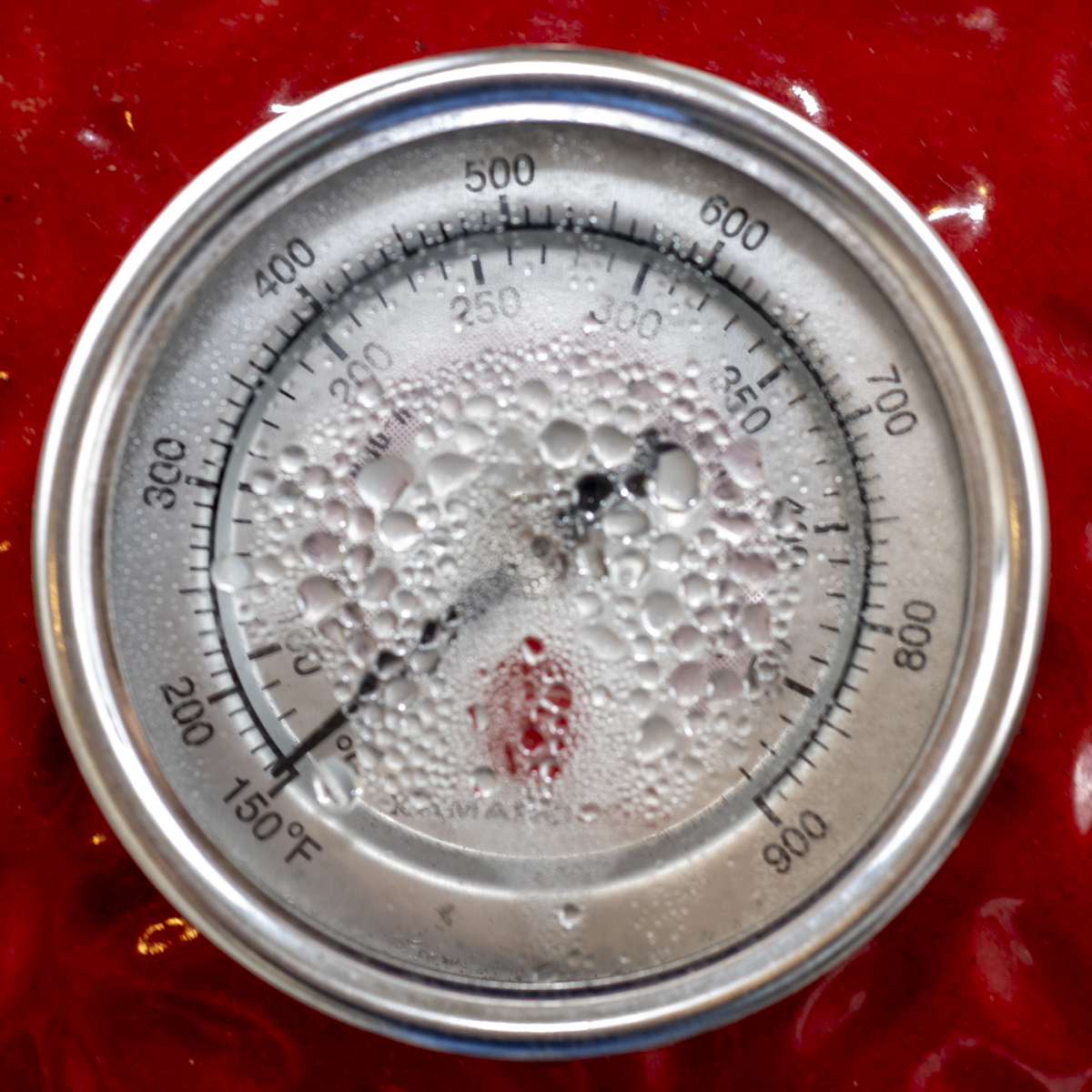
Check the Dome Thermometer
The factory dome thermometer gives you an approximate indication of the temperature inside the grill. It is not a particularly precise instrument, even when new. On a used grill, inspect the face carefully and look for condensation or moisture underneath the glass. If moisture has entered the gauge, I would assume the seal has failed and plan on replacing the thermometer.
Even if the thermometer appears to be in good condition, I recommend calibrating it after you get the grill home. A replacement thermometer costs approximately $25, so this is a relatively minor issue.
Inspect the Cooking Grates
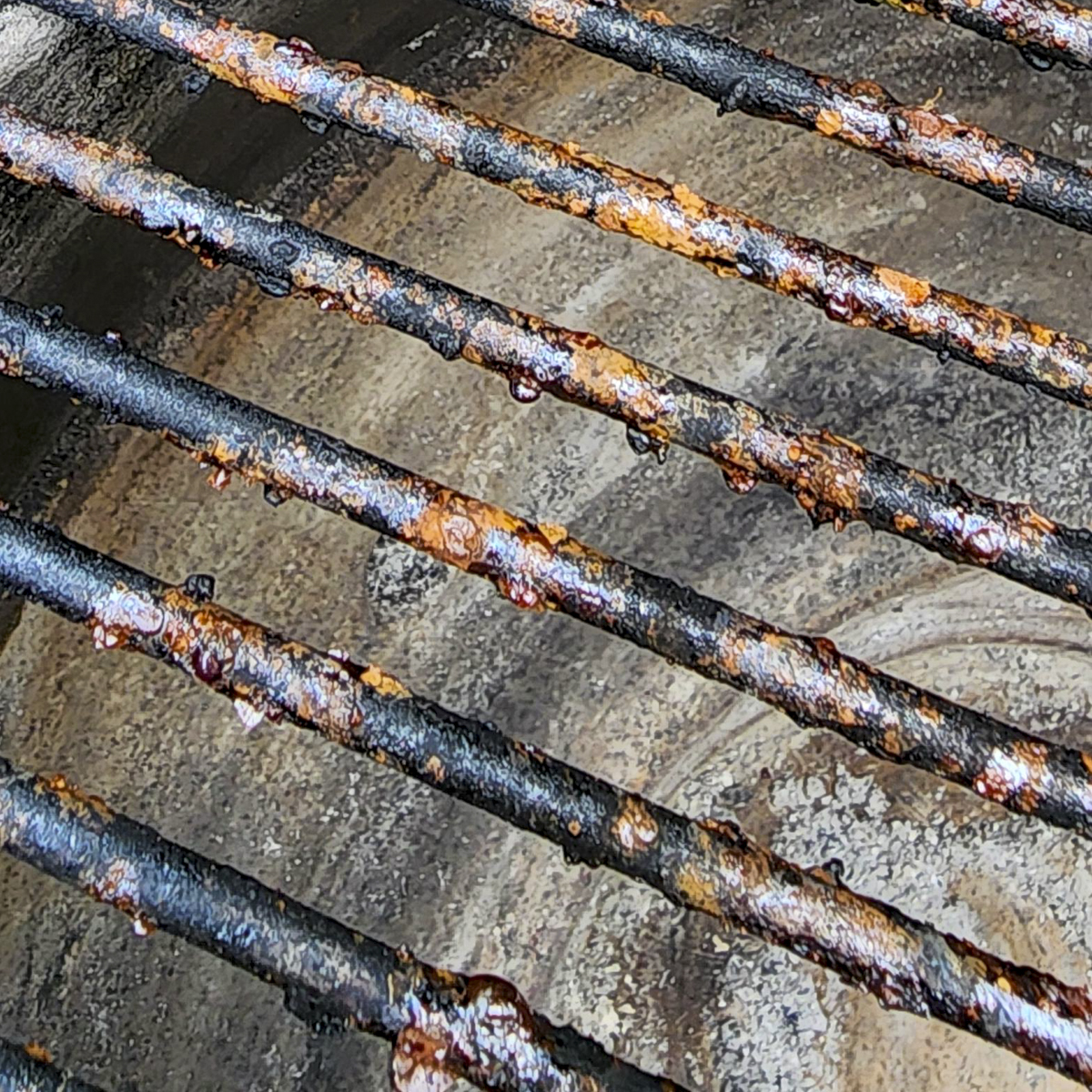
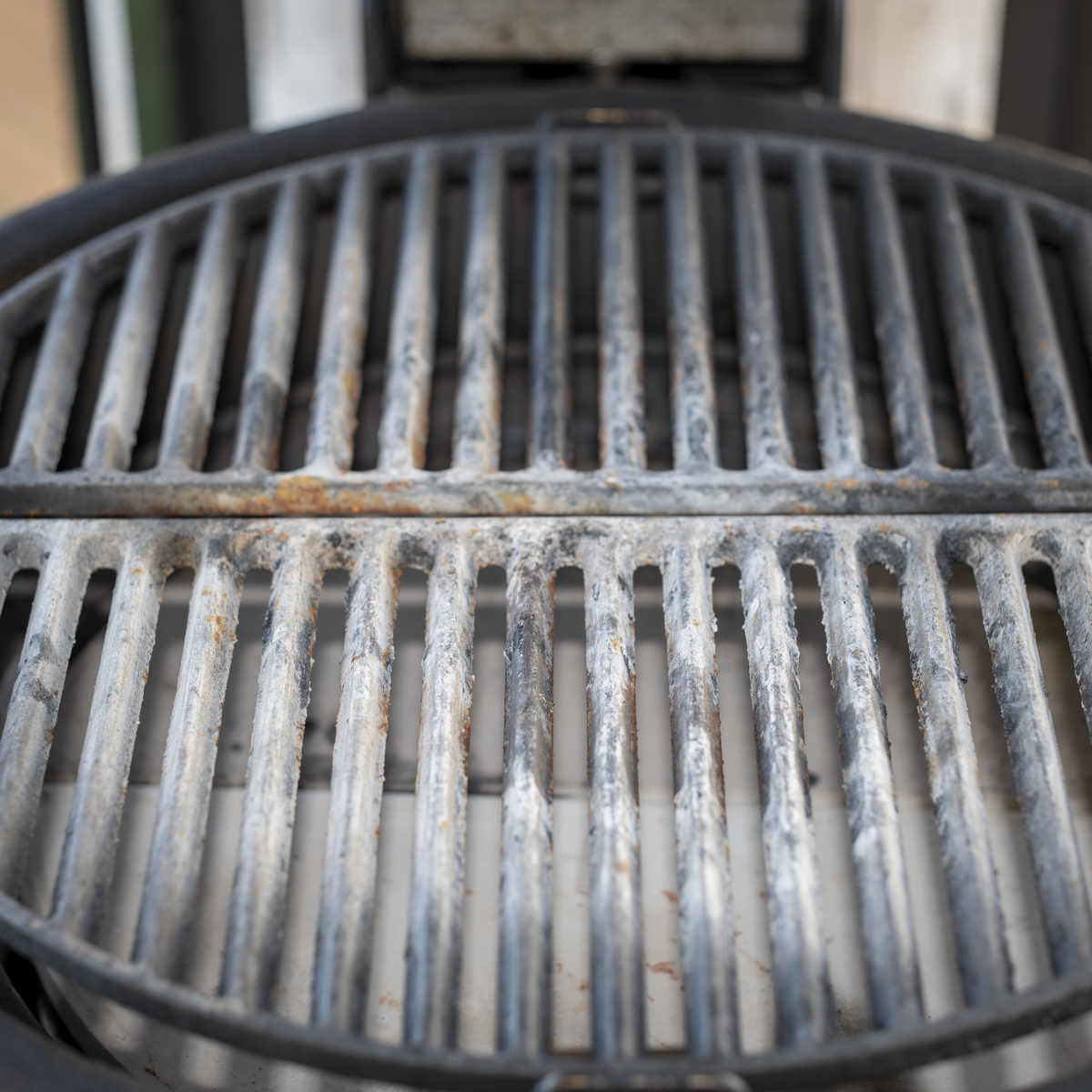
Remove the cooking grates and examine their condition. The Classic II and Classic III typically come with stainless steel cooking grates. Kamado Joe also offers cast iron grates as an accessory. Stainless steel grates should not have significant rust, although heat discoloration is completely expected and should not concern you.
Cast iron is different. Ideally, cast iron grates should have a relatively uniform, dark, seasoned surface. Light surface rust can generally be removed before the grate is re-seasoned. Heavy rust and deep pitting are another matter. If the cooking surface has significantly deteriorated, I would plan on replacing the grate. A stainless steel cooking grate costs approximately $50, while a set of half-moon cast iron grates costs approximately $160.
Test the Cart and Casters
A ceramic grill is extremely heavy, which makes the condition of the cart and wheels more important than it might initially seem. Unlock the casters and roll the grill a short distance. Every wheel should rotate and swivel smoothly without binding. Then engage each caster lock and try moving the grill again.
A wheel that continues rolling when it is supposed to be locked is a safety issue, particularly if the grill will be sitting on a deck or patio that is not perfectly level. Replacement casters cost approximately $25 each.
Inspect the Side Shelves
Fold the side shelves up and down and inspect them carefully. Look for peeling paint, corrosion, or damage, particularly around the folded edges and the hinge points where the shelves connect to the cart. Check the tool hooks as well. They should all be present and intact.
A replacement set of side shelves costs approximately $25. None of these issues would prevent me from buying an otherwise good grill, but every missing or damaged component has a dollar value. Keep track of them because you are going to use that information when you make your offer.
Find Out Which Tools and Accessories Are Included
Ask the seller exactly what comes with the grill. At a minimum, a standard Kamado Joe Classic package should include an ash tool and grate gripper. If either is missing, factor replacement costs into your offer. An ash tool and grate gripper cost approximately $25 each to replace.
More importantly, determine whether the grill includes its Divide & Conquer cooking system and heat deflector plates. Accessories can substantially change the value of a used Kamado Joe, so compare what is actually included with what originally came with that particular model. Do not pay for a "complete" grill that is missing half of its original equipment.
Five More Things to Check Before Making an Offer
Once you have completed the main inspection, there are five additional areas I would check before discussing price. These are easy to overlook, but each one can reveal additional repair costs or signs that the grill has not been properly maintained.
Dome Handle
Grab the handle and pull gently in different directions. It should feel solid, with no cracking or movement at the mounting points. A loose handle can often simply be tightened, but once again, it can be evidence of deferred maintenance. A replacement handle costs approximately $32.
Metal Bands
Inspect both the upper and lower bands that hold the dome and base and connect them to the hinge. Look carefully for cracks or significant corrosion, especially around the hinge attachment points. A cracked band is a structural problem and should be taken seriously. Replacement bands cost approximately $100.
Bottom Draft Door
Slide the lower draft door back and forth through its entire range. It should move smoothly without sticking or binding. A badly warped or stuck draft door may need to be replaced. A replacement bottom draft door costs approximately $38.
Heat Deflector Plates
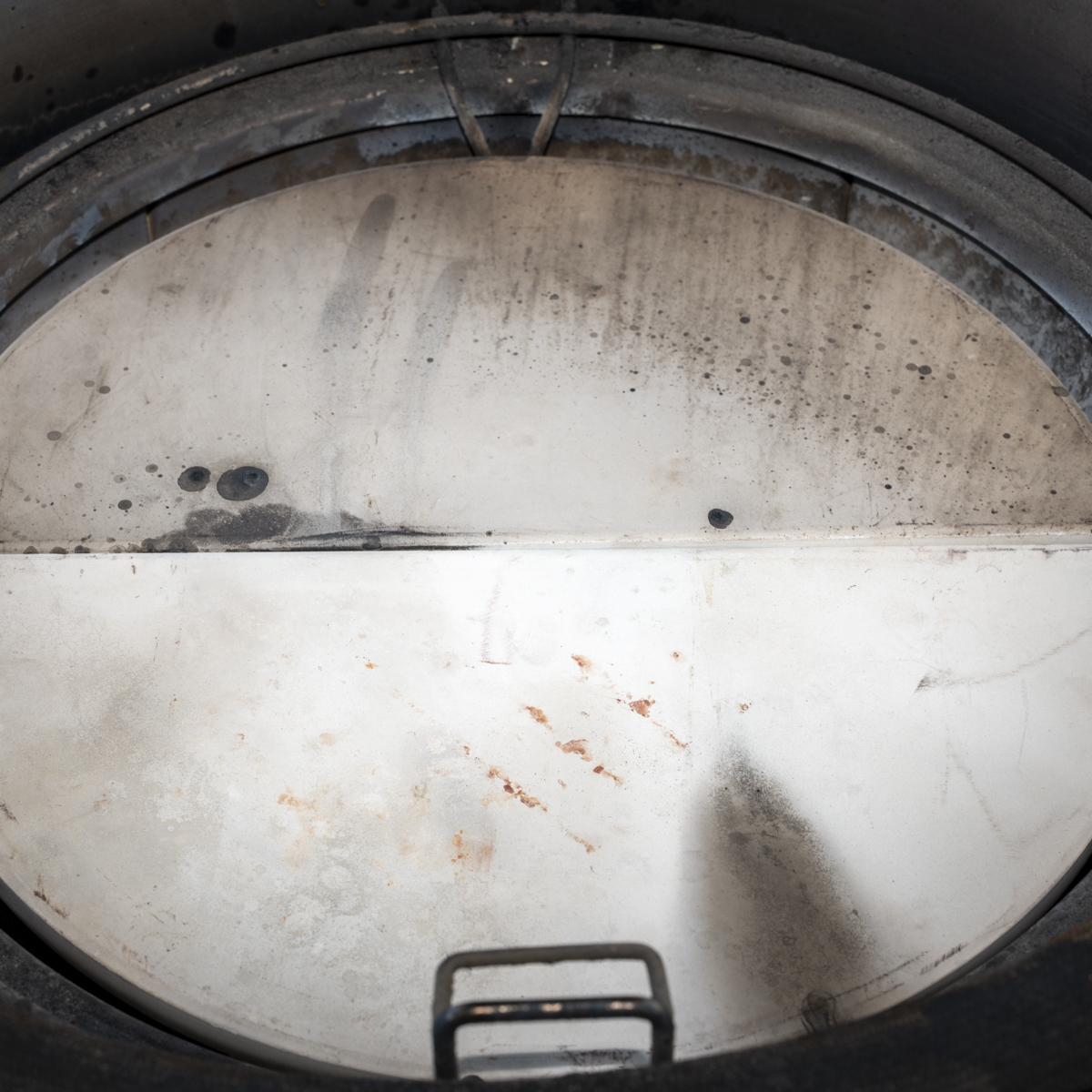
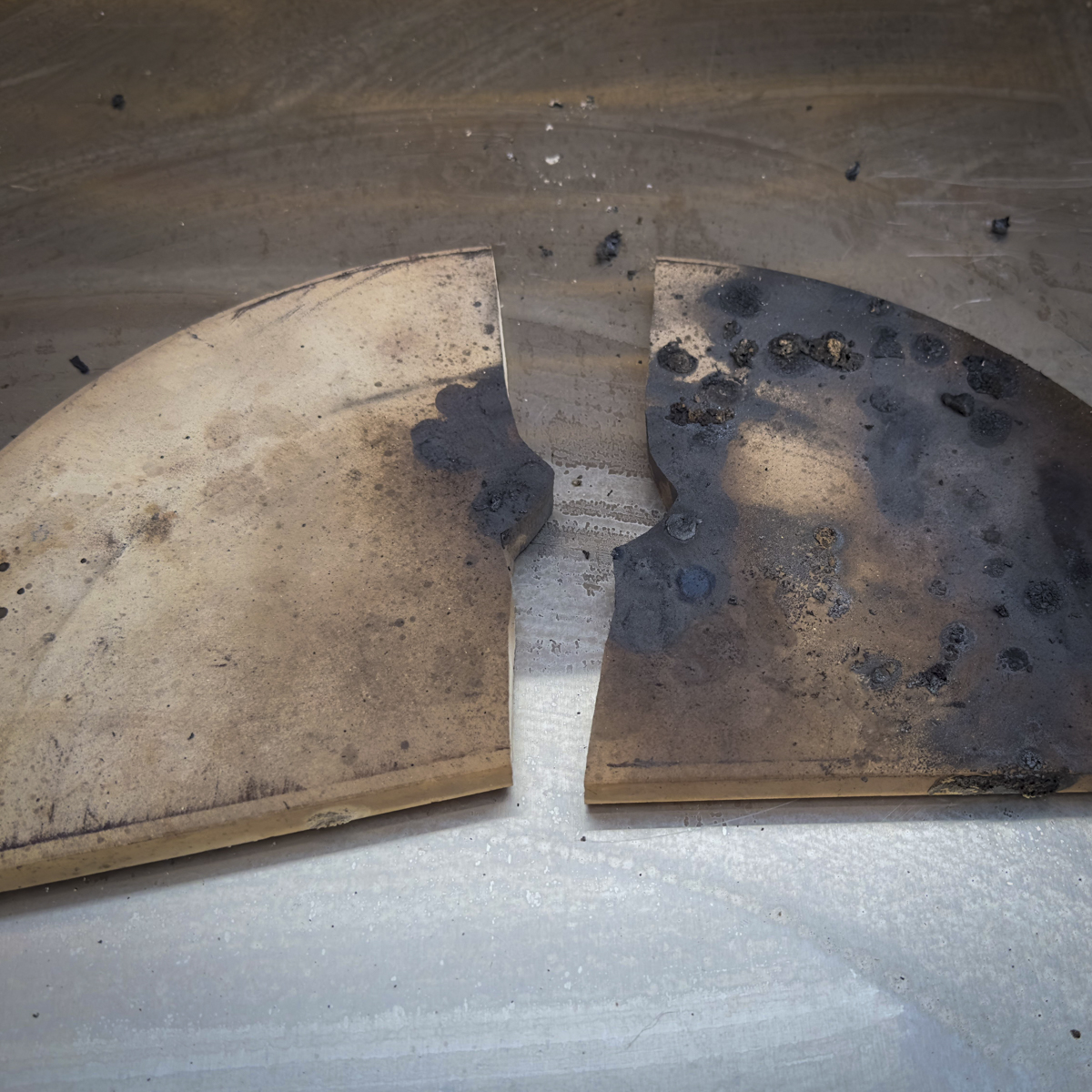
If the grill is supposed to include the full Divide & Conquer system, make sure both ceramic heat deflector plates are present and inspect them for cracks and broken sections. Ceramic deflectors can crack with use, so this is not unusual, but replacements still cost money. A replacement set of two heat deflector plates costs approximately $80.
The Cart Frame
Surface rust on the cart of an older Kamado Joe is not unusual, but structural rust is different. Inspect the legs, welds, lower frame, and areas surrounding the casters. If corrosion has weakened the cart to the point that it can no longer safely support the weight of the grill, the cart needs to be replaced.
This is a safety issue, not merely a cosmetic problem. A replacement cart frame costs approximately $163.
Used Kamado Joe Replacement Costs at a Glance
Here are the approximate replacement costs I use when evaluating a used grill. These prices can change, but they give you a useful starting point for calculating how much money you may need to put into a grill after buying it.
| Component | Approximate Replacement Cost |
| Firebox retaining ring | $39 |
| Firebox panel | $25 each |
| Firebox base | $38 |
| Kontrol Tower | $75 |
| Gasket | $113 |
| Air Lift Hinge | $163 |
| Dome thermometer | $25 |
| Stainless steel cooking grate | $50 |
| Half-moon cast iron grates | $160 |
| Caster | $25 each |
| Side shelf set | $25 |
| Ash tool | $25 |
| Grate gripper | $25 |
| Dome handle | $32 |
| Replacement bands | $100 |
| Bottom draft door | $38 |
| Heat deflector plates | $80 per set |
| Cart frame | $163 |
The important point is not whether a particular part costs $38 or $42 when you read this. The point is to recognize that a grill with five "minor" problems may require several hundred dollars in parts before it is back in good condition.
Used Kamado Joe Problems: What Is a Dealbreaker?
Not every problem deserves the same reaction. Some issues are almost entirely cosmetic. Others are inexpensive enough that I would simply account for them when negotiating the purchase price. A few deserve much more serious consideration.
| What You Find | How I Would Treat It |
| Small chips in the exterior glaze | Usually cosmetic |
| Light surface rust | Usually minor |
| Dirty or moldy interior | Cleanable, but inspect carefully for other signs of neglect |
| Missing ash tool or grate gripper | Negotiate |
| Bad thermometer | Negotiate |
| Cracked firebox panel | Negotiate |
| Cracked heat deflector | Negotiate |
| Worn or damaged gasket | Negotiate |
| Bad caster or damaged side shelf | Negotiate |
| Minor dome or latch misalignment | Usually repairable, but investigate |
| Warped firebox ring | Negotiate |
| Badly corroded Kontrol Tower | Negotiate |
| Significant band damage | Serious concern |
| Structurally rusted cart | Serious safety concern |
| Failed Air Lift Hinge | Major repair, possibly walk away |
| Structural crack in dome or base | Potential dealbreaker |
The condition of the entire grill still matters. One minor problem on an otherwise immaculate grill is very different from finding six minor problems on a grill that has obviously been neglected. The more issues you find, the more carefully I would inspect everything else.
What Problems Are Acceptable on a Used Kamado Joe?
Most of the items in the negotiation category are repairable and would not stop me from buying an otherwise sound grill. Their value is that they give you a specific, defensible reason to lower your offer. A cracked firebox panel, worn gasket, bad thermometer, or missing accessory has a real replacement cost, so account for it before you agree on a price.
The important distinction is between a replaceable component and damage to the structure of the grill. A repairable defect can make a good grill cheaper. Structural damage can make a cheap grill expensive.
When Should You Walk Away from a Used Kamado Joe?
Structural cracks in the ceramic dome or base deserve the most caution. Significant band damage, a structurally compromised cart, or a failed Air Lift Hinge can also turn an attractive purchase into a major repair project.
At a bargain price, almost anything can make financial sense, but you need to know exactly what you are taking on. If the seller is asking too much for a grill with structural ceramic damage or an expensive mechanical failure and will not adjust the price, I would walk away. Another used Kamado Joe will come along.
How Much Should You Pay for a Used Kamado Joe?
There is no single correct price because model, age, condition, location, accessories, and current retail pricing all affect the value. For example, if a new Kamado Joe Classic II costs around $1,500, you might encounter used Classic II grills somewhere in the $500 to $1,000 range, depending on condition.
The mistake is looking only at the asking price. A $500 grill that needs $400 worth of parts may be a far worse purchase than an $800 grill that is clean, complete, properly maintained, and ready to cook.
A simple way to think about it is:
Value of the grill in good used condition - needed repairs - missing equipment = what the grill is worth to you
Suppose comparable Classic IIs in good condition are selling for around $800 in your area. The grill you are considering needs a $113 gasket, a $25 thermometer, and an $80 set of heat deflectors. It is already more than $200 behind the better $800 grill, and that is before you put any value on the time and effort required to make the repairs.
This is also why I recommend looking at several listings before buying. You want an idea of what comparable Kamado Joe grills are actually selling for in your market. Compare the same generation and similar equipment whenever possible. A bare Classic I and a complete Classic III with a SlōRoller are not comparable simply because both sellers wrote "Kamado Joe" in their listings.
How to Negotiate the Price
The best negotiation tool is not telling the seller that you think the grill is overpriced. It is showing them what you found. Be specific. If the firebox has a cracked panel, point it out and explain what the replacement will cost. Add a gasket if it's damaged. If the thermometer contains moisture, the Kontrol Tower is badly corroded, and one caster does not lock, include those too.
You are not arbitrarily trying to knock $100 off the asking price. You have a rational basis for your offer. A neglected grill can easily accumulate several hundred dollars in replacement parts. Add those costs before you make an offer, not after you make the purchase and get the grill home.
There is also nothing wrong with walking away. Used Kamado Joe grills come up for sale regularly. Saving $100 on the wrong grill is not a bargain if you immediately have to spend several hundred dollars and a weekend repairing it.
Used Kamado Joe Inspection Checklist
If you are going to look at a grill in person, save this checklist on your phone and work through it before making an offer:
- Bring gloves and a flashlight
- Confirm the exact Kamado Joe model
- Ask whether the seller is the original owner and has the receipt
- Confirm exactly which accessories are included
- Inspect the exterior dome and base for structural cracks
- Inspect the interior dome with a flashlight
- Check the ceramic base around the hinge
- Look for mold and other signs of long-term neglect
- Completely remove and inspect the firebox
- Check the firebox retaining ring for warping
- Inspect every firebox panel and the firebox base
- Test the Kontrol Tower and inspect it for corrosion
- Inspect the ceramic underneath the top vent.
- Check the entire gasket
- Verify that the dome and base align properly
- Test the lid latch
- Test the Air Lift Hinge at multiple positions
- Inspect the dome thermometer for moisture
- Inspect the cooking grates
- Roll the cart and test every caster lock
- Inspect the side shelves and tool hooks
- Confirm the ash tool and grate gripper are included
- Inspect the dome handle
- Inspect the upper and lower metal bands
- Test the bottom draft door
- Confirm both heat deflector plates are present and intact
- Inspect the cart for structural corrosion
- Identify any missing Divide & Conquer components or accessories
- Add up the expected replacement costs before making your offer
Frequently Asked Questions About Buying a Used Kamado Joe
It certainly can be. A properly maintained Kamado Joe can provide years of cooking, and age by itself does not significantly change how the ceramic grill cooks. Buying used can therefore save you hundreds of dollars compared with purchasing the same model new. The condition of the grill matters much more than its age.
Start with the ceramic dome and base. Most worn components on a Kamado Joe can be replaced relatively easily and inexpensively. Structural damage to the primary ceramic body is much more significant and can dramatically change whether the grill is worth buying.
Not necessarily. The multi-piece firebox used in newer Kamado Joe models is designed with replaceable ceramic panels. A cracked panel can be replaced individually, so you should factor the replacement cost into your offer rather than automatically rejecting the grill.
Mold alone would not make me walk away. It is common in ceramic grills that have been sitting unused, especially in humid environments with the vents closed. A high-temperature burn will generally eliminate it. However, mold is evidence that the grill may have been neglected, so inspect everything else especially carefully.
You should not assume it does. Kamado Joe's current limited lifetime warranty on key ceramic parts is tied to the original purchaser's ownership of the grill. When evaluating a used grill, assume you will be responsible for the cost of replacement parts.
Usually not. Heat deflector plates can crack over time and are replaceable. Treat a cracked or missing deflector as a replacement expense and negotiate accordingly.
Open the dome to approximately 45 degrees and release it. The dome should remain in position. Repeat the test with the dome fully open. If it drifts downward, the hinge may need adjustment. If the dome feels unusually heavy or falls under its own weight, the hinge may have a more serious problem.
Condition matters more than finding a universal percentage of the new price. A well-maintained, complete grill is worth considerably more than a cheaper grill that requires hundreds of dollars in parts. Evaluate the model and its normal value first, then subtract the cost of missing or damaged components and account for the work required to repair it.
Final Thoughts
Buying a used Kamado Joe can be a great way to get into ceramic grilling without paying the premium price of a new grill. These grills are built around a ceramic body that can last for many years, and most of the parts that eventually wear out can be repaired or replaced. But that does not mean every used Kamado Joe is a bargain.
The difference between a great purchase and an expensive mistake is the inspection you perform before money changes hands. Look closely at the ceramic. Take the firebox apart. Test the hinge, gasket, vents, cart, latch, and cooking components. Find out what is missing, determine what needs to be replaced, and calculate those costs before you negotiate.
Most buyers will look inside the grill, decide it looks good enough, and hope for the best. Perform a complete inspection. If the problems are inexpensive and repairable, use them to negotiate a better deal. If you find serious structural damage or an expensive failure and the price does not reflect it, walk away. There will be another used Kamado Joe.
Leave a Reply