
Barbecue involves a lot more knife work than simply slicing the finished meat. Trimming brisket, breaking down poultry, portioning large cuts of meat, and prepping vegetables all require different techniques. The right knife can make each job a lot easier.
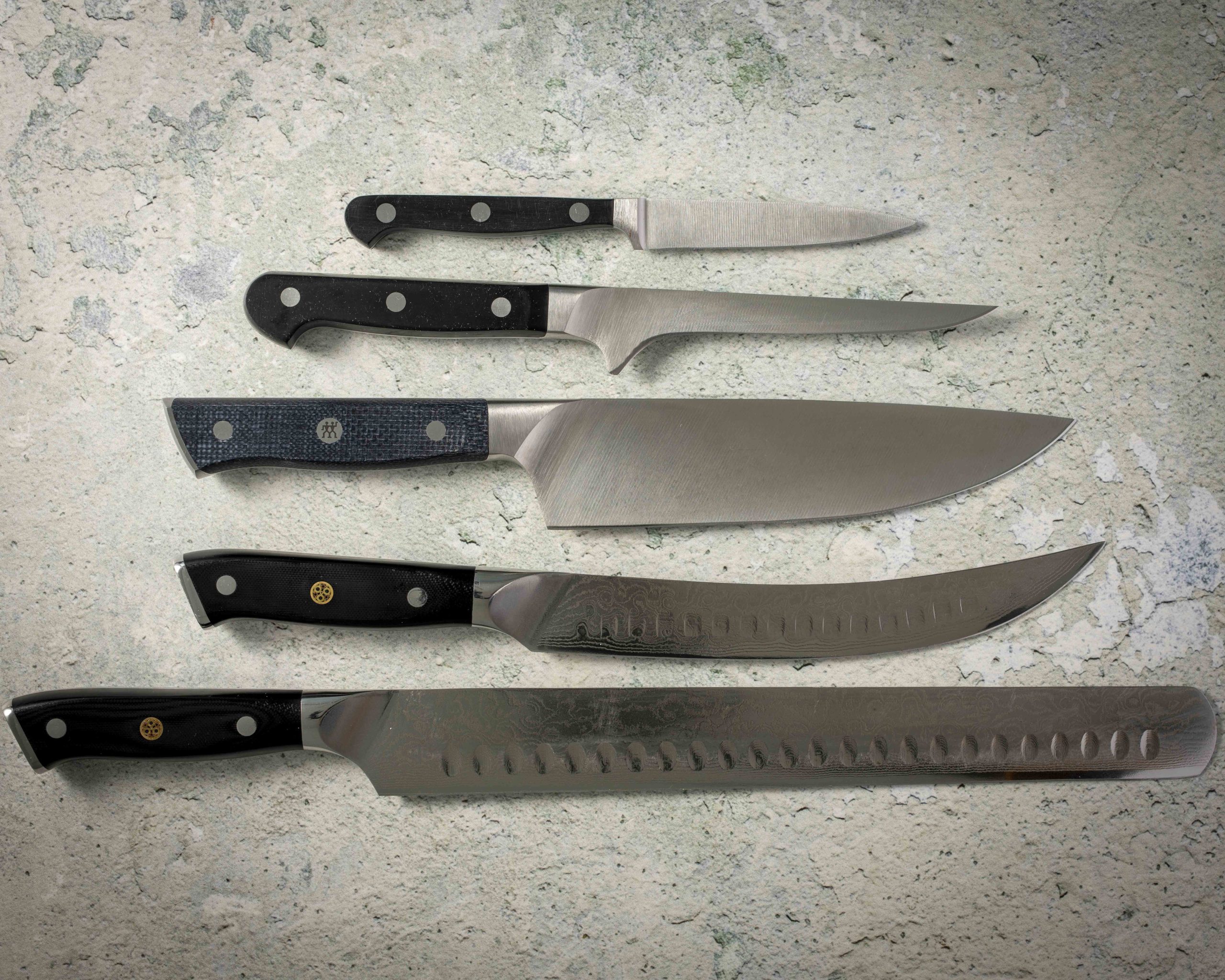
I rely on just five knives for all of my food preparation from trimming and cutting to slicing finished meat for serving. Each has a blade shaped and sized for a specific task.
Jump to:
- Equipment
- 1. 5.5-inch Boning Knife for Detailed Meat Trimming
- 2. 10-inch Breaking Knife for Large Cuts and Heavy Trim
- 3. 8-inch Chef's Knife for Vegetables and Herbs
- 4. 4-inch Paring Knife for Small Precision Jobs
- 5. 12-inch Slicing Knife for Brisket and Roasts
- Knife Care and Maintenance
- Cutting Boards for Food Preparation
- Frequently Asked Questions
- Final Thoughts
- Where to Buy
- Other Resources
Equipment
Here are the knives and accessories covered in this article.
- 5.5-inch, semi-flexible curved boning knife for detail trimming
- 10-inch curved breaking knife for portioning large cuts
- 8-inch chef's knife with a broad blade for chopping and mincing
- 4-inch paring knife for small precision work
- 12-inch slicing knife
- Honing steel for edge maintenance
- Large wood or composite cutting board for general prep work
- Plastic cutting boards for cutting raw meat and cooked meat
- Knife block, blade guards or magnetic strip for safe storage
1. 5.5-inch Boning Knife for Detailed Meat Trimming
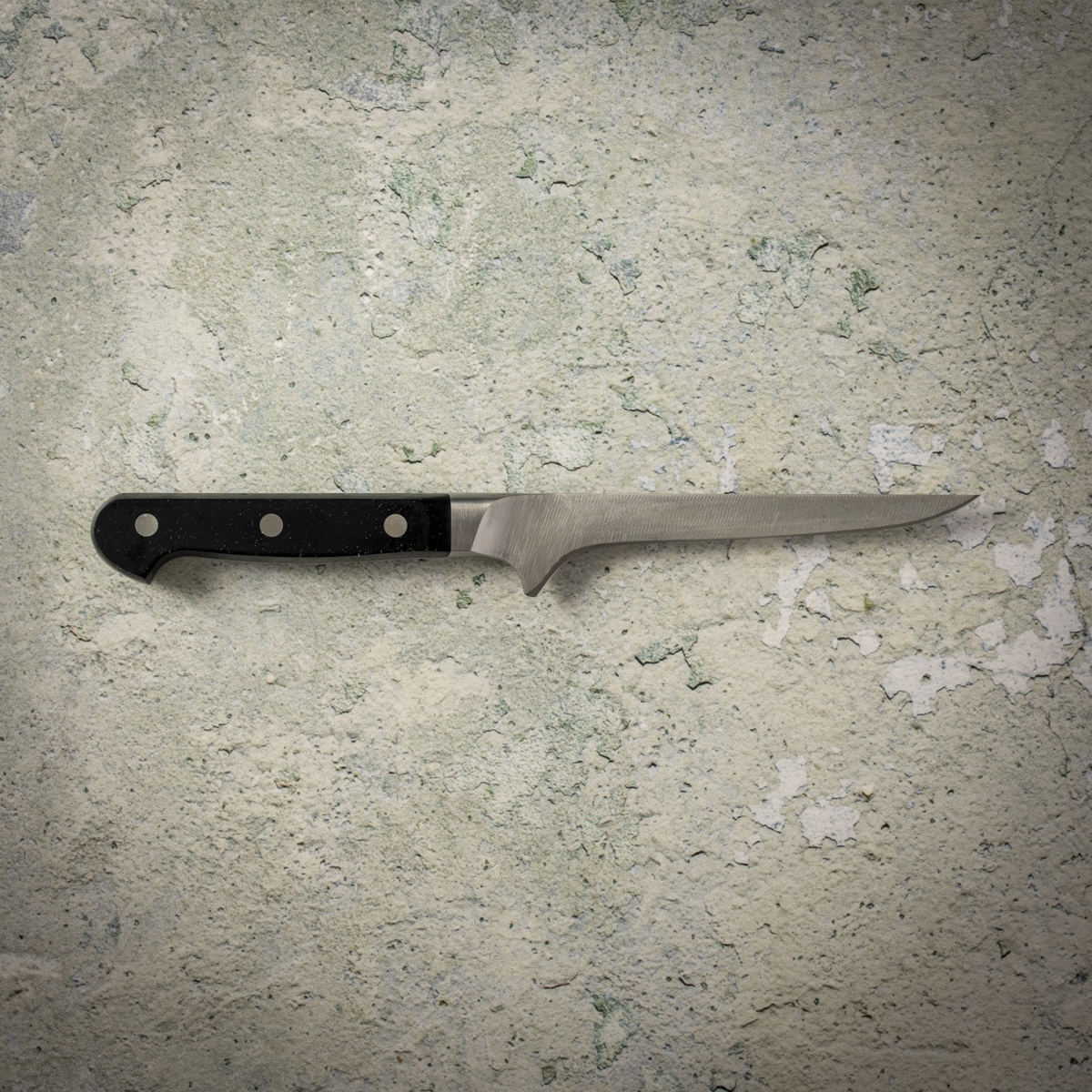
A boning knife is useful for barbecue preparation because its narrow blade can handle both broad trimming and close work. It also works well for removing silver skin, the thin, silvery layer of tough connective tissue on cuts such as tenderloin.
My boning knife is 5.5 inches long, with a narrow, curved, semi-flexible blade. That shape works well for following seams and working around bone and fat. I use it to remove excess fat from pork shoulder and to shape the edges of a brisket.
2. 10-inch Breaking Knife for Large Cuts and Heavy Trim
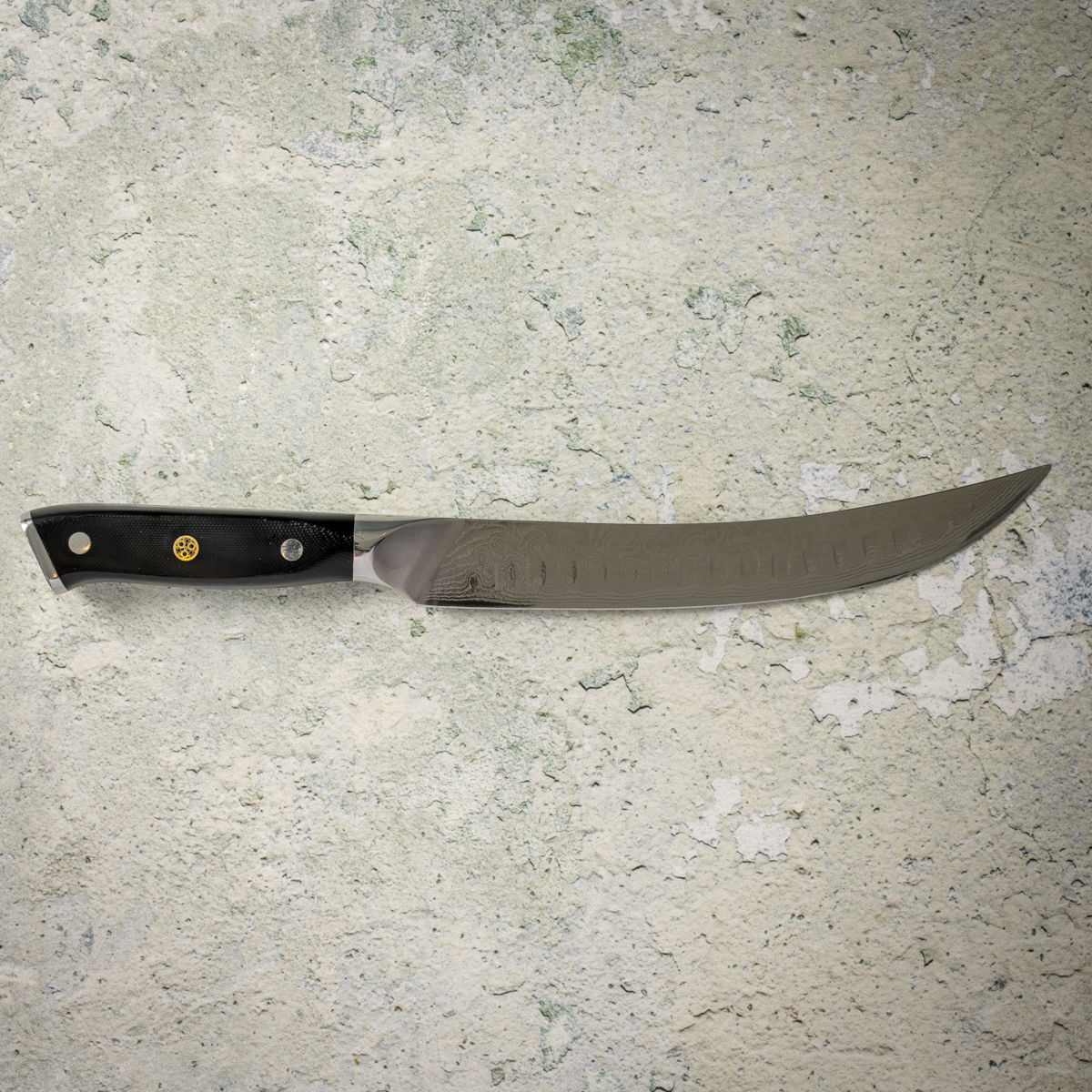
A breaking knife is used to divide large cuts of meat into smaller, more manageable pieces. Its long, wide, curved blade makes broad cuts through fat and thick muscle easier.
I use this knife for dividing boneless pork shoulder, cutting between the bones to portion rib racks, cubing chuck roast for stew meat, and heavy brisket trimming.
3. 8-inch Chef's Knife for Vegetables and Herbs
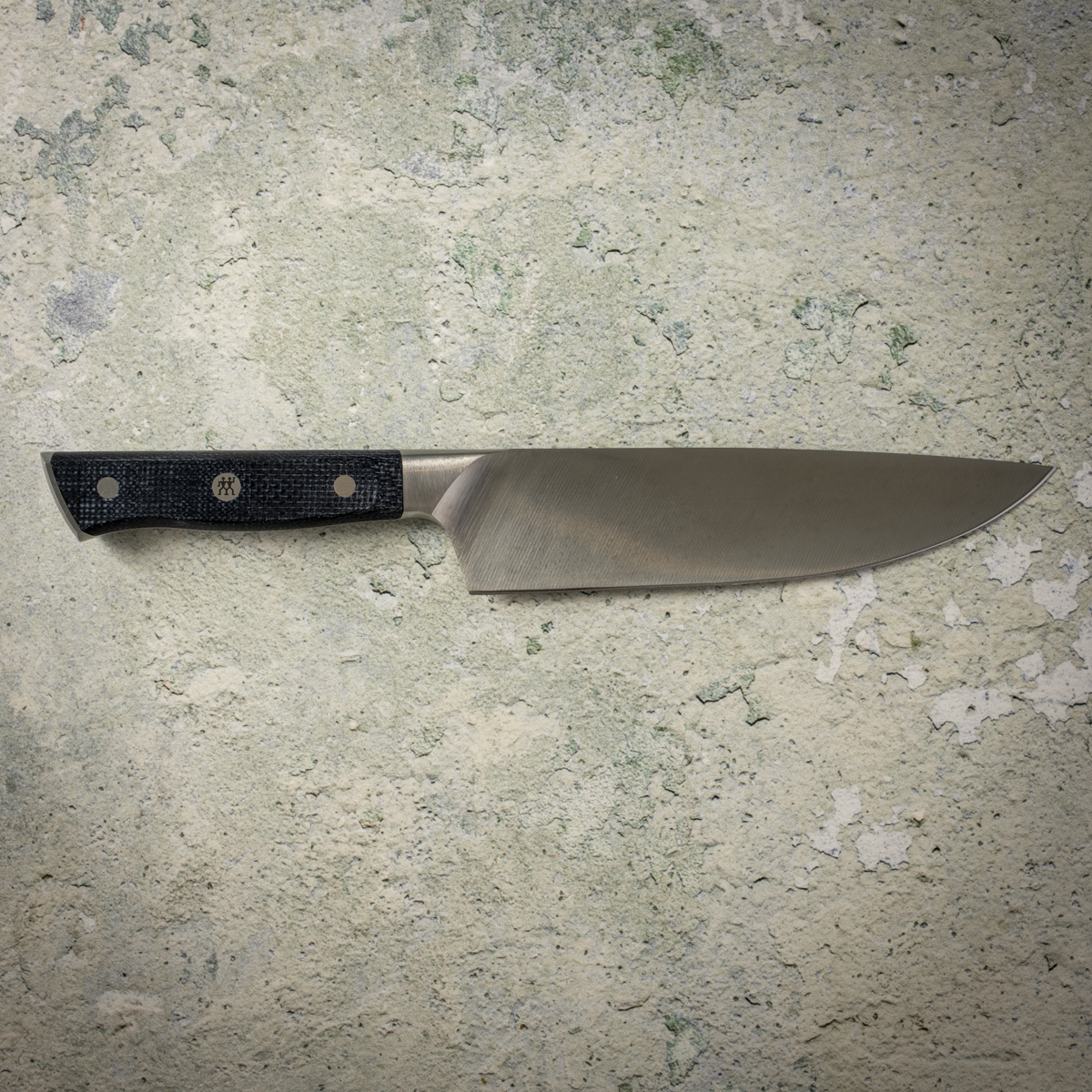
My chef's knife has an 8-inch blade with a broad profile and a curved edge. I prefer a full-tang design where the blade steel extends through the handle, and a curved bolster, the junction between the blade and handle, that feels more comfortable to hold. Its curved edge allows me to use a rocking motion when mincing herbs, garlic and shallots. I also use this knife for chopping onions, slicing peppers, and dicing potatoes. A chef's knife can also handle some meat trimming and carving. Its long blade makes it easier to slice smaller roasts in fewer strokes.
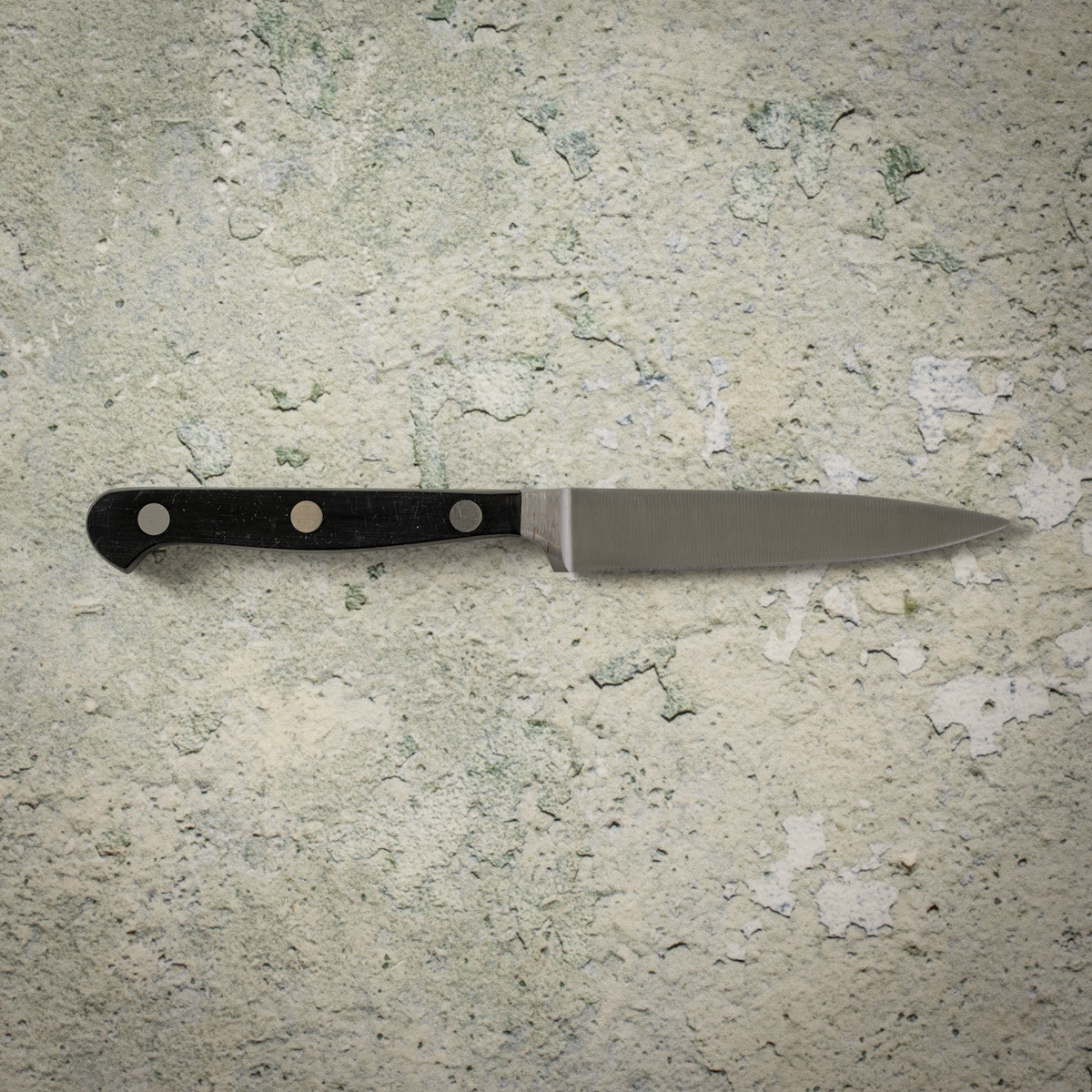
4. 4-inch Paring Knife for Small Precision Jobs
My 4-inch paring knife is used for small cuts that would be awkward with a larger knife. I use it for coring jalapenos, peeling and trimming garlic, trimming green beans and broccoli florets, cutting small vegetables like radishes, and deveining shrimp.
5. 12-inch Slicing Knife for Brisket and Roasts
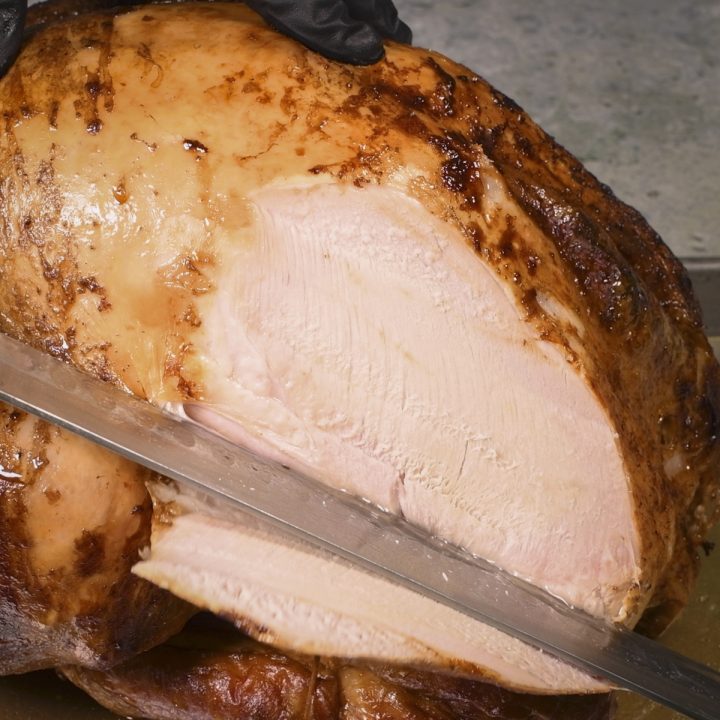
A straight, 12-inch slicing knife is well suited to large cooked cuts of meat like ham, brisket, turkey breast, and beef rib roasts. Its long, thin blade makes smooth, even slices with fewer strokes. The scalloped indentations of a Granton edge help reduce friction and keep food from sticking to the blade.
Knife Care and Maintenance
Care for the blade and handle according to the manufacturer's instructions. Wash knives by hand and thoroughly dry them. Store knives in a knife block, with edge guards or on a secure magnetic strip where the edges are protected from other utensils.
Follow the knife manufacturer's guidance when choosing a honing or sharpening tool. Use a smooth honing steel to realign the edge. Use a professional knife sharpening service when honing no longer restores cutting performance.
Cutting Boards for Food Preparation
Use a wood or composite cutting board for vegetable and herb preparation. Wash boards with hot, soapy water after use and sanitize using a food-safe sanitizer before switching foods. Use separate nonporous plastic cutting boards for raw meat and cooked meat.
I use color-coded plastic cutting boards to reduce the risk of cross-contamination during food preparation: red for raw beef and pork, yellow for raw chicken, brown for cooked meat, green for vegetables, and blue for fish. Choose dishwasher-safe plastic boards and follow the manufacturer's cleaning instructions. This system keeps each board dedicated to a specific task.
Frequently Asked Questions
Use a 5.5-inch boning knife for removing excess fat and detailed trimming. If the brisket needs a lot of fat removed, use a 10-inch breaking knife for the initial trimming, then finish with a boning knife.
If you do not already own a chef's knife, start there. A chef's knife is great for everyday food preparation, including cutting meat, vegetables, and herbs.
A chef's knife will carve meat in a pinch. A 12-inch slicing knife makes longer, more uniform slices with less tearing because the extra length covers more of the cut in each pass, especially on brisket and prime rib.
Final Thoughts
Having the right knife makes food preparation easier from start to finish. Build your knife collection one blade at a time as your needs change, always adding the right tool for each job.
Where to Buy
These are paid affiliate links. As a customer, you do not pay any more or less because of an affiliated link. A small percentage of the sale will go to the person who generated the link. Thank you for supporting my website and channel.
- Zwilling Pro 8" Chef's Knife
- Zwilling Pro 4" Paring Knife
- Zwilling Pro 5.5" Boning Knife
- Dalstrong 12" Slicing Knife
- Dalstrong 10" Breaking Knife
Other Resources
If you found this guide helpful, here are a few more resources that will help you get the most out of your Kamado Joe:
- Kamado Joe Owner's Handbook
- The Texas Backyard Kitchen - Complete Meals from Fire to Table
- Kamado Joe 101 Playlist
- How to Control Temperature on a Kamado Joe
- Kamado Joe vs. Big Green Egg: Which Ceramic Grill Would I Buy After Owning Five of Them?
Watch the companion video for a closer look at the blades and their uses.

Leave a Reply