
There are plenty of opinions about which lump charcoal is best for a Kamado Joe. Some people swear by the brand they've used for years, while others buy whatever is cheapest or easiest to find. I wanted something a little more objective.
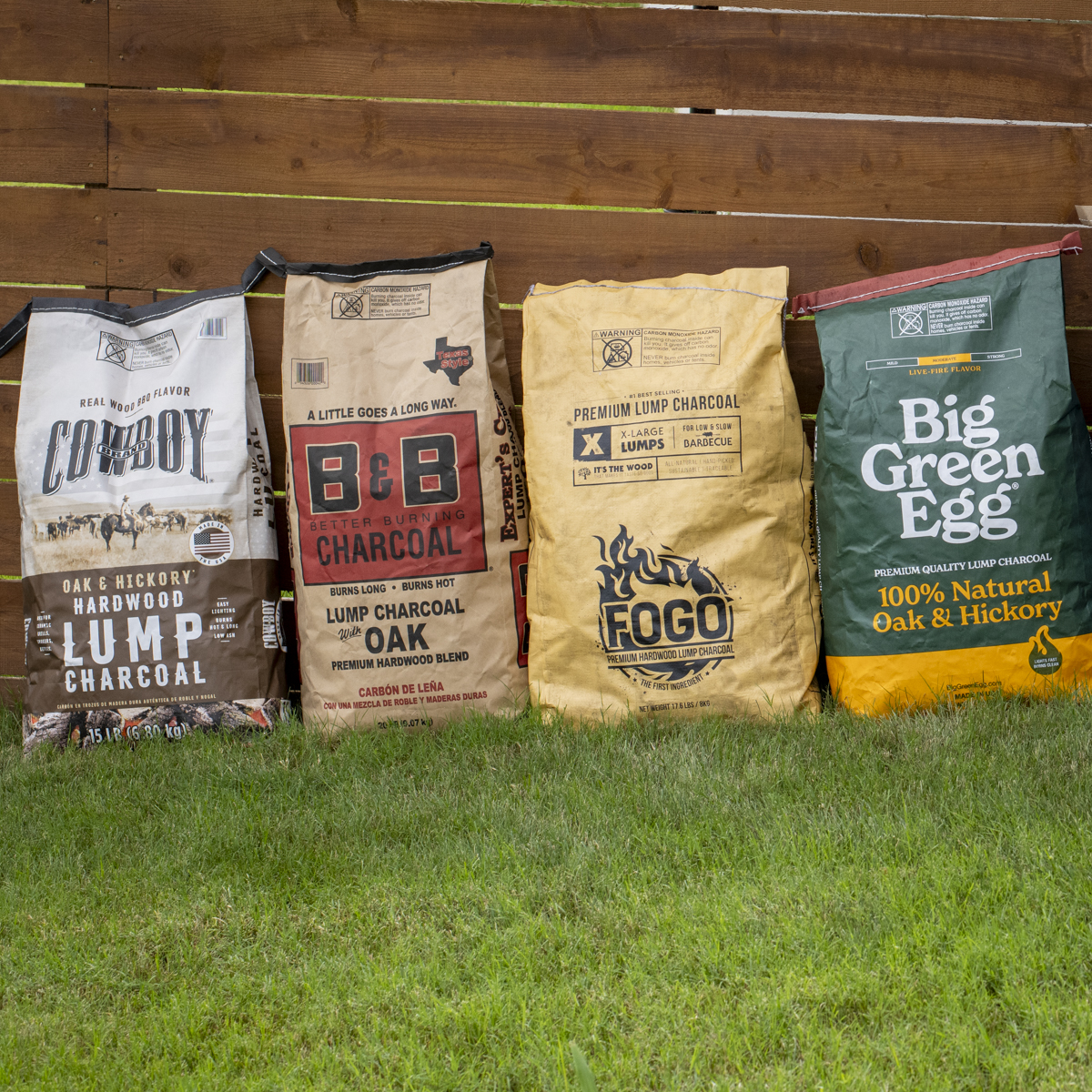
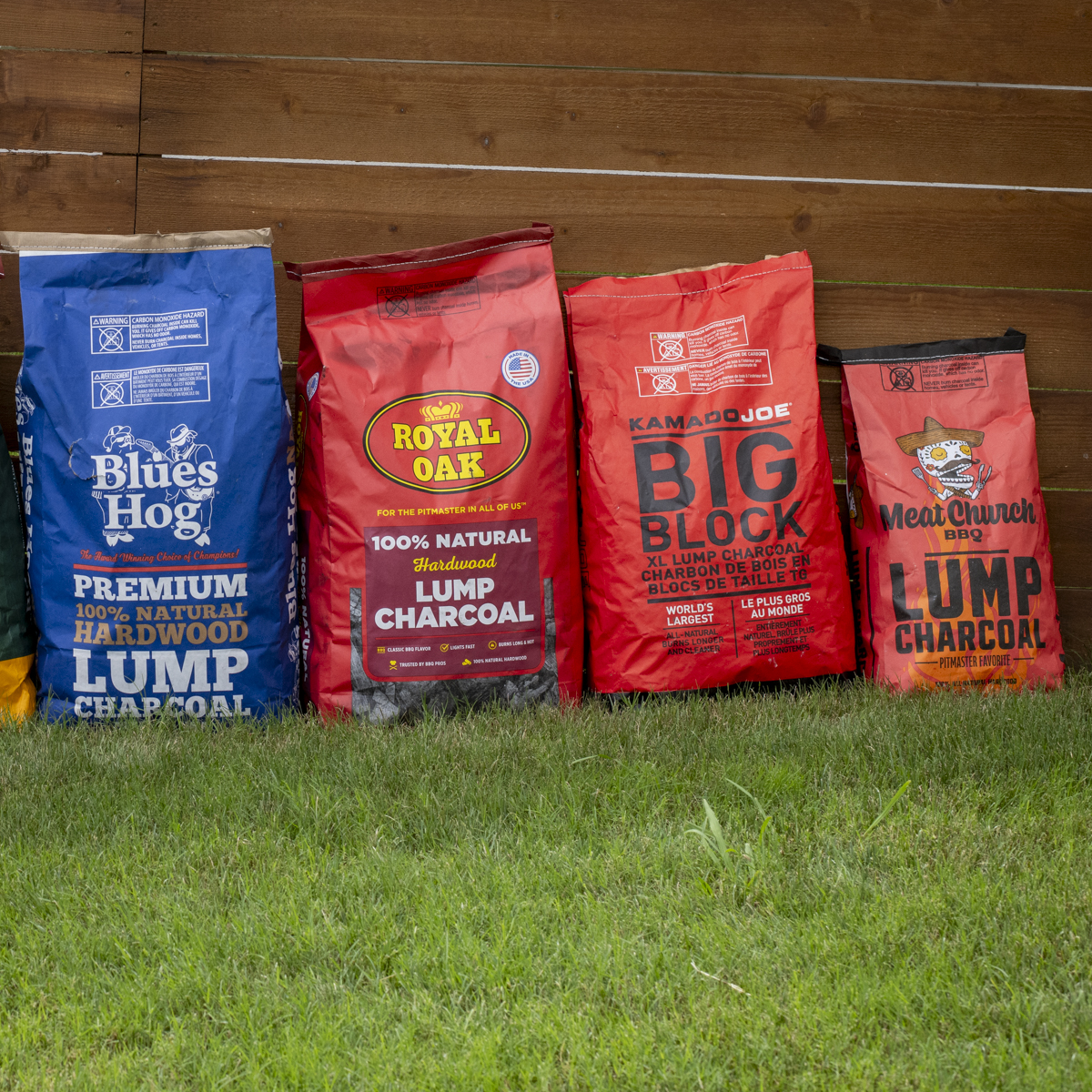
So, I bought ten bags of charcoal and started measuring. I weighed and sorted every piece, separated rocks, sticks, and under-carbonized wood, measured charcoal density, and calculated what I actually paid per pound of usable charcoal.
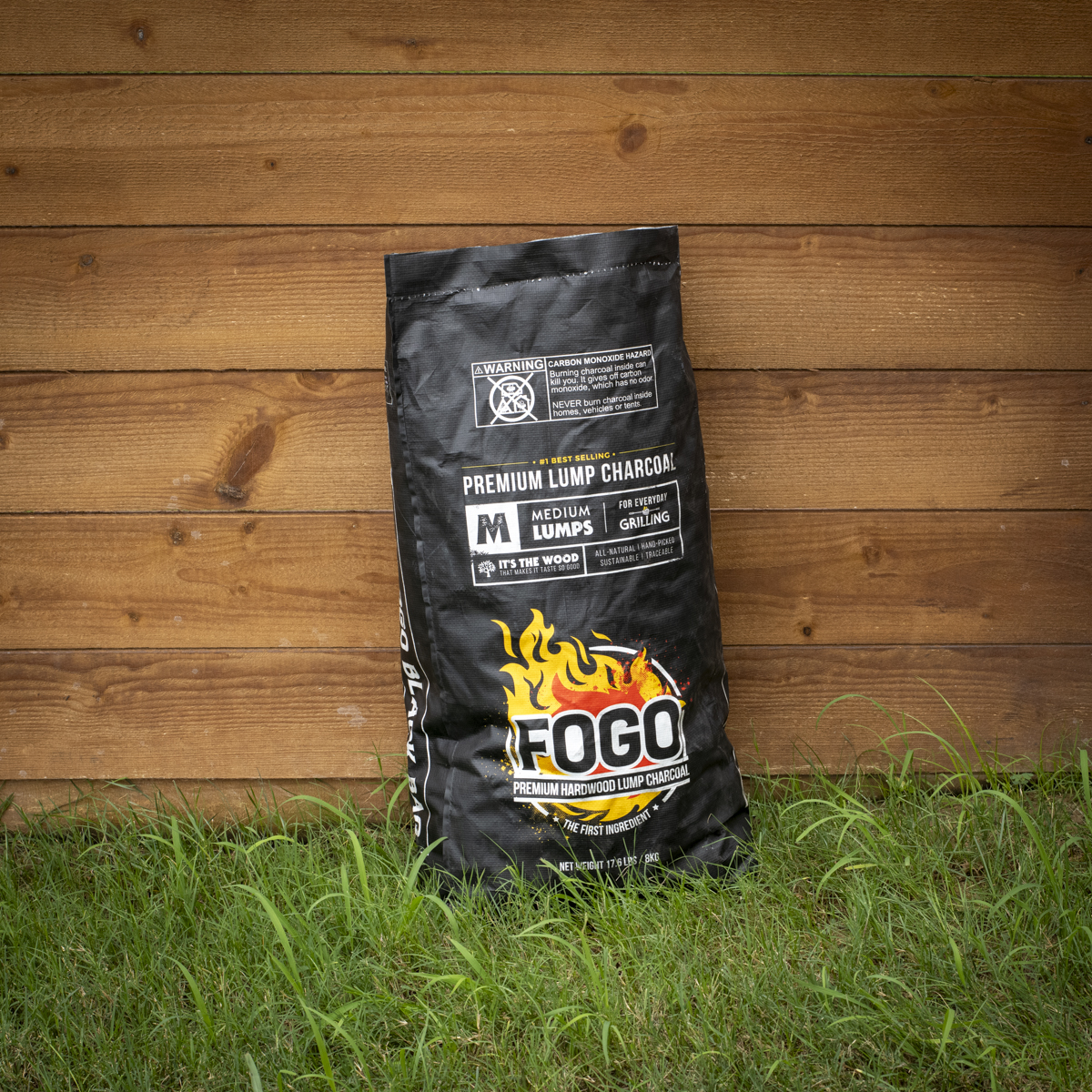
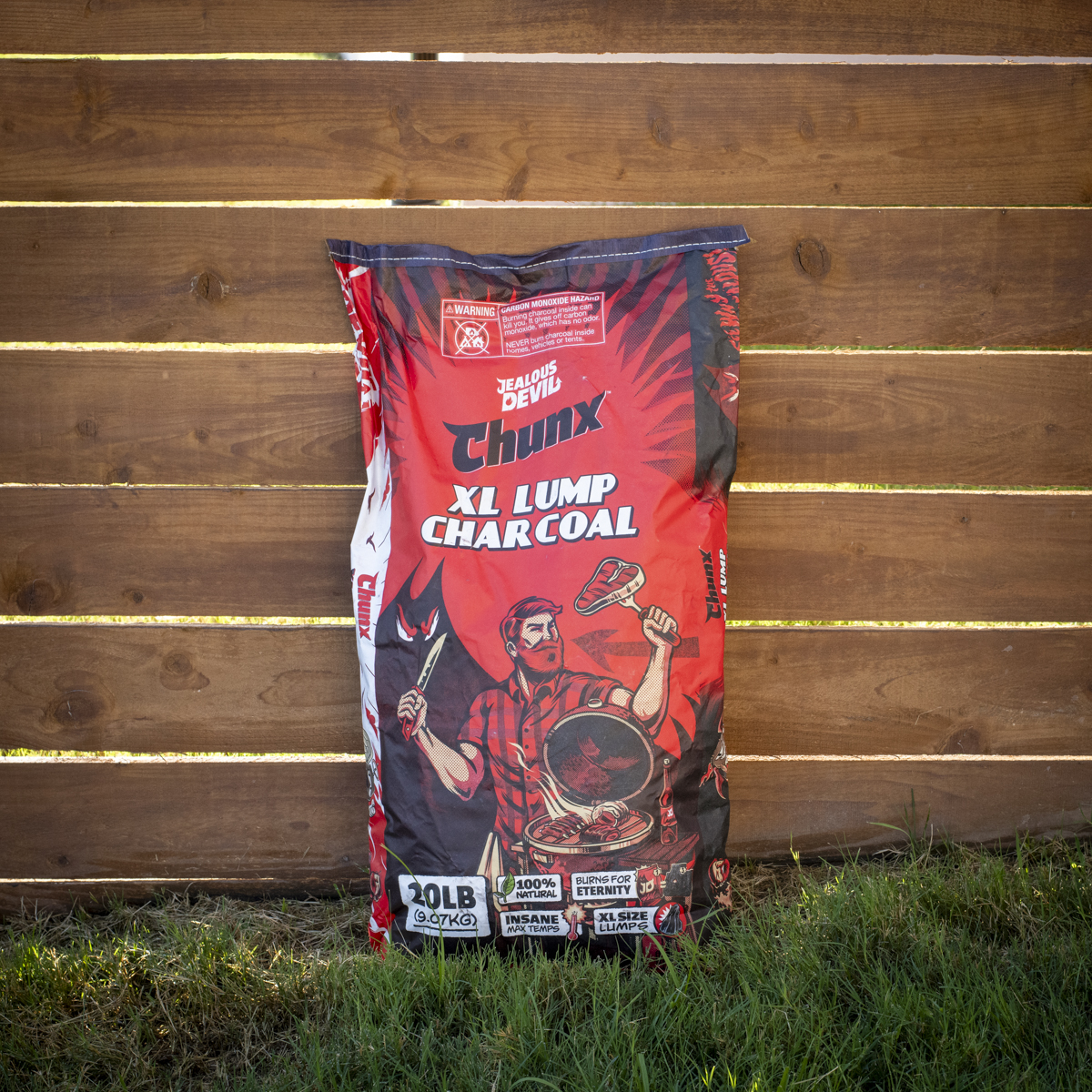
Ultimately, nine brands were ranked using the same four criteria: usable charcoal, density, quality control, and value. I also tested Fogo Extra Large separately, bringing the total to 10 bags tested.
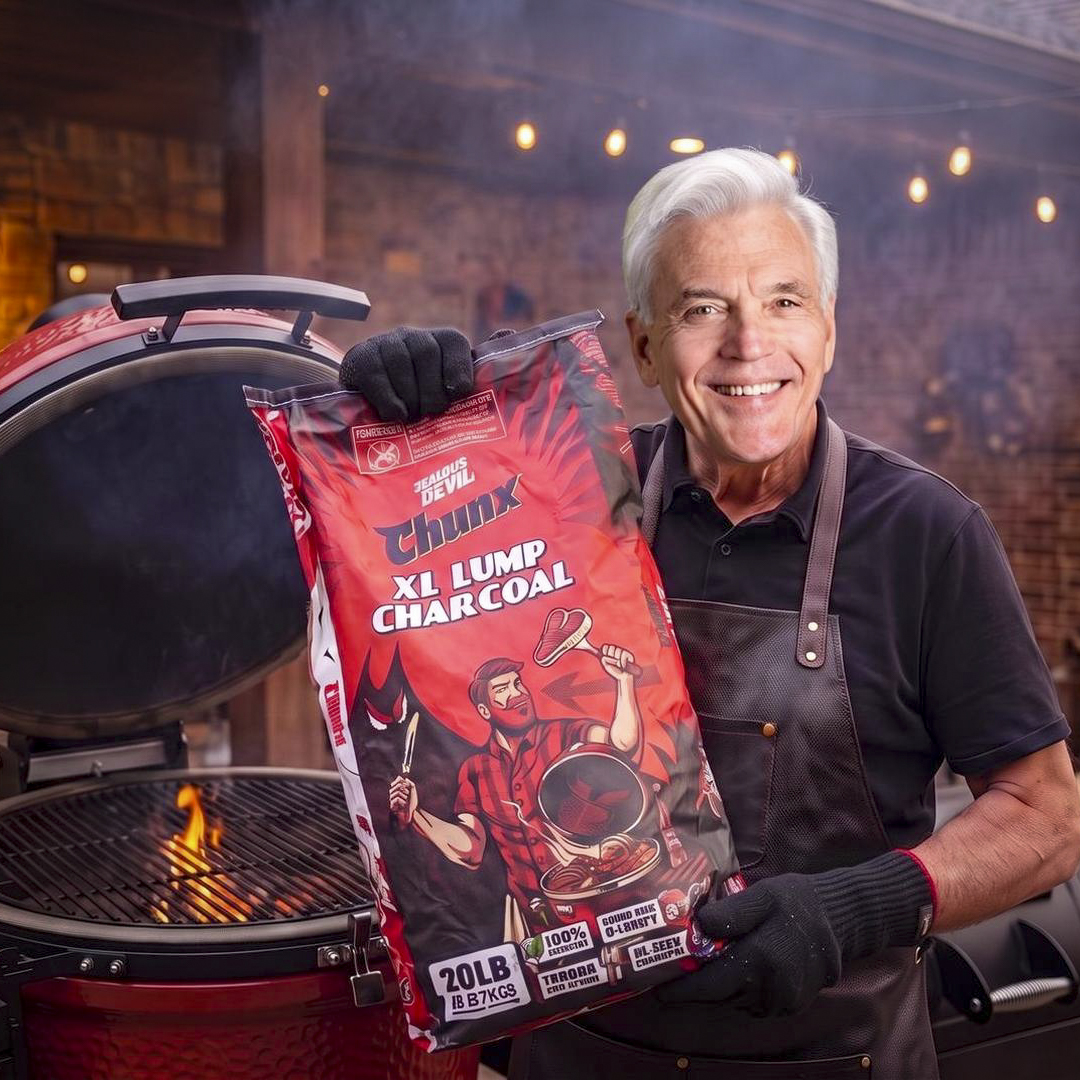
The winner was Jealous Devil. It finished first in three of the four tests and second in the fourth, making it the best overall lump charcoal in my comparison.
Best Lump Charcoal: My Results at a Glance
Here are my final results after adding Jealous Devil to the original test:
| Award | Winner | Result |
| Best Overall Lump Charcoal | Jealous Devil | #1 overall |
| Most Usable Charcoal | Jealous Devil | 79.4% |
| Best Value | B&B | $1.39 per usable lb. |
| Highest Density | Jealous Devil | 330 g/L |
| Best Quality Control | Jealous Devil & Fogo Premium | 0% debris |
| Best Alternative to Jealous Devil | Fogo Premium | #2 overall |
Jealous Devil's performance surprised me because it didn't just win one category and perform reasonably well everywhere else. It ranked first in usable charcoal, density, and quality control, then finished second only to B&B in value. No other charcoal I tested was as consistent across all four measurements.
Fogo Premium finished second overall, followed by Blues Hog and B&B. Kamado Joe Big Block finished fifth. But the overall ranking doesn't tell the whole story. B&B, for example, was easily the best value, while Blues Hog had one of the highest percentages of large pieces. Which charcoal is best for you may depend on which of those characteristics matters most.
Jump to:
- Best Lump Charcoal: My Results at a Glance
- The Complete Lump Charcoal Rankings
- How I Tested the Lump Charcoal
- Handle Your Lump Charcoal Carefully
- Test #1: Which Lump Charcoal Had the Most Usable Pieces?
- Test #2: Which Lump Charcoal Was the Best Value?
- Test #3: Which Lump Charcoal Was the Most Dense?
- Test #4: Which Brand Had the Best Quality Control?
- Why Jealous Devil Won the Overall Test
- What About Fogo Extra Large?
- The 9 Lump Charcoal Brands Ranked From Best to Worst
- So Which Lump Charcoal Should You Buy?
- What This Lump Charcoal Test Does Not Measure
- Frequently Asked Questions About Lump Charcoal
- Top Tip
- Final Thoughts: Which Lump Charcoal Would I Buy?
- Related
The Complete Lump Charcoal Rankings
Here are the final rankings for all nine standard lump charcoal products:
| Rank | Brand | Usable % | Debris % | Density | Cost/Usable lb. |
| 1 | Jealous Devil | 79.4% | 0.0% | 330 g/L | $1.57 |
| 2 | Fogo Premium | 62.3% | 0.0% | 240 g/L | $1.82 |
| 3 | Blues Hog | 74.4% | 0.2% | 197 g/L | $1.82 |
| 4 | B&B | 54.8% | 4.3% | 317 g/L | $1.39 |
| 5 | Kamado Joe | 71.5% | 2.0% | 230 g/L | $2.44 |
| 6 | Big Green Egg | 65.3% | 4.1% | 214 g/L | $2.39 |
| 7 | Royal Oak | 58.5% | 1.6% | 189 g/L | $2.28 |
| 8 | Meat Church | 56.8% | 4.7% | 229 g/L | $2.42 |
| 9 | Cowboy | 42.7% | 0.7% | 205 g/L | $2.77 |
The overall positions came from ranking each charcoal across the four tests. A first-place finish received one point, second place received two points, and so on. The lowest combined score produced the highest overall ranking.
One important note is that I tested one bag of each product. These results tell you exactly what I found in the bags I purchased, but they don't mean that every bag produced by each manufacturer will contain exactly the same distribution of charcoal.
How I Tested the Lump Charcoal
I purchased the charcoal at retail rather than obtaining specially selected bags from the manufacturers. For each bag, I weighed the total contents and then sorted every piece into four size categories: under 1 inch, 1 to 2 inches, 2 to 4 inches, and more than 4 inches.
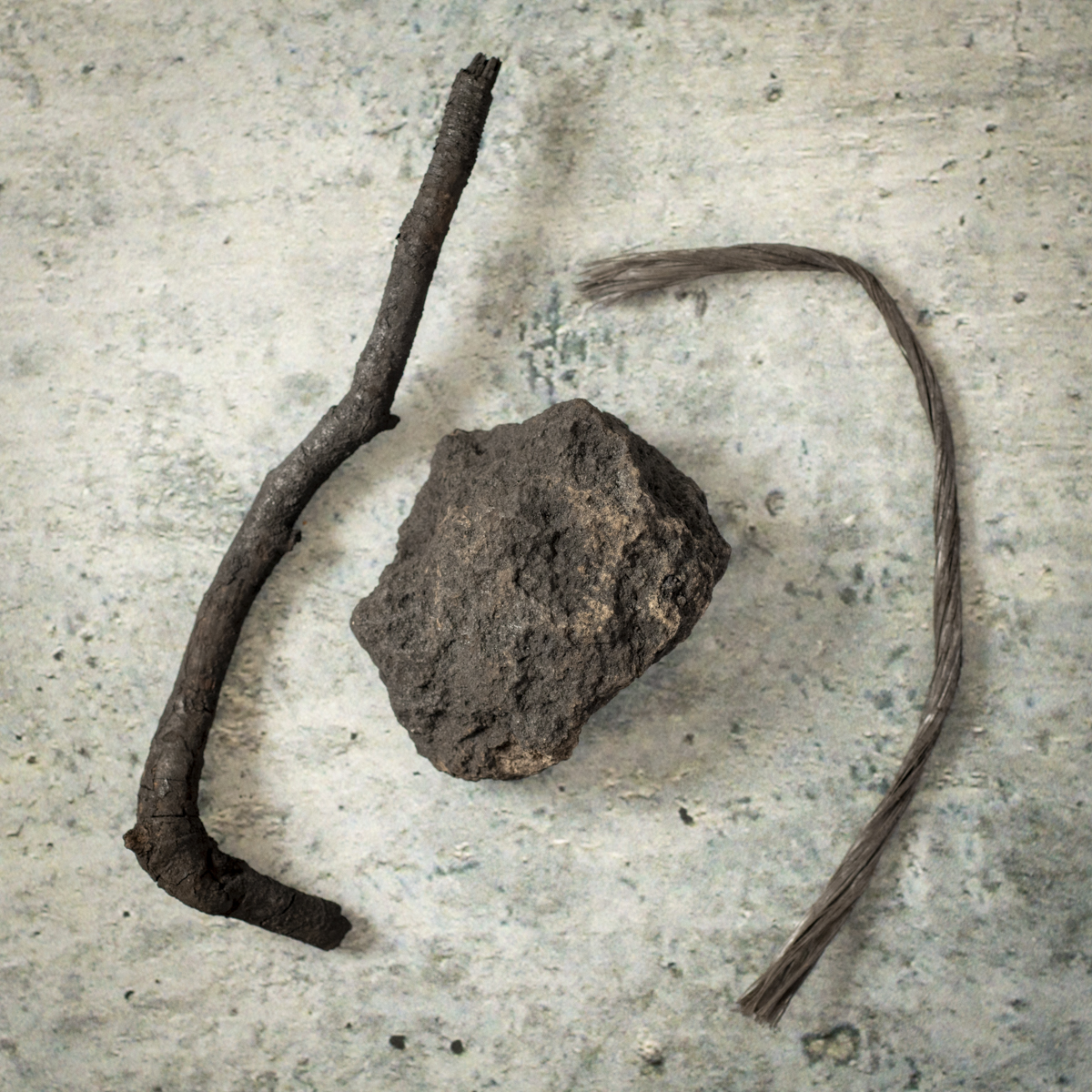
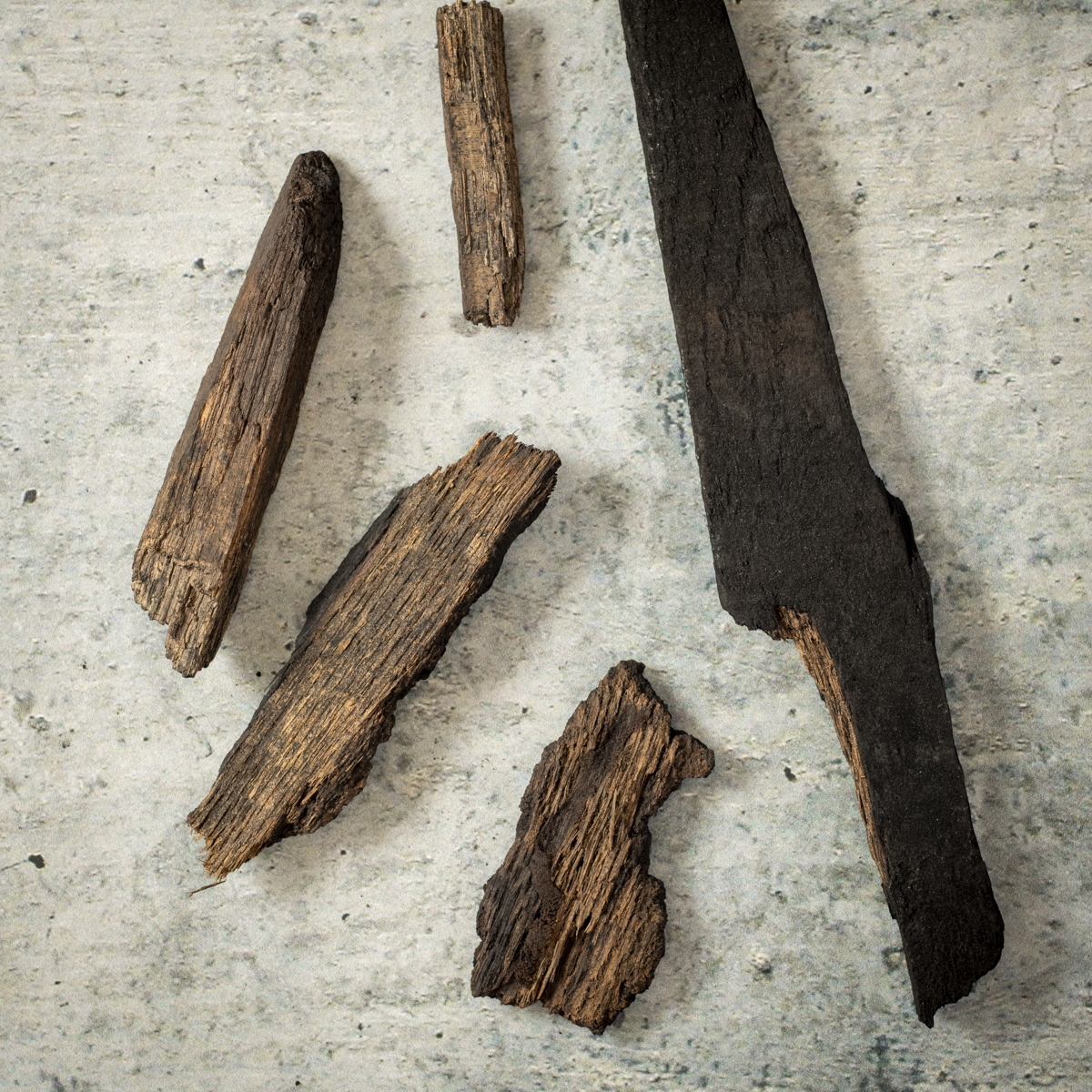
I weighed each group separately and removed anything I didn't consider properly carbonized lump charcoal. That included rocks, sticks, string, and under-carbonized wood. Those materials were also weighed so I could determine how much of the bag consisted of debris.
From those measurements, I evaluated each charcoal using four criteria.
1. Usable Charcoal Percentage
For this test, I defined usable lump charcoal as pieces 2 inches or larger. That's the size range I prefer in a Kamado Joe because larger pieces provide good airflow through the charcoal basket and are well suited to the controlled fires I want in a ceramic grill.
That doesn't mean a piece measuring 1 ½ inches won't burn. It obviously will. I simply needed a consistent threshold that I could apply to every bag, and 2 inches was the standard I used throughout the test.
2. Cost Per Usable Pound
The price printed on the bag doesn't necessarily tell you which charcoal offers the best value. A less expensive bag isn't much of a bargain if a large percentage of its contents consists of dust and small pieces you don't particularly want.
That's why I calculated cost per usable pound. I divided the price I paid for each bag by the amount of charcoal that met my 2-inch usable-size standard. That allowed me to compare what I was actually paying for the larger charcoal I wanted rather than simply comparing retail prices.
3. Charcoal Density
I also wanted to know how much charcoal mass each brand puts into a given amount of space. I used the same 12-liter container for every product, filled it consistently with similarly sized pieces, and weighed the contents. That gave me a density measurement in grams per liter.
Density matters because your Kamado Joe charcoal basket has a fixed amount of space. A denser charcoal allows you to put more charcoal mass into that space, which gives you more fuel in the basket without taking up additional room. That can be particularly useful when preparing for a long cook.
4. Quality Control
Finally, I looked at what was in each bag that wasn't properly carbonized lump charcoal. During the test, I found rocks, sticks, string, and under-carbonized wood.
Those materials count toward the weight of the bag you're buying, but they aren't what I want to load into my Kamado Joe. I weighed that material separately and calculated the percentage of each bag that consisted of debris.
Handle Your Lump Charcoal Carefully
While performing these tests, I accidentally discovered something else about lump charcoal that I think is worth knowing.
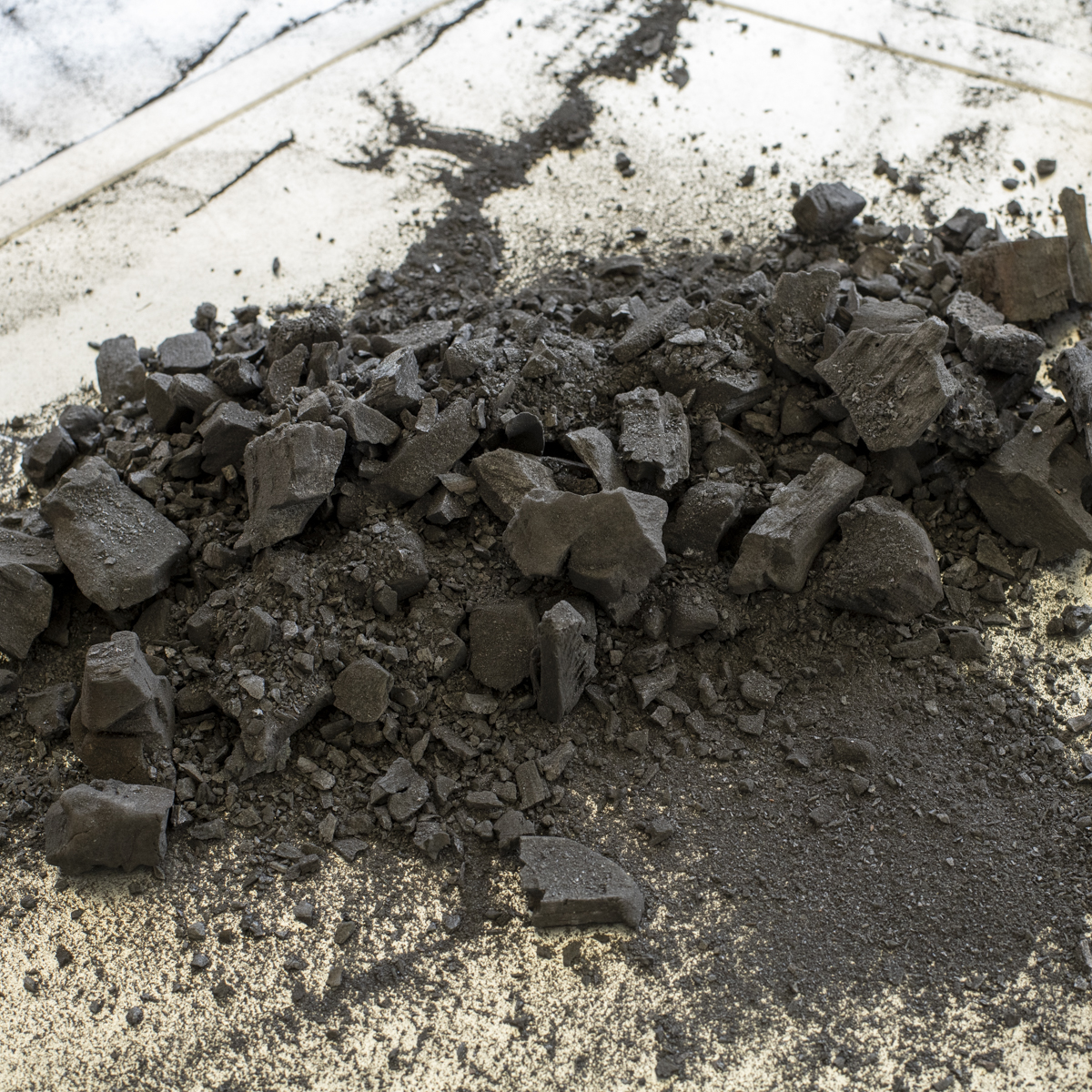
After sorting the Kamado Joe charcoal, I had already removed all of the dust and material under 1 inch. I put the remaining charcoal back into the bag and then dumped it out one more time.
That single additional dump produced another 264 grams of dust and fine pieces, which is more than half a pound of charcoal. The material had been in larger pieces only moments earlier. Simply putting the charcoal back into the bag and dumping it out again broke some of those pieces apart.
That experiment changed the way I handle lump charcoal. Charcoal is brittle, and every time a bag gets dropped, shaken, thrown onto a pallet, or otherwise handled roughly, some of the large pieces can break into smaller ones. A bag may go through quite a bit of handling before it ever reaches your grill.
Once you buy it, there's no reason to make the problem worse. Carry the bag carefully, pour the charcoal slowly, and don't shake or drop it unnecessarily. Those big pieces cost money, so there's no sense turning them into dust before they ever reach your Kamado Joe.
Test #1: Which Lump Charcoal Had the Most Usable Pieces?
The first test looked at how much of each bag consisted of charcoal measuring at least 2 inches. There was a surprisingly large difference between the brands.
Cowboy finished at the bottom with just 42.7% usable charcoal. B&B came in at 54.8%, followed by Meat Church at 56.8% and Royal Oak at 58.5%. Fogo Premium moved above them at 62.3%, followed by Big Green Egg at 65.3% and Kamado Joe at 71.5%.
That left two brands at the top. Blues Hog produced an excellent 74.4% usable charcoal, but Jealous Devil did even better at 79.4%.
| Rank | Brand | Usable Charcoal |
| 1 | Jealous Devil | 79.4% |
| 2 | Blues Hog | 74.4% |
| 3 | Kamado Joe | 71.5% |
| 4 | Big Green Egg | 65.3% |
| 5 | Fogo Premium | 62.3% |
| 6 | Royal Oak | 58.5% |
| 7 | Meat Church | 56.8% |
| 8 | B&B | 54.8% |
| 9 | Cowboy | 42.7% |
Winner: Jealous Devil
Almost four-fifths of the Jealous Devil bag met my usable-size standard. Blues Hog and Kamado Joe also performed very well, while Cowboy was a distant last.
Smaller charcoal isn't worthless, and I'm not suggesting you throw away every piece under 2 inches. It will still burn. My concern is how well those pieces work in a Kamado Joe, particularly when I'm trying to maintain good airflow and a controlled fire for a long cook. Smaller pieces can settle into the spaces between larger pieces and restrict airflow, which is why I place a higher value on the larger pieces.
Test #2: Which Lump Charcoal Was the Best Value?
This is where looking only at the price of the bag can be misleading. I wasn't interested in simply finding the least expensive bag. I wanted to know how much I was paying for the charcoal that met the usable-size standard from the first test.
Cowboy finished last at $2.77 per usable pound. What looked like inexpensive charcoal based on retail price became the most expensive product in the test once I accounted for how much of the bag met my usable-size standard.
Kamado Joe was next at $2.44 per usable pound, followed closely by Meat Church at $2.42 and Big Green Egg at $2.39. Royal Oak came in at $2.28.
At the top, Fogo Premium and Blues Hog tied at $1.82 per usable pound. Jealous Devil beat both at $1.57, but the winner was B&B at just $1.39 per usable pound.
| Rank | Brand | Cost Per Usable Pound |
| 1 | B&B | $1.39 |
| 2 | Jealous Devil | $1.57 |
| 3 | Fogo Premium | $1.82 |
| 3 | Blues Hog | $1.82 |
| 5 | Royal Oak | $2.28 |
| 6 | Big Green Egg | $2.39 |
| 7 | Meat Church | $2.42 |
| 8 | Kamado Joe | $2.44 |
| 9 | Cowboy | $2.77 |
Winner: B&B
B&B won the value test by a meaningful margin. Even though only 54.8% of the bag met my usable-size standard, its purchase price was low enough that it still delivered the cheapest usable charcoal in the comparison.
Jealous Devil's second-place finish is also important. It wasn't the cheapest charcoal I purchased, but its high usable percentage meant I got a lot of larger charcoal for my money. At $1.57 per usable pound, it was only 18 cents more than B&B and substantially less expensive by this measure than many of the other products.
The value test, however, is only part of the story. B&B's results become much more complicated when we get to quality control.
Test #3: Which Lump Charcoal Was the Most Dense?
The third test measured charcoal density. I used the same 12-liter container for every brand, filled it consistently with the same general size of charcoal pieces, and weighed the contents. This gave me a density measurement in grams per liter.
Royal Oak finished at the bottom at 189 g/L, with Blues Hog only slightly higher at 197 g/L. Cowboy measured 205 g/L, followed by Big Green Egg at 214 g/L. Meat Church and Kamado Joe were nearly identical at 229 and 230 g/L, while Fogo Premium came in at 240 g/L.
Then there was a significant jump. B&B measured 317 g/L, which was the highest density in my original test by a substantial margin. When I later tested Jealous Devil using the same procedure, it came in even higher at 330 g/L.
| Rank | Brand | Density |
| 1 | Jealous Devil | 330 g/L |
| 2 | B&B | 317 g/L |
| 3 | Fogo Premium | 240 g/L |
| 4 | Kamado Joe | 230 g/L |
| 5 | Meat Church | 229 g/L |
| 6 | Big Green Egg | 214 g/L |
| 7 | Cowboy | 205 g/L |
| 8 | Blues Hog | 197 g/L |
| 9 | Royal Oak | 189 g/L |
Winner: Jealous Devil
To put the difference into perspective, Jealous Devil was about 75% more dense than Royal Oak in this test. B&B was also an obvious standout. After those two, there was a substantial drop to Fogo Premium in third place.
For a Kamado Joe owner, density is useful because the charcoal basket gives you a fixed amount of space. The more charcoal mass you can fit into that space, the more fuel you have available without refilling the basket. That's particularly relevant for long cooks such as brisket and pork shoulder.
Density by itself doesn't make one charcoal better than another, which is why I didn't want any single measurement to determine the winner. Blues Hog is a good example. It performed poorly in density but extremely well in usable piece size. B&B was almost the opposite, with mediocre usable-piece results but outstanding density.
Test #4: Which Brand Had the Best Quality Control?
For the fourth test, I separated and weighed material that I didn't consider properly carbonized lump charcoal. Depending on the bag, that included sticks, rocks, string, and under-carbonized wood.
There are two issues here. First, you're paying for the total weight of the bag, so debris is material you paid for that isn't usable charcoal. Second, under-carbonized wood isn't the same as fully carbonized lump charcoal, so I didn't count it as usable charcoal in this comparison.
The worst result came from Meat Church at 4.7% debris, which consisted of sticks. B&B was next at 4.3%, and its debris included rocks, sticks, and under-carbonized wood. I found 66 grams of rock in the B&B bag I tested.
Big Green Egg wasn't far behind at 4.1% debris and had the highest percentage of under-carbonized wood in the test. Kamado Joe came in at 2.0%, followed by Royal Oak at 1.6% and Cowboy at 0.7%. Blues Hog performed extremely well at just 0.2%.
At the top were Fogo Premium and Jealous Devil. I found zero measurable debris in either bag.
| Rank | Brand | Debris |
| 1 | Jealous Devil | 0.0% |
| 1 | Fogo Premium | 0.0% |
| 3 | Blues Hog | 0.2% |
| 4 | Cowboy | 0.7% |
| 5 | Royal Oak | 1.6% |
| 6 | Kamado Joe | 2.0% |
| 7 | Big Green Egg | 4.1% |
| 8 | B&B | 4.3% |
| 9 | Meat Church | 4.7% |
Winners: Jealous Devil and Fogo Premium
The B&B result is particularly interesting when considered alongside the previous tests. B&B gave me the cheapest usable charcoal and had the second-highest density, but I also found rocks, sticks, and under-carbonized material in the bag. That explains why a product that won the value test and nearly won the density test still finished fourth overall.
Why Jealous Devil Won the Overall Test
Looking at all four measurements together is where Jealous Devil separates itself from the rest of the field. It ranked first in usable charcoal percentage, first in density, tied for first in quality control, and second in value. There wasn't a category where it had a significant weakness.
The other leading brands tended to have more obvious tradeoffs. Fogo Premium performed consistently enough to finish second despite having fewer large pieces. Blues Hog had the second-highest usable percentage and almost no debris, but its low density hurt its overall score. B&B offered tremendous density and unbeatable value, but its usable percentage and quality-control results kept it from finishing higher.
That's one of the reasons I prefer looking at several measurements instead of declaring a winner based on a single characteristic. A bag with enormous pieces isn't necessarily the best value, and the cheapest bag isn't necessarily inexpensive once you see what's actually inside it. Across all four of the things I measured, Jealous Devil gave me the strongest overall combination.
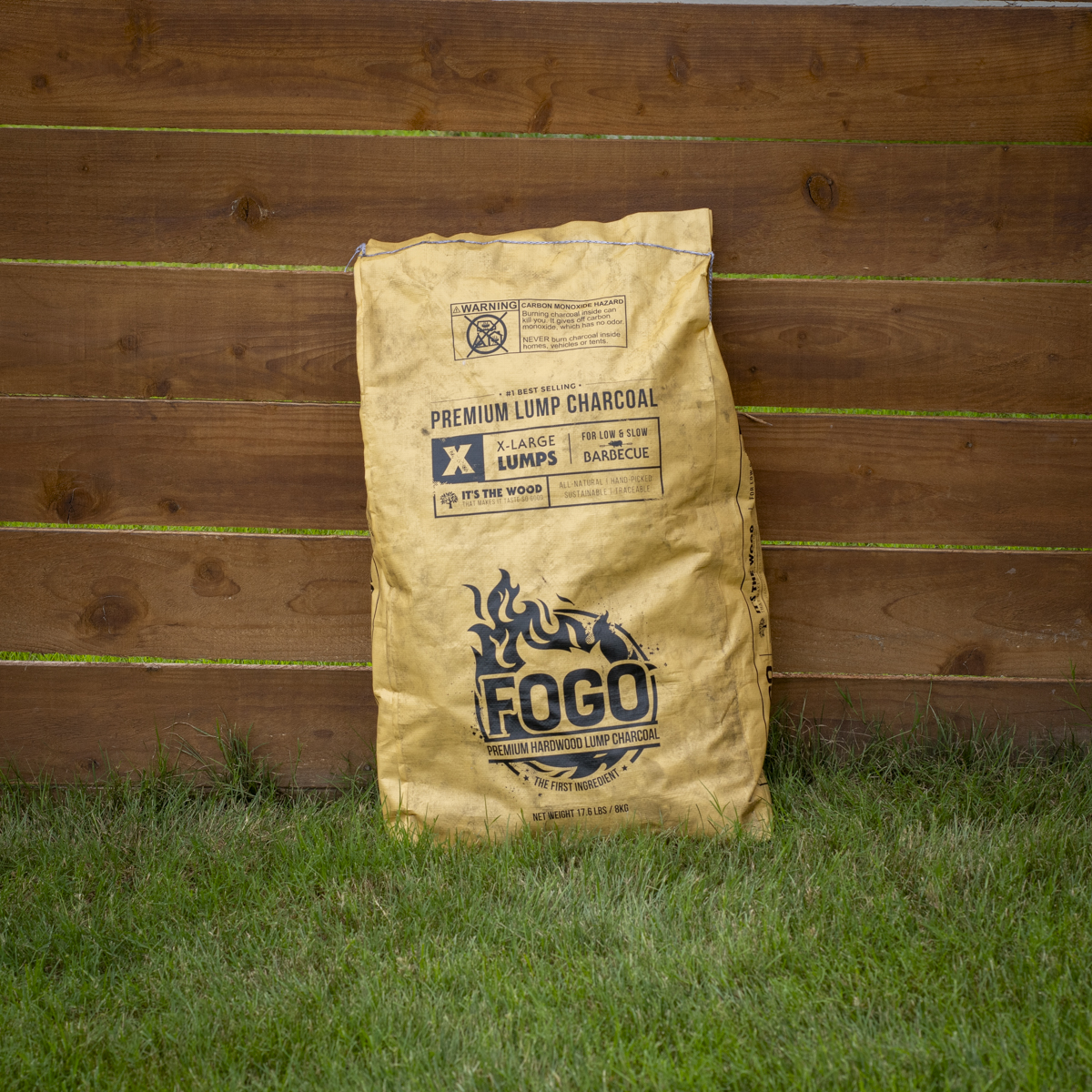
What About Fogo Extra Large?
There's one more set of results worth discussing because Fogo Extra Large was one of the original bags I tested.
When I first ran the test, Fogo XL appeared to be the obvious winner. Then I realized there was a problem with the comparison. Fogo Extra Large is specifically made to provide oversized pieces of lump charcoal. One of my major scoring criteria was the percentage of charcoal measuring 2 inches or larger, so I was effectively rewarding Fogo XL for doing exactly what that specialized product was designed to do.
That didn't mean there was anything wrong with Fogo XL. It meant I wasn't comparing equivalent products. I purchased Fogo Premium and ran it through the same tests, and Fogo Premium is the product included in the nine-brand ranking.
The Fogo Extra Large results are still worth showing:
| Piece Size | Fogo Extra Large |
| Under 1 inch | 3.2% |
| 1 to 2 inches | 1.5% |
| 2 to 4 inches | 37.3% |
| More than 4 inches | 57.7% |
| Total usable, 2 inches+ | 95.0% |
| Debris | 0.0% |
Those are exceptional numbers. Ninety-five percent of the bag consisted of pieces at least 2 inches in size, and 57.7% of the entire bag consisted of pieces measuring more than 4 inches. I also found no rocks, sticks, or under-carbonized material.
If your primary goal is getting extremely large pieces of lump charcoal, the Fogo XL bag I tested certainly delivered them. I simply don't include it in the overall rankings because my scoring system would give a product specifically designed around extra-large pieces an inherent advantage.
The 9 Lump Charcoal Brands Ranked From Best to Worst
The individual tests show exactly how each product performed. Rather than repeat all four sets of numbers again, here's how I would characterize each charcoal after looking at the complete scorecard.
#1 Jealous Devil Lump Charcoal
Jealous Devil was the most complete performer in the test. It gave me more usable charcoal than any of the other standard products, was the densest charcoal I measured, had no measurable debris, and still came within 18 cents per usable pound of winning the value test.
What stands out most is the absence of a meaningful weakness. Usually there was some sort of tradeoff between piece size, density, cleanliness, and price. I didn't see that with the Jealous Devil bag.
Best for: The best overall combination of size, density, quality, and value.
#2 Fogo Premium Lump Charcoal
Fogo Premium didn't dominate any of the size measurements, but it performed consistently enough everywhere else to finish second. It was one of only two ranked products with zero measurable debris, had the third-highest density, and tied Blues Hog for third in value.
If Jealous Devil isn't available or you already prefer Fogo, I wouldn't hesitate to use Fogo Premium based on these results.
Best for: A clean, well-rounded alternative to Jealous Devil.
#3 Blues Hog Lump Charcoal
Blues Hog's biggest strength was piece size. It finished second only to Jealous Devil in usable charcoal and had almost no debris. It also tied Fogo Premium for third in value.
The tradeoff was density. Blues Hog finished eighth in that measurement, which kept an otherwise strong performance from moving higher in the overall rankings.
Best for: A high percentage of larger pieces with very little debris.
#4 B&B Lump Charcoal
B&B produced the most polarized results in the entire comparison. It was the best value and came remarkably close to Jealous Devil in density, but it finished near the bottom in usable piece size and quality control.
That makes the buying decision fairly straightforward. If getting dense charcoal at the lowest cost per usable pound is your priority, B&B deserves serious consideration. If you place more value on large pieces and a clean bag, the three products above it performed better in my test.
Best for: Value and density.
Weakness: Smaller pieces and quality control.
#5 Kamado Joe Big Block Lump Charcoal
Kamado Joe Big Block actually performed quite well in terms of the charcoal itself. It ranked third in usable piece size and fourth in density, which are both characteristics I value when cooking on a Kamado Joe.
Its biggest weakness was price. It finished eighth in cost per usable pound, which pulled it down to fifth overall despite respectable results elsewhere.
Best for: Kamado owners who prioritize larger pieces and don't mind paying more for them.
#6 Big Green Egg Lump Charcoal
Big Green Egg landed near the middle in most of the measurements. Its usable-charcoal percentage was respectable, but its density and value didn't distinguish it from the leaders.
The bigger concern in the bag I tested was quality control. It had one of the highest debris percentages and the highest amount of under-carbonized wood in the comparison.
Best for: A reasonable middle-of-the-pack option based on the bag tested.
#7 Royal Oak Lump Charcoal
Royal Oak didn't have one disastrous result, but it also didn't have a category where it stood out. Its usable percentage, value, and quality control all landed somewhere around the middle of the group.
Density was its biggest weakness. Royal Oak had the lowest density of all nine products, which pulled down its overall score.
Best for: No particular category in this test.
#8 Meat Church Lump Charcoal
Meat Church had respectable density and included some very large pieces, but too much of the remaining material fell below my usable-size threshold. Its value also landed near the bottom of the group.
The biggest problem was quality control. The bag I tested had the highest debris percentage of all nine products, consisting of sticks.
Best for: Decent density, although the other results make it difficult for me to recommend over the higher-ranked products.
#9 Cowboy Lump Charcoal
Cowboy demonstrates why I wanted to calculate cost per usable pound rather than simply compare prices at the store. The bag appeared inexpensive, but it contained by far the lowest percentage of charcoal meeting my 2-inch standard.
Once I accounted for that, Cowboy became the most expensive product in the comparison on a cost-per-usable-pound basis. Its quality-control result was actually fairly good, but that wasn't enough to overcome last-place finishes in usable charcoal and value.
Best for: Its relatively low debris result was a positive, but based on the overall test, I would choose one of the higher-ranked products.
So Which Lump Charcoal Should You Buy?
Based on this test, my answer is Jealous Devil. It gave me the best overall combination of the four characteristics I measured without a significant weakness in any of them.
That doesn't mean the ranking should be your only consideration. B&B is particularly compelling if value is your priority. Fogo Premium gave me an exceptionally clean bag and performed well across the board. Blues Hog is worth considering if you put a high priority on getting larger pieces, while Kamado Joe Big Block also did well in piece size and density but cost considerably more per usable pound in my test.
Prices can also change. The value rankings reflect what I paid for these bags at the time of the test, so I would look at current prices where you live before making a decision. The physical measurements, however, give us another way to evaluate what was actually inside each bag rather than relying on the price or the name printed on it.
What This Lump Charcoal Test Does Not Measure
Before wrapping up, it's important to be clear about what these rankings do and don't tell us. I designed this test around four things I could objectively measure: usable piece size, cost per usable pound, density, and quality control.
I did not assign scores for flavor, how quickly the charcoal lights, maximum temperature, or how long a basket will burn. That was intentional. Burn time in a Kamado Joe can be affected by cooking temperature, airflow, the amount of charcoal in the basket, weather conditions, how the charcoal is arranged, and how often the grill is opened. Flavor is even more subjective.
Trying to assign numerical scores to those characteristics would have introduced more judgment into a comparison that I wanted to keep as objective as possible.
So, when I say Jealous Devil was the best lump charcoal in this test, I'm not claiming it will make your brisket taste better than every other charcoal or that a basket will always burn longer than another brand. I'm saying that of the bags I tested, Jealous Devil produced the best overall results across the four measurements I used. That's an important distinction.
Frequently Asked Questions About Lump Charcoal
Based on my testing, Jealous Devil was the best overall lump charcoal for a Kamado Joe. It had the highest usable-charcoal percentage at 79.4%, the highest density at 330 g/L, zero measurable debris, and the second-lowest cost per usable pound at $1.57.
It finished first in three of my four test categories and second in the fourth. No other standard lump charcoal I tested performed as consistently across all four measurements.
In my test, Jealous Devil finished ahead of Fogo Premium overall, but both performed well. Jealous Devil had substantially more charcoal that met my 2-inch usable-size standard and was considerably denser. It also cost less per usable pound based on the prices I paid.
Quality control was excellent for both products. I found no measurable rocks, sticks, or under-carbonized material in either bag. Fogo Premium finished second overall, so I consider it a very good alternative to Jealous Devil.
Fogo Extra Large is a different matter. It produced much larger pieces than either of them, but because it is specifically designed as an extra-large lump charcoal, I excluded it from the main rankings.
B&B was the best value in my test at $1.39 per usable pound, followed by Jealous Devil at $1.57.
B&B does come with a tradeoff. Only 54.8% of the bag met my 2-inch usable-size standard, and the bag I tested contained rocks, sticks, and under-carbonized wood. On the other hand, B&B had a density of 317 g/L, second only to Jealous Devil.
If your priority is getting the lowest cost per usable pound, B&B won that measurement. If you're looking for the best combination of value, large pieces, density, and quality control, I would choose Jealous Devil.
The Kamado Joe Big Block bag I tested performed quite well in two of the measurements that matter most to me. 71.5% of the bag consisted of pieces at least 2 inches in size, which was third best in the test, and its density of 230 g/L ranked fourth.
Its biggest weakness was value. At the price I paid, Kamado Joe charcoal cost $2.44 per usable pound, putting it eighth out of the nine ranked products.
So, I wouldn't interpret its fifth-place overall finish to mean that Kamado Joe Big Block is bad charcoal. Its piece-size distribution and density were both good. The price I paid relative to the amount of usable charcoal was what hurt it most in my rankings.
It matters to me, which is why piece size was one of the four measurements in this test. I used 2 inches as my threshold for usable charcoal because larger pieces provide the airflow and controlled fire I want in a ceramic grill, particularly during longer cooks.
That doesn't mean every piece under 2 inches should go in the trash. Smaller pieces still burn. The 2-inch cutoff was a consistent standard I used to compare all of the bags and reflects the size of charcoal I prefer to load into my Kamado Joe.
Not necessarily. One of the reasons I calculated cost per usable pound was that the retail price alone doesn't tell you what you're actually getting.
Cowboy demonstrated this particularly well. It looked inexpensive based on the price of the bag, but only 42.7% of the contents met my usable-size standard. That pushed its effective cost to $2.77 per usable pound, the highest in the comparison.
Jealous Devil provides the opposite example. It wasn't the cheapest bag I purchased, but because 79.4% met my usable-size standard, it ended up costing only $1.57 per usable pound.
The lesson is simple: don't assume the cheapest bag is necessarily the best value.
Yes. Calling pieces under 2 inches "not usable" for purposes of this test doesn't mean they won't burn. I needed a consistent definition that allowed me to compare the bags objectively, and I chose 2 inches because larger pieces are what I prefer in my Kamado Joe.
You can certainly use the smaller pieces. I simply don't place the same value on a bag containing a large percentage of small pieces as I do on one containing more of the larger pieces I prefer.
Top Tip
Lump charcoal is fragile. Handle your bags of charcoal as little as possible and avoid setting them down hard or stacking anything on top of them.
Final Thoughts: Which Lump Charcoal Would I Buy?
After testing these bags, Jealous Devil is the lump charcoal I would buy. What impressed me wasn't one standout measurement. It was the lack of a meaningful weakness. It gave me the most usable charcoal, the highest density, a perfectly clean bag, and nearly the best value in the entire test.
That doesn't make the other brands bad choices. B&B is particularly compelling if value matters most, while Fogo Premium gave me an exceptionally clean bag and finished second overall. Blues Hog also delivered one of the highest percentages of large pieces in the test, and Kamado Joe Big Block performed well in both piece size and density.
The biggest thing I learned from this research is that the price printed on a bag of lump charcoal doesn't tell you what you're actually getting. Once I started measuring the amount of usable charcoal, its density, and the material in the bag that wasn't properly carbonized charcoal, the differences between products became much clearer.
There is also one important limitation to remember. I tested one bag of each product, so these results represent the bags I purchased rather than every bag those manufacturers have ever produced. Using the same measurements across all nine brands did, however, give me a much better basis for choosing charcoal than simply looking at the price or the name on the bag.
For the bags I tested, Jealous Devil was the clear winner.
Leave a Reply